
The short version
- It’s very common to sleep badly after a diagnosis, as worry, appointments and changes to routine all get in the way.
- Regular habits help: getting up at the same time, getting daylight, being active, and winding down before bed.1
- If poor sleep goes on, CBT for insomnia works well. Sleepio is free for anyone living with or beyond cancer in the UK, through Macmillan.2, 3
Why sleep matters before treatment
Good sleep helps your mood, energy and ability to cope, and makes it easier to stay active and eat well before treatment. Poor sleep and worry can feed each other, so it’s worth tackling early.
Habits that help
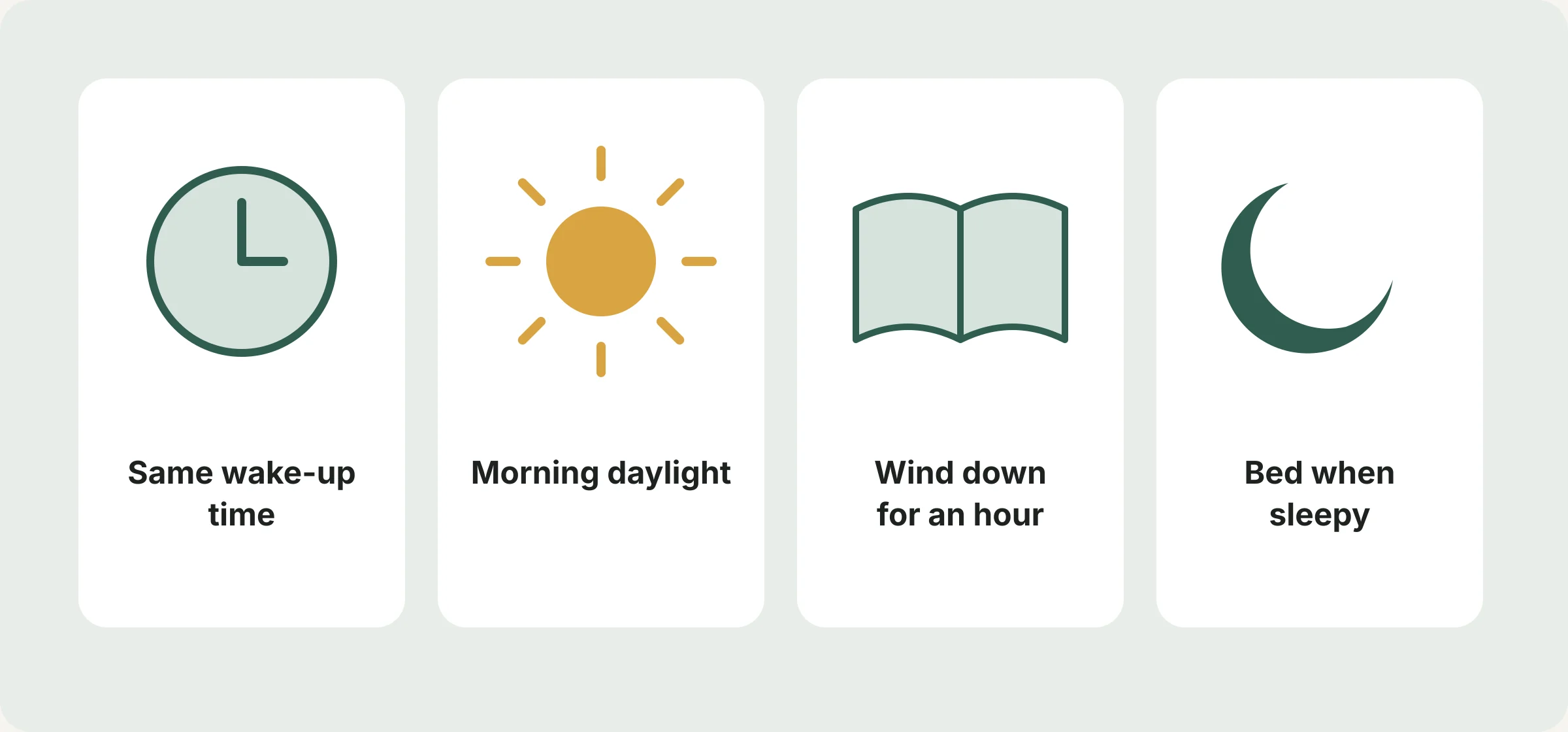
- Get up at the same time every day, even after a bad night.1
- Get outside in daylight, ideally in the morning.
- Be active during the day: a walk counts. Avoid hard exercise late in the evening.
- Cut down on caffeine after lunchtime, and go easy on alcohol, which disturbs sleep.1
- Wind down for an hour before bed: dim the lights, put screens away and do something calming.
- Keep your bedroom cool, dark and quiet.1
- Only go to bed when you feel sleepy. If you can’t sleep after about 20 minutes, get up and do something calm in another room, then go back to bed.
If worry keeps you awake
- Write down your worries and a to-do list earlier in the evening, so they’re out of your head.
- Try slow breathing or relaxation in bed. See breathing and relaxation techniques.
- Set aside “worry time” during the day. See managing anxiety while you wait for treatment.
CBT for insomnia
Cognitive behavioural therapy for insomnia (CBT-I) helps change the thoughts and habits that keep you awake.1
- Sleepio is a digital CBT programme for insomnia, recommended by NICE for treating insomnia in primary care.3 It’s free for anyone living with or beyond cancer in the UK through Macmillan, with no referral needed.2
- Your GP can also refer you, or you can refer yourself to NHS Talking Therapies in England.4
Sleeping tablets
Sleeping tablets are usually only for short-term use. Talk to your GP if you’re struggling, and don’t take over-the-counter sleep remedies or herbal products without checking with your team or pharmacist.
Before surgery
The night before surgery, many people sleep badly. That’s normal and won’t affect your operation. Follow your hospital’s instructions about eating and drinking before surgery.
Related pages
Everyone’s treatment is different, so talk to your cancer team about what is right for you.
References
- NHS. Insomnia. www.nhs.uk/conditions/insomnia/
- Macmillan Cancer Support. Big Health apps: Sleepio and Daylight, free for anyone living with or beyond cancer in the UK. orders.macmillan.org.uk/products/bighealth-big-health-apps
- National Institute for Health and Care Excellence. Sleepio to treat insomnia and insomnia symptoms (MTG70). 2022. www.nice.org.uk/guidance/mtg70
- NHS. NHS talking therapies for anxiety and depression. www.nhs.uk/mental-health/talking-therapies-medicine-treatments/talking-therapies-and-counselling/nhs-talking-therapies/