
Wherever you are with breast cancer, there are things you can do to help yourself. Choose the section that fits you best.
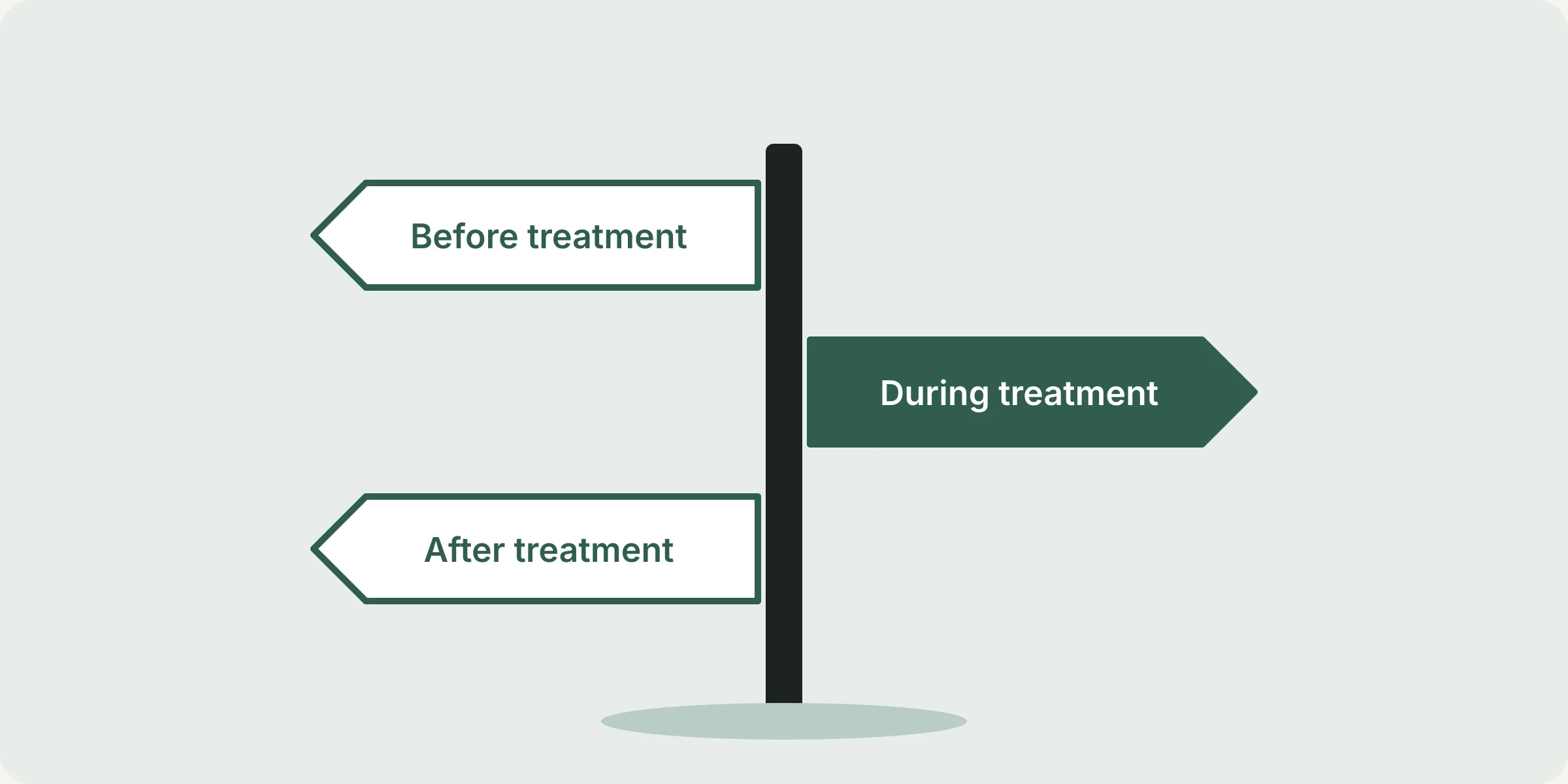
Where are you right now?
- I’ve just been diagnosed, or I’m waiting for treatment
- I’m having treatment
- I’ve finished hospital treatment
- I’m supporting someone with breast cancer
Just diagnosed or waiting for treatment
The weeks before treatment are a good time to get stronger and better prepared. This is called prehabilitation, and UK guidance recommends starting it as early as possible.1
Start with these:
- Just diagnosed: your first two weeks
- What is prehabilitation?
- Questions to ask after a breast cancer diagnosis
- A simple prehab plan to start at home
If you’re having surgery: learn your arm and shoulder exercises now. Breast Cancer Now suggests starting them before your operation if you can.2
Want a personal prehab plan?
Ask your breast care nurse whether your hospital offers prehabilitation. If it doesn’t, you can refer yourself to a digital prehab programme and start from home.
Having treatment
Staying as active as you can, eating well and looking after your sleep and mood can help you cope with side effects.3
Start with these:
- Exercise during chemotherapy
- Managing cancer-related fatigue
- Arm and shoulder exercises after breast surgery
- Reducing your risk of lymphoedema
Finished hospital treatment
Many people find the months after treatment harder than they expected, with tiredness, stiffness or worry, just as appointments become less frequent. A plan helps.
Start with these:
- When treatment ends: what to expect
- Digital rehabilitation: recovery support at home
- Lymphoedema: signs, treatment and support
- Getting your strength back: a 12-week plan
Want a personal recovery plan?
If you haven’t been offered rehabilitation, QuestPrehab Recover is a four-week personalised programme, with no payment until suitability is confirmed. Free courses such as Breast Cancer Now’s Moving Forward are also very helpful. Compare all options.
Supporting someone with breast cancer
You can make a real difference, for example by walking together, helping with meals or coming to appointments.
What’s worrying you most?
| If you’re worried about… | Read this |
|---|---|
| Feeling exhausted | Managing cancer-related fatigue |
| Getting fitter before surgery | Moving more before surgery |
| A stiff arm or shoulder | Arm and shoulder exercises |
| Swelling in your arm | Lymphoedema |
| Anxiety and sleep | Managing anxiety while you wait |
| Getting back to normal | Digital rehabilitation |
| Finding support near you | UK tools and services |
Groups with particular needs
- Breast cancer in younger women
- Breast cancer in older adults
- Breast cancer in men
- Living with secondary breast cancer
Need to talk to someone now?
Breast Cancer Now nurses: 0808 800 6000 · Macmillan Support Line: 0808 808 00 00 · In an emergency, call 999.
Everyone’s treatment is different, so talk to your cancer team about what is right for you.
References
- Macmillan Cancer Support, Royal College of Anaesthetists and NIHR Cancer and Nutrition Collaboration. Principles and guidance for prehabilitation within the management and support of people with cancer. 2019, updated November 2020. www.macmillan.org.uk/healthcare-professionals/news-and-resources/guides/principles-and-guidance-for-prehabilitation
- Breast Cancer Now. Exercises after breast cancer surgery (BCC6). breastcancernow.org/media-assets/yjajew1j/bcc6-exercises-after-breast-cancer-surgery-web.pdf
- Campbell KL, Winters-Stone KM, Wiskemann J, et al. Exercise guidelines for cancer survivors: consensus statement from international multidisciplinary roundtable. Medicine & Science in Sports & Exercise. 2019;51(11):2375–2390. doi.org/10.1249/MSS.0000000000002116