
The short version
- Prehabilitation (“prehab”) means getting your body and mind as ready as possible for cancer treatment. It usually combines three things: physical activity, good nutrition and support for your emotional wellbeing.
- UK guidance says prehab should start as early as possible after diagnosis, ideally in the weeks before surgery or chemotherapy.1
- It is not about becoming an athlete. Small, regular steps count, and you can start from wherever you are today.
What prehabilitation means
Rehabilitation is the support you get to recover after an illness or operation. Prehabilitation moves some of that support to before treatment starts, so you go into it as strong and well-prepared as you can be.
In 2019, Macmillan Cancer Support, the Royal College of Anaesthetists and the National Institute for Health Research published joint UK guidance on prehabilitation for people with cancer. It describes prehab as a key part of cancer care that should underpin the whole treatment pathway, built around nutrition, physical activity and psychological support.1, 2
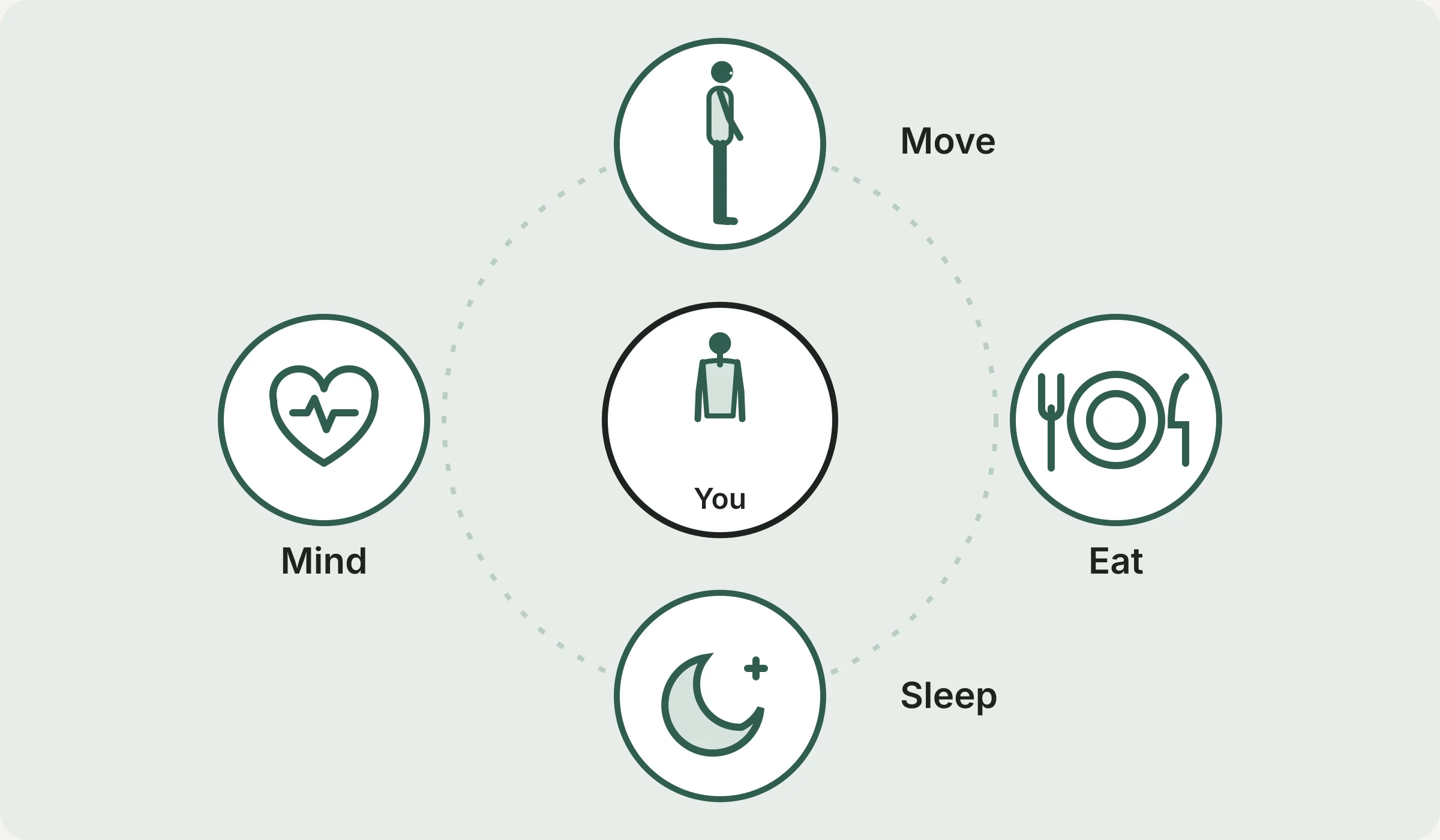
Many programmes, including the digital ones we describe on this site, add a fourth area: sleep. Sleep, mood, energy and appetite all affect each other, so working on them together tends to work better than tackling one at a time.
Why the weeks before treatment matter
For many people, the time between diagnosis and the start of treatment feels like waiting. Prehab turns some of that waiting time into preparation.
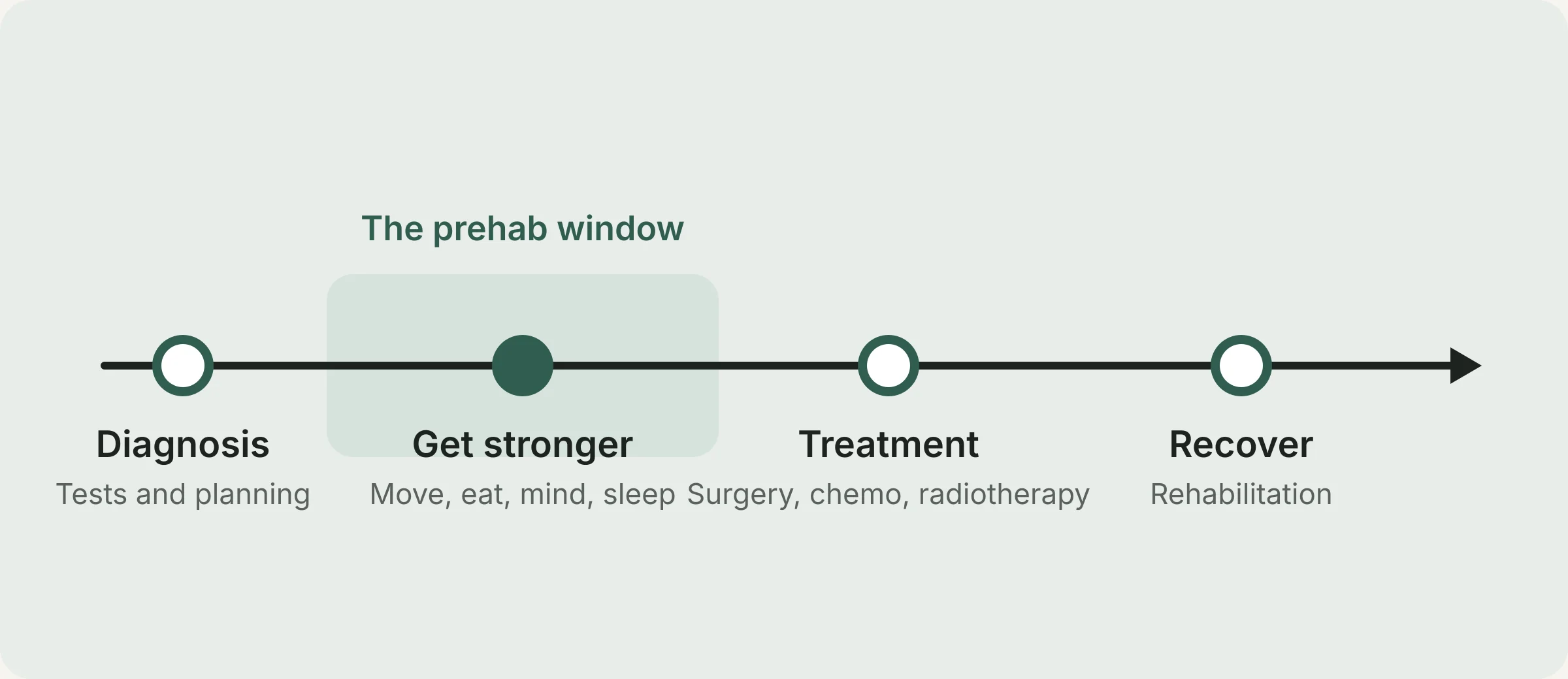
The UK guidance says prehabilitation aims to:2
- build up your physical and psychological resilience before treatment
- help you feel more in control at a time when a lot feels out of your hands
- improve your quality of life during and after treatment
- support your long-term health, because habits you start now can carry on after treatment ends
There is good evidence that being active is safe for most people with cancer and helps with fatigue, anxiety, low mood, physical function and quality of life, both during and after treatment.3 Prehab applies the same ideas earlier, before treatment begins.
What a prehab plan usually includes
Moving more
The aim is to build stamina and keep or build muscle. That usually means a mix of:
- aerobic activity that gets you slightly out of breath, such as brisk walking, cycling or swimming
- strength exercises, such as sit-to-stands from a chair, wall press-ups or exercises with light weights or resistance bands
- arm and shoulder movement, if you are having breast or lymph node surgery, so you know your starting range of movement
International guidelines suggest that about 30 minutes of moderate activity, three times a week, plus strength exercises, is enough to improve fatigue and wellbeing for most people with cancer.3 If that sounds like a lot, start with less. A 10-minute walk is a real start.
Eating well
Treatment uses a lot of energy, and protein helps protect your muscles. A prehab plan usually focuses on regular meals, enough protein (for example eggs, fish, beans, lentils, dairy or tofu) and staying hydrated. If you have lost weight without trying, or you have other health conditions, ask to see a dietitian.
Looking after your mind
Worry is a normal reaction to a cancer diagnosis. Prehab often includes simple techniques such as slow breathing, relaxation and planning, as well as information about where to get emotional support. Knowing what to expect from treatment can also make it feel less frightening.
Sleep and healthy habits
Better sleep helps with energy and mood. Prehab is also a good time to get support to stop smoking or cut down on alcohol, both of which can affect healing and recovery.
Is prehab right for me?
Prehab can help almost anyone, whatever their fitness. It is particularly worth asking about if:
- you are waiting for surgery (mastectomy, lumpectomy, lymph node surgery or reconstruction)
- you are about to start chemotherapy before surgery (neoadjuvant chemotherapy)
- you have other health conditions, or have become less active recently
- you are feeling anxious and want something practical to focus on
Check with your team first
Everyone’s situation is different. Before you change how active you are, tell your breast care nurse or doctor, especially if you have heart or lung problems, bone pain, or you are already having treatment.
How to get prehab support
There are four main routes in the UK:
- Ask your breast care team. Some NHS hospitals and cancer alliances now offer prehab, sometimes through a digital programme. Our guide on how to ask for prehab on the NHS has a script you can use.
- Use a digital prehab programme from home. These turn guidance into a daily plan with coach support. Read how digital prehab works.
- Join a free local or charity programme, such as Macmillan Move More activity sessions or online classes. See our UK services directory.
- Start on your own with our simple prehab plan to start at home.
England’s National Cancer Plan, published in February 2026, commits to making prehabilitation available to all cancer patients through a digital-first offer, along with national quality standards. Until that is in place everywhere, what you can get still depends on where you live, so it is worth asking.4
Prefer a guided plan?
A personalised digital prehab programme can build movement, nutrition, mind and sleep into a few simple steps each day, designed around your treatment date. Find out how digital prehab works or compare UK programmes.
Related pages
- Moving more before breast cancer surgery
- Eating well before breast cancer treatment
- Managing anxiety while you wait for treatment
- Questions to ask after a breast cancer diagnosis
Everyone’s treatment is different, so talk to your cancer team about what is right for you.
References
- Macmillan Cancer Support, Royal College of Anaesthetists and NIHR Cancer and Nutrition Collaboration. Principles and guidance for prehabilitation within the management and support of people with cancer. 2019, updated November 2020. www.macmillan.org.uk/healthcare-professionals/news-and-resources/guides/principles-and-guidance-for-prehabilitation
- Royal College of Anaesthetists. RCoA, Macmillan and NIHR launch prehabilitation report for people with cancer. 2 July 2019. rcoa.ac.uk/news/rcoa-macmillan-nihr-launch-prehabilitation-report-people-cancer
- Campbell KL, Winters-Stone KM, Wiskemann J, et al. Exercise guidelines for cancer survivors: consensus statement from international multidisciplinary roundtable. Medicine & Science in Sports & Exercise. 2019;51(11):2375–2390. doi.org/10.1249/MSS.0000000000002116
- Department of Health and Social Care. National Cancer Plan for England. February 2026. Summary of prehabilitation commitments as reported by the Royal College of Anaesthetists and Centre for Perioperative Care. rcoa.ac.uk/news/rcoa-cpoc-respond-release-governments-national-cancer-plan