
The short version
- This is a gentle four-week plan you can start at home while you wait for treatment. No gym or equipment needed.
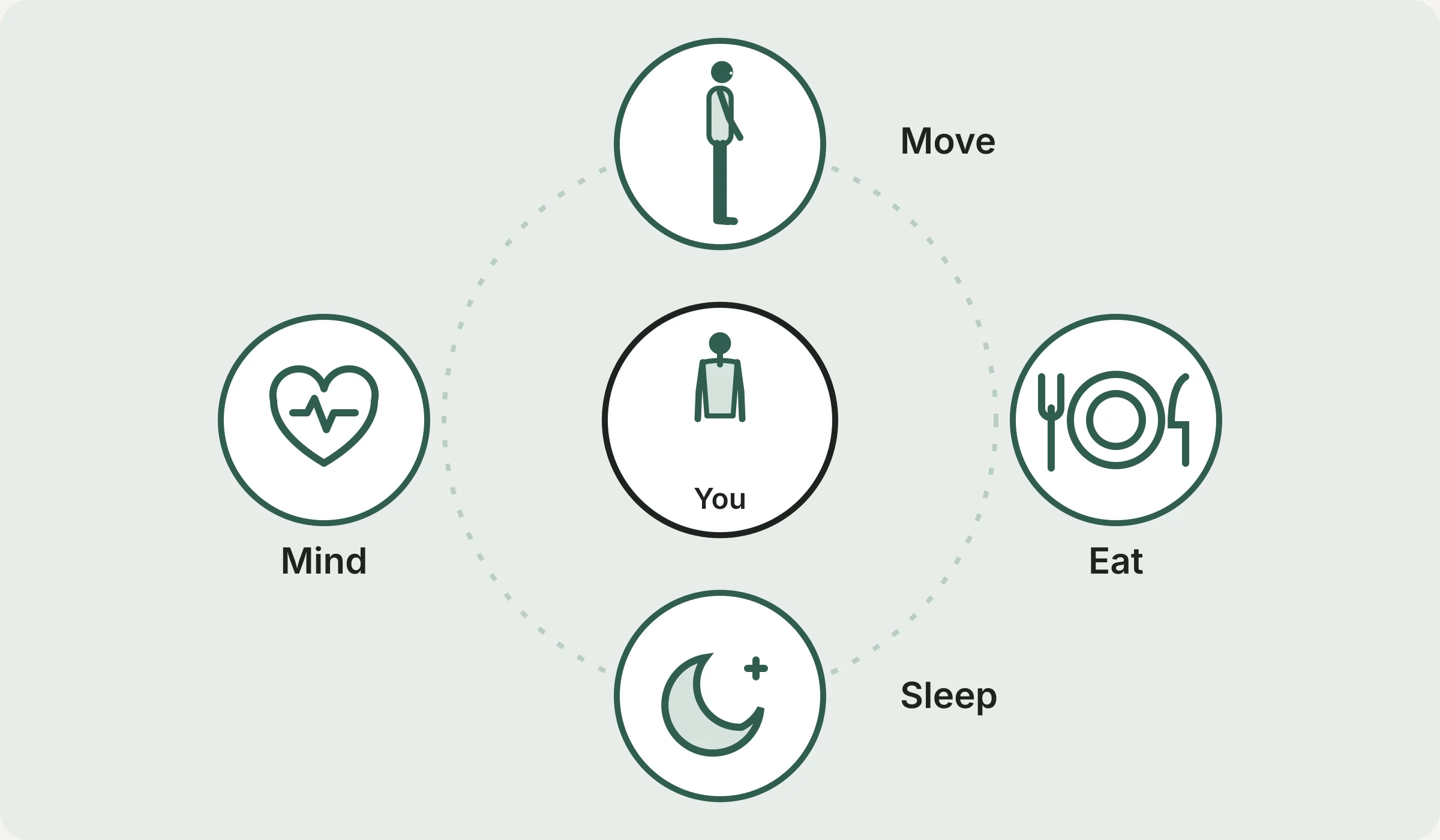
- Each week covers the four building blocks: move, eat, mind and sleep.
- Go at your own pace. If you have fewer than four weeks, start with week 1 and do what you can. Even a couple of weeks can help.
Before you start
Tell your breast care nurse or doctor you’re planning to be more active, especially if you have heart or lung problems, bone pain, dizziness, or you’re already having treatment. Stop and get advice if anything feels wrong.
How the plan works
UK guidance says prehab should combine physical activity, nutrition and psychological support, and start as early as possible.1 International exercise guidelines suggest that about 30 minutes of moderate activity three times a week, plus strength exercises twice a week, helps people with cancer.2 This plan builds up towards that.
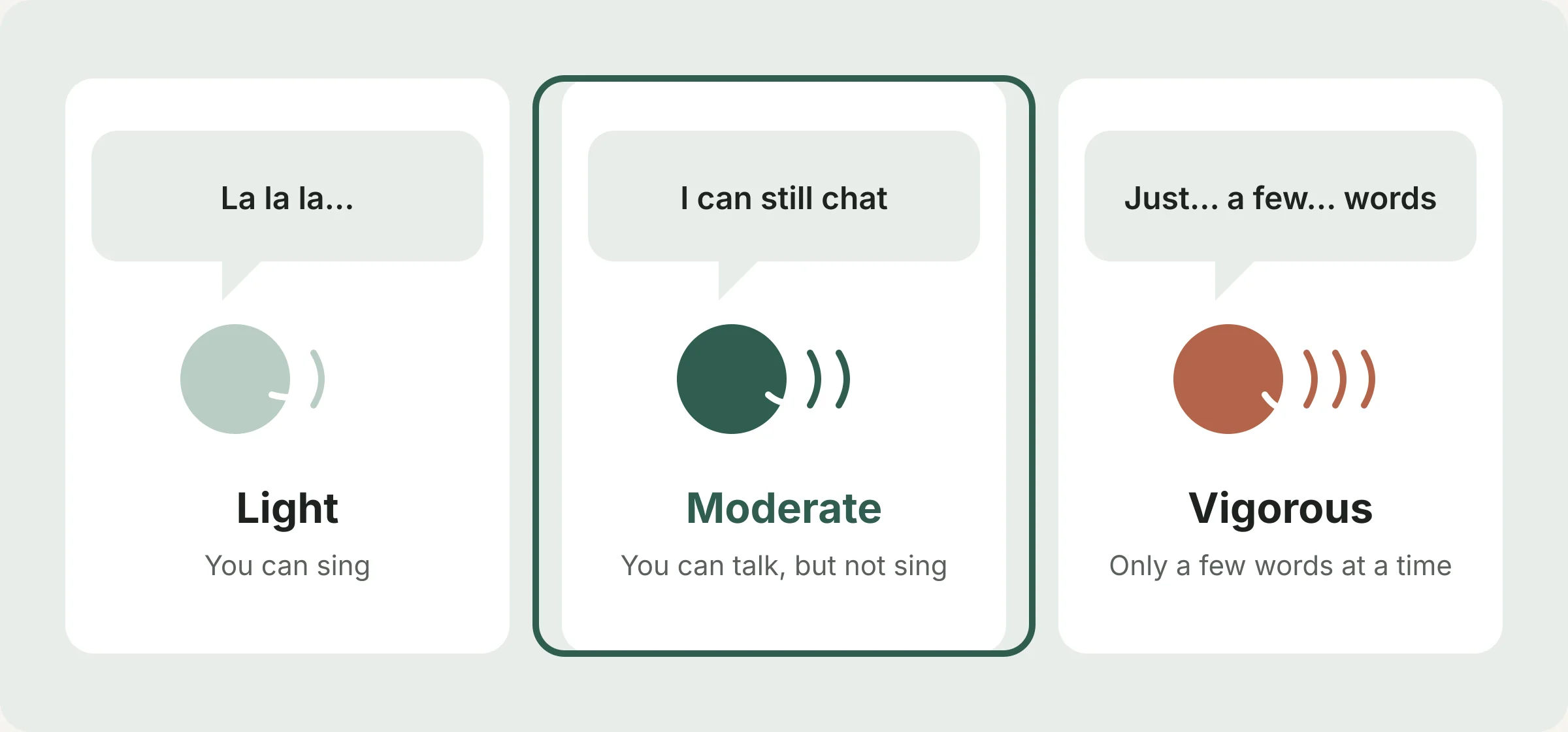
“Moderate” means you’re breathing harder but can still talk.3 Use the talk test:
The four-week plan
| Week 1 | Week 2 | Week 3 | Week 4 | |
|---|---|---|---|---|
| Walk | 10 minutes most days, at a comfortable pace | 15 minutes most days, a little brisker | 20 minutes, 3 to 5 days | 25 to 30 minutes, 3 to 5 days |
| Strength | Sit-to-stand: 2 sets of 5, twice this week | Add wall press-ups. 2 sets of 8, twice a week | Add step-ups and calf raises. 2 sets of 10, twice a week | All exercises, 2 to 3 sets of 10, twice a week |
| Arm and shoulder (if having surgery) | Learn the warm-up and stage 1 exercises | Practise daily | Practise daily | Practise daily |
| Eat | Protein at breakfast | Protein at every meal | Add a protein snack | Keep it up and stay hydrated |
| Mind | 5 minutes of slow breathing daily | Write down your questions for your team | Try a relaxation recording | Plan support for after treatment |
| Sleep | Fixed wake-up time | Screens off 30 minutes before bed | Keep naps short and early | Keep your routine |
Walking
Walking is the easiest way to build stamina. Start where you are. If 10 minutes is too much, do two 5-minute walks. Each week, add a few minutes or walk a little faster. Read more in moving more before surgery.
Strength
Stronger muscles help you recover and stay independent. Our strength exercises page has illustrated instructions for each exercise:
- sit-to-stand from a chair
- wall press-ups
- step-ups on the bottom stair
- calf raises
- bridges lying on your back
Arm and shoulder
If you’re having breast or lymph node surgery, Breast Cancer Now suggests starting your arm and shoulder exercises before surgery, so you know your normal range of movement and the exercises feel familiar.4 See arm and shoulder exercises.
Eating well
Aim for a source of protein at every meal, such as eggs, fish, chicken, beans, lentils, tofu, yoghurt or milk. Protein helps your body hold on to muscle and heal after surgery. If you’ve lost weight without trying, tell your team and ask to see a dietitian. Read eating well before treatment.
Mind
Worry is completely normal. Slow breathing for a few minutes a day can help you feel calmer.5 Writing your questions down before appointments helps too. Read managing anxiety while you wait.
Sleep
A regular wake-up time, daylight in the morning and a calm wind-down routine all help. If sleep is a real problem, Sleepio offers free digital CBT for sleep to people with cancer.6
Track your progress
Keep a simple diary: how long you walked, how many sit-to-stands you did and how you felt. Many people find it motivating to see their progress, and it’s useful to share with your team. Try the activity diary.
Adapting the plan
- On bad days, do less, but try to do something: a short walk, or a few sit-to-stands.
- If you’re short of time, focus on walking, sit-to-stands and arm exercises.
- If you’re already active, keep going, and talk to your team about how hard to train before treatment.
Prefer a guided plan?
A personalised digital prehab programme does all of this for you: a plan built around your treatment date and fitness, a few clear daily steps, and a coach who adjusts the plan as you go. See how digital prehab works or compare UK programmes.
Related pages
Everyone’s treatment is different, so talk to your cancer team about what is right for you.
References
- Macmillan Cancer Support, Royal College of Anaesthetists and NIHR Cancer and Nutrition Collaboration. Principles and guidance for prehabilitation within the management and support of people with cancer. 2019, updated November 2020. www.macmillan.org.uk/healthcare-professionals/news-and-resources/guides/principles-and-guidance-for-prehabilitation
- Campbell KL, Winters-Stone KM, Wiskemann J, et al. Exercise guidelines for cancer survivors: consensus statement from international multidisciplinary roundtable. Medicine & Science in Sports & Exercise. 2019;51(11):2375–2390. doi.org/10.1249/MSS.0000000000002116
- UK Chief Medical Officers. Physical activity guidelines for adults and older adults. 2019. www.gov.uk/government/publications/physical-activity-guidelines-adults-and-older-adults/physical-activity-for-adults-and-older-adults-19-and-over-text-of-the-infographic
- Breast Cancer Now. Exercises after breast cancer surgery (BCC6). breastcancernow.org/media-assets/yjajew1j/bcc6-exercises-after-breast-cancer-surgery-web.pdf
- NHS. Breathing exercises for stress. www.nhs.uk/mental-health/self-help/guides-tools-and-activities/breathing-exercises-for-stress/
- Macmillan Cancer Support and Big Health. Free Sleepio for people with cancer. www.sleepio.com/macmillan