
The short version
- Gentle arm and shoulder exercises after breast or lymph node surgery help you get your movement back and reduce stiffness and pain.
- A large UK trial found that a structured exercise programme after breast cancer surgery led to less arm disability and pain a year later, without increasing complications or lymphoedema.1
- Start the day after surgery unless your team says otherwise, keep your arm below shoulder height in the first week, and move on to the next stage as you heal.2
Why these exercises matter
Surgery to the breast and the lymph nodes in your armpit can make your shoulder and arm feel tight, sore or weak. If you protect your arm by not moving it, the shoulder can stiffen. Good shoulder movement also matters if you are having radiotherapy, because you need to be able to raise your arm above your head for treatment.
The UK PROSPER trial followed 392 women having breast cancer surgery at 17 NHS centres. Those who had a structured exercise programme, starting with a physiotherapy assessment about a week after surgery, had better arm function, less pain and better quality of life at 12 months than women who only received an exercise leaflet. The programme didn’t increase wound complications or lymphoedema, and it was cost-effective for the NHS.1
If you’d like more support than a leaflet, ask your breast care nurse whether you can see a physiotherapist.
Before you start
- Follow your own team’s advice first. If you’ve had breast reconstruction or other surgery, check with your surgeon, nurse or physiotherapist before starting, as your exercises may be different.2
- Start the day after surgery with the warm-up exercises. If you can’t start within a couple of days, contact your breast care nurse or physiotherapist.2
- In the first week, keep your arms below shoulder height (90 degrees), and wait until any drains or removable stitches are out before starting the stage 1 exercises.2
- It should feel like a stretch, not pain. A pulling or tight feeling is normal. Sharp or increasing pain is not.
How often
For the first three months, aim to do the exercises three times a day (morning, around midday and evening), repeating each one 5 times. Do something every day, even if you can’t manage the whole set.2
Warm-up: every session
Sit or stand tall, with your shoulders relaxed.
1. Shoulder shrugs
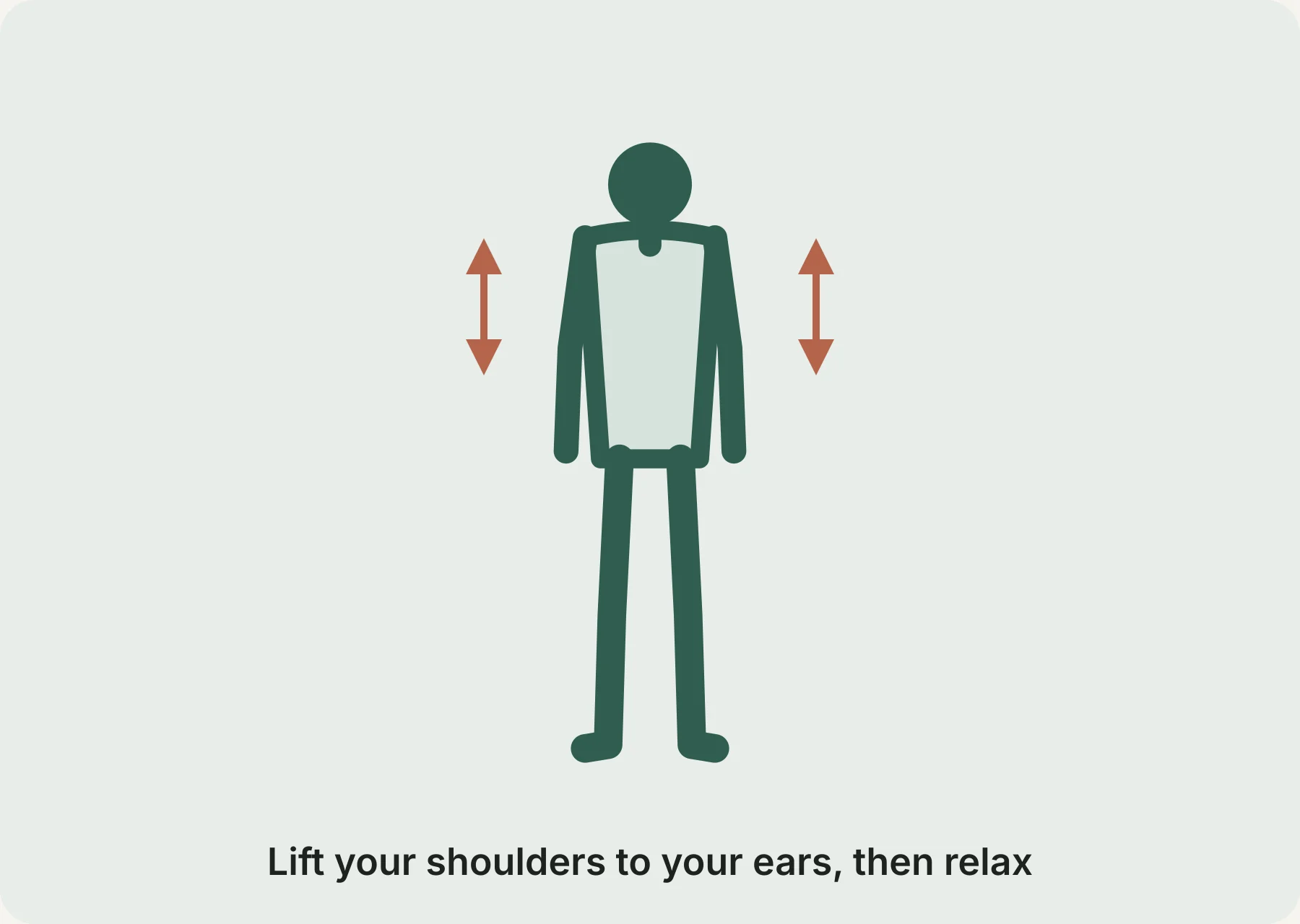
Lift both shoulders up towards your ears, then let them drop down and relax.
2. Shoulder circles
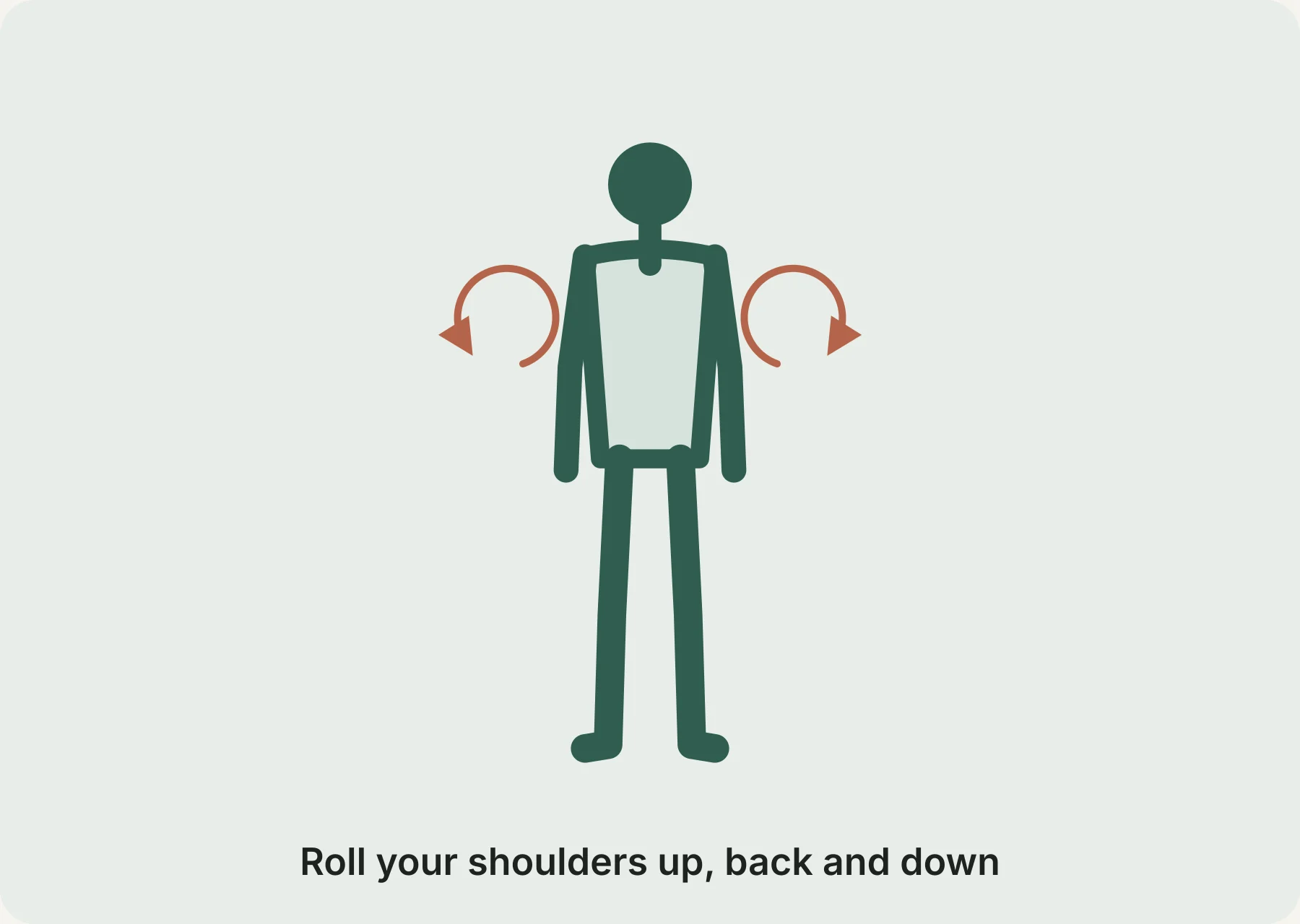
Lift your shoulders, then gently roll them backwards and down in a slow circle.
Stage 1: from week 1
Start these once any drains or removable stitches are out. Keep your arms below shoulder height for the first week.
3. Bent arms forwards
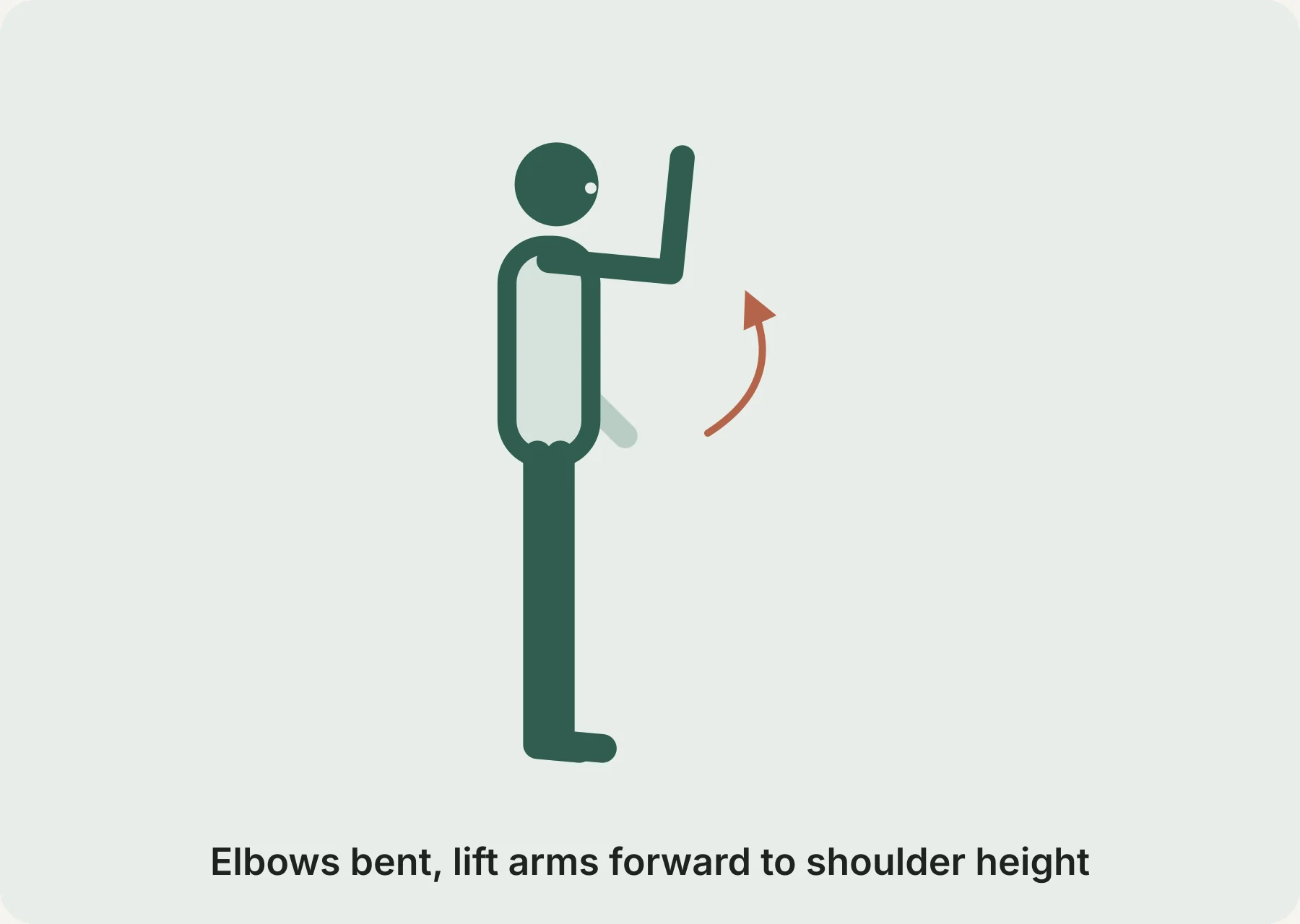
With your elbows bent, slowly lift your arms forwards in front of you, up to shoulder height, then lower them.
4. Bent arms sideways
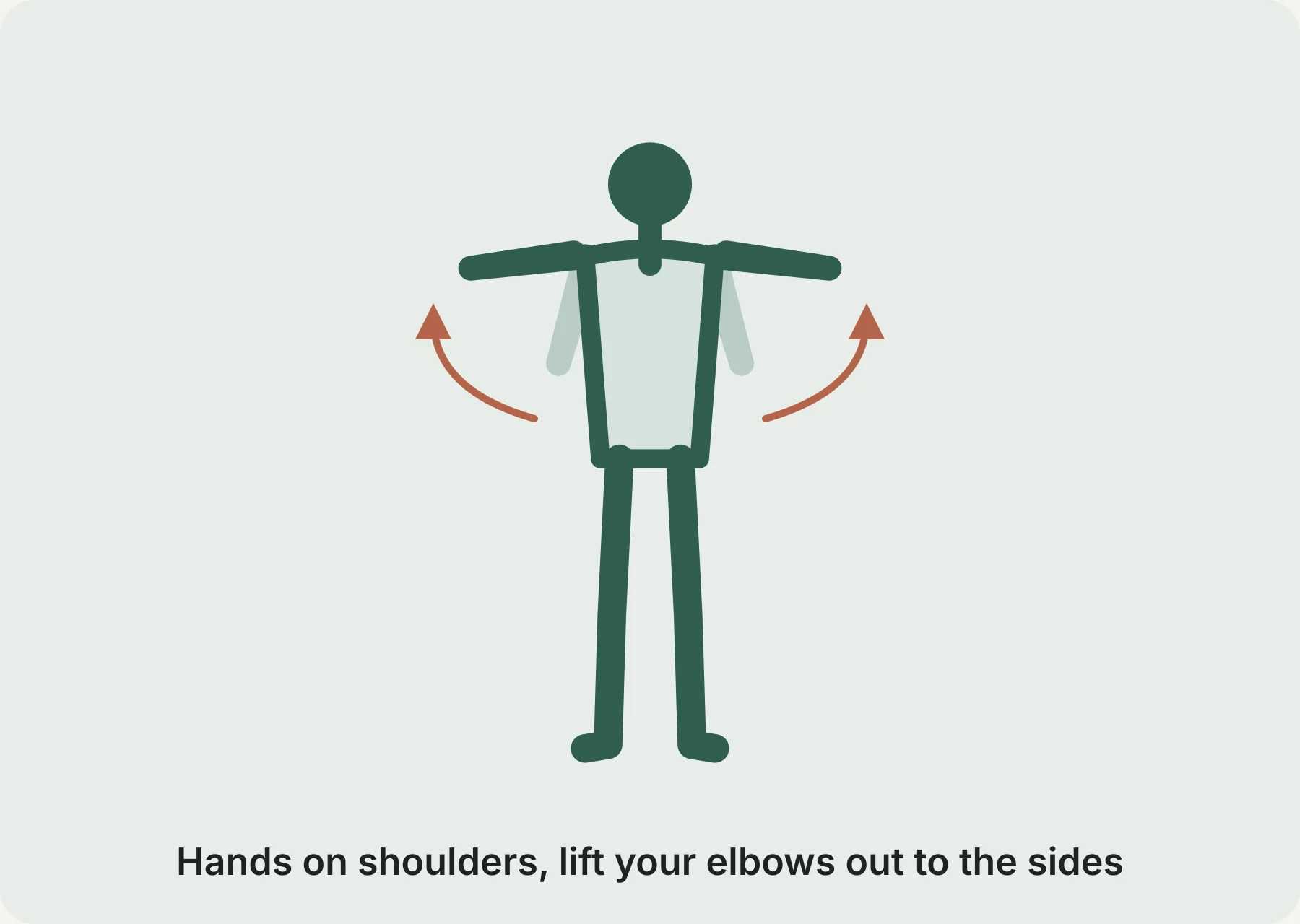
Rest your hands on your shoulders and lift your elbows out to the sides, then lower them.
5. Hands behind your back
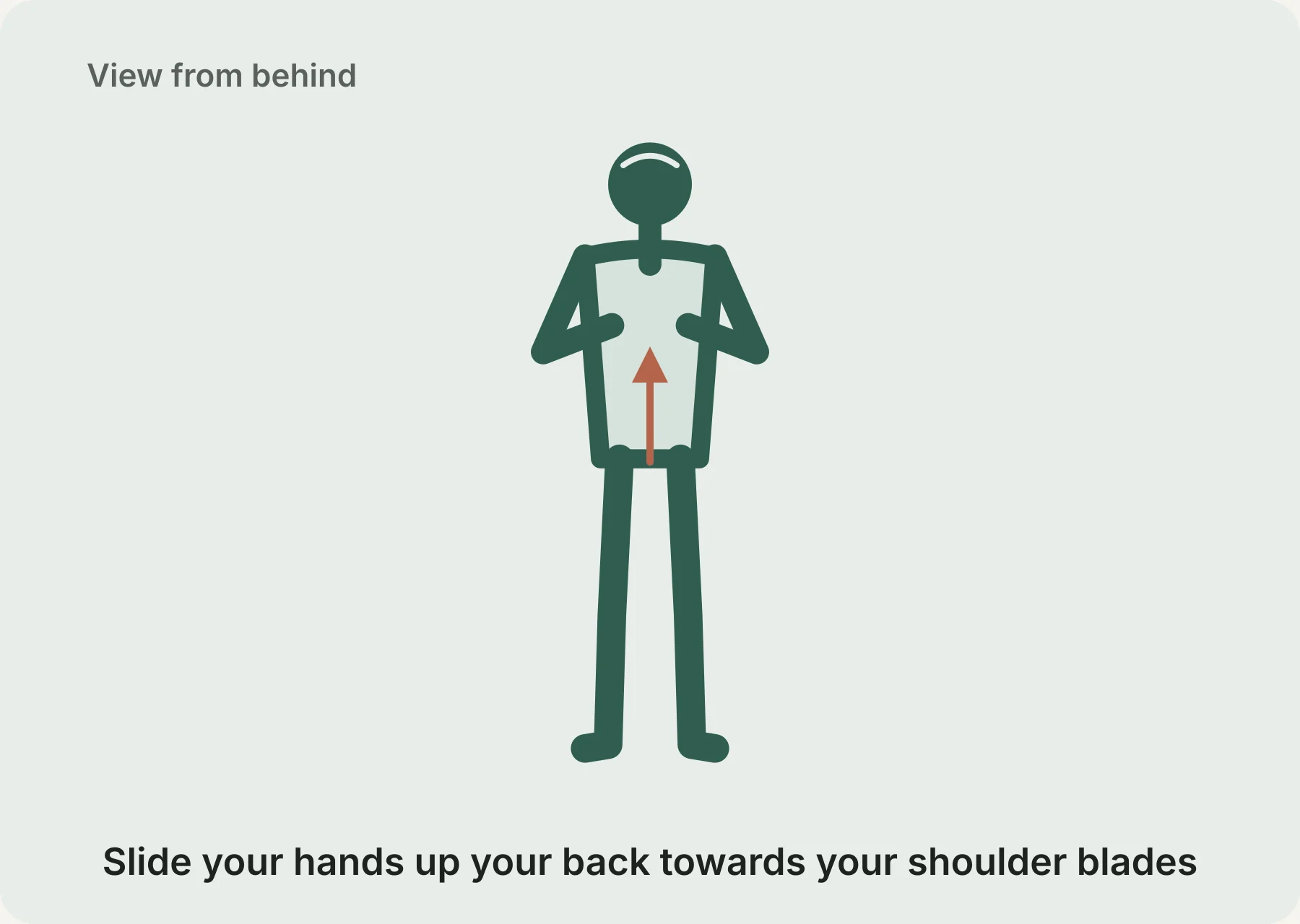
Put your hands behind your back and slowly slide them up towards your shoulder blades, as if scratching your back.
6. Elbows out
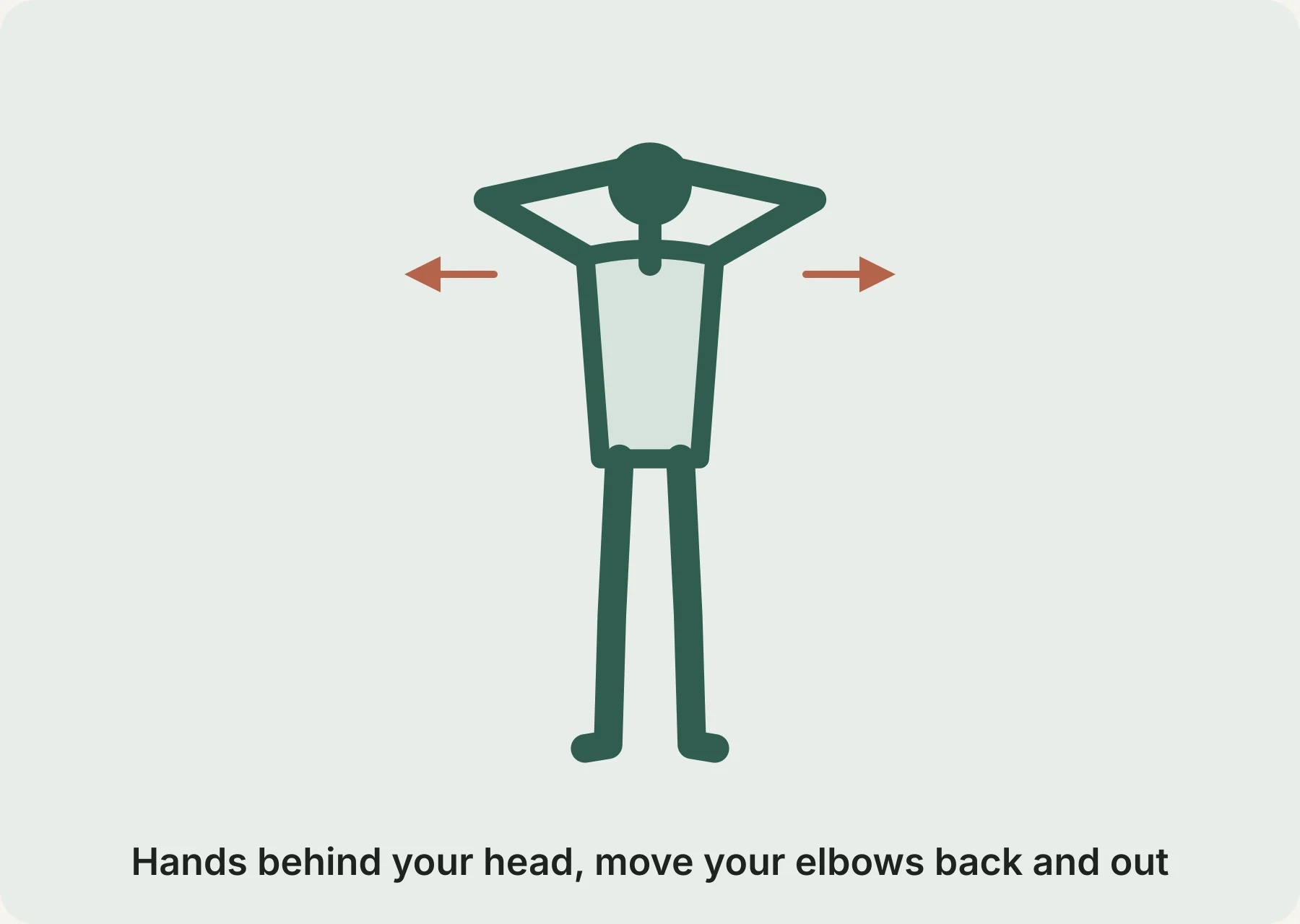
Put your hands behind your head (or as near as you can), then gently move your elbows back and out to the sides.
Stage 2: from week 2
When you’re comfortable with stage 1, add these. You can now lift your arm above shoulder height, as far as is comfortable.
7. Wall climbing
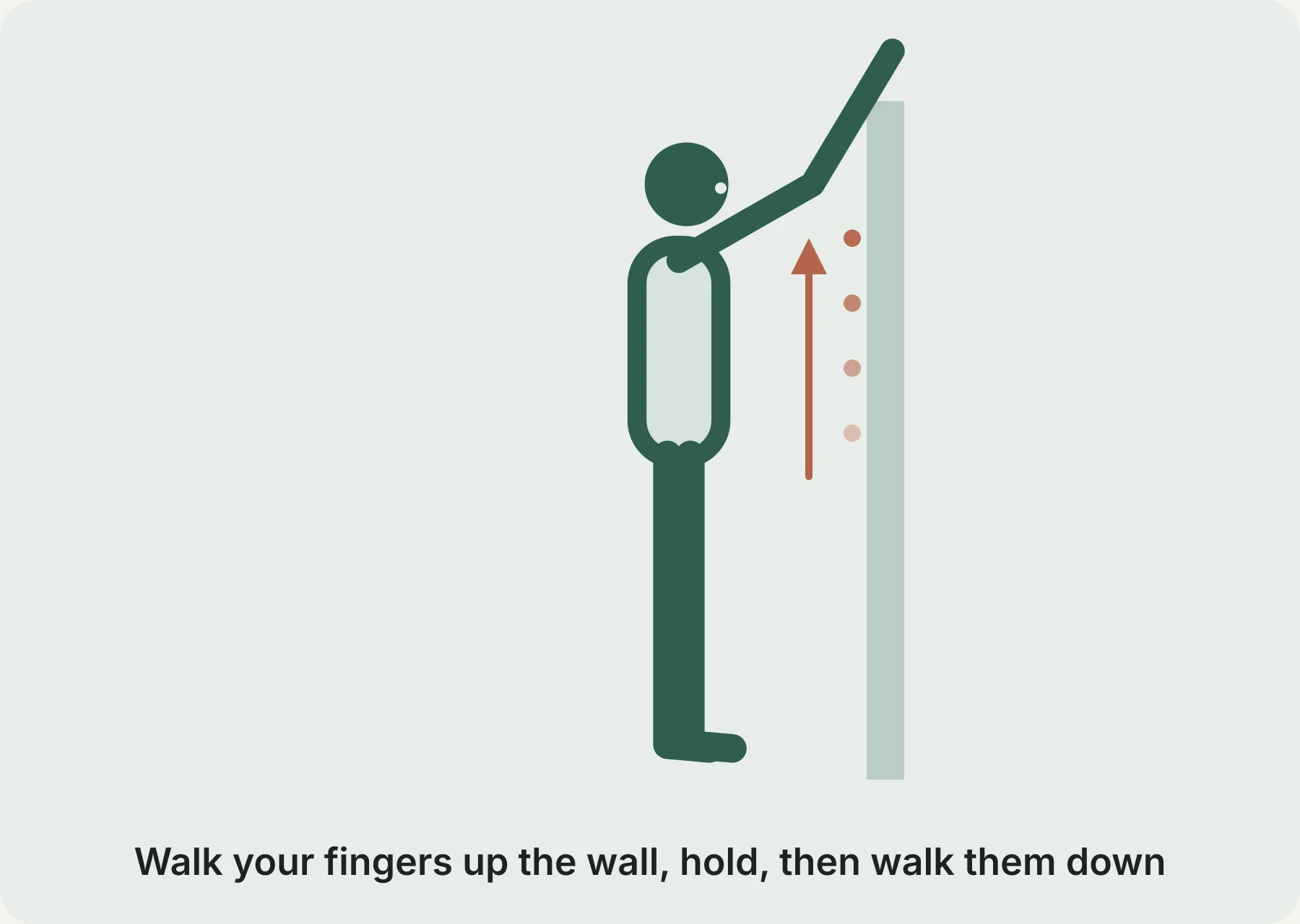
Stand facing a wall. Walk your fingers up the wall as high as you comfortably can, hold for 10 seconds, then walk them back down. Mark how high you reach, so you can see your progress.
8. Arm lifts lying down
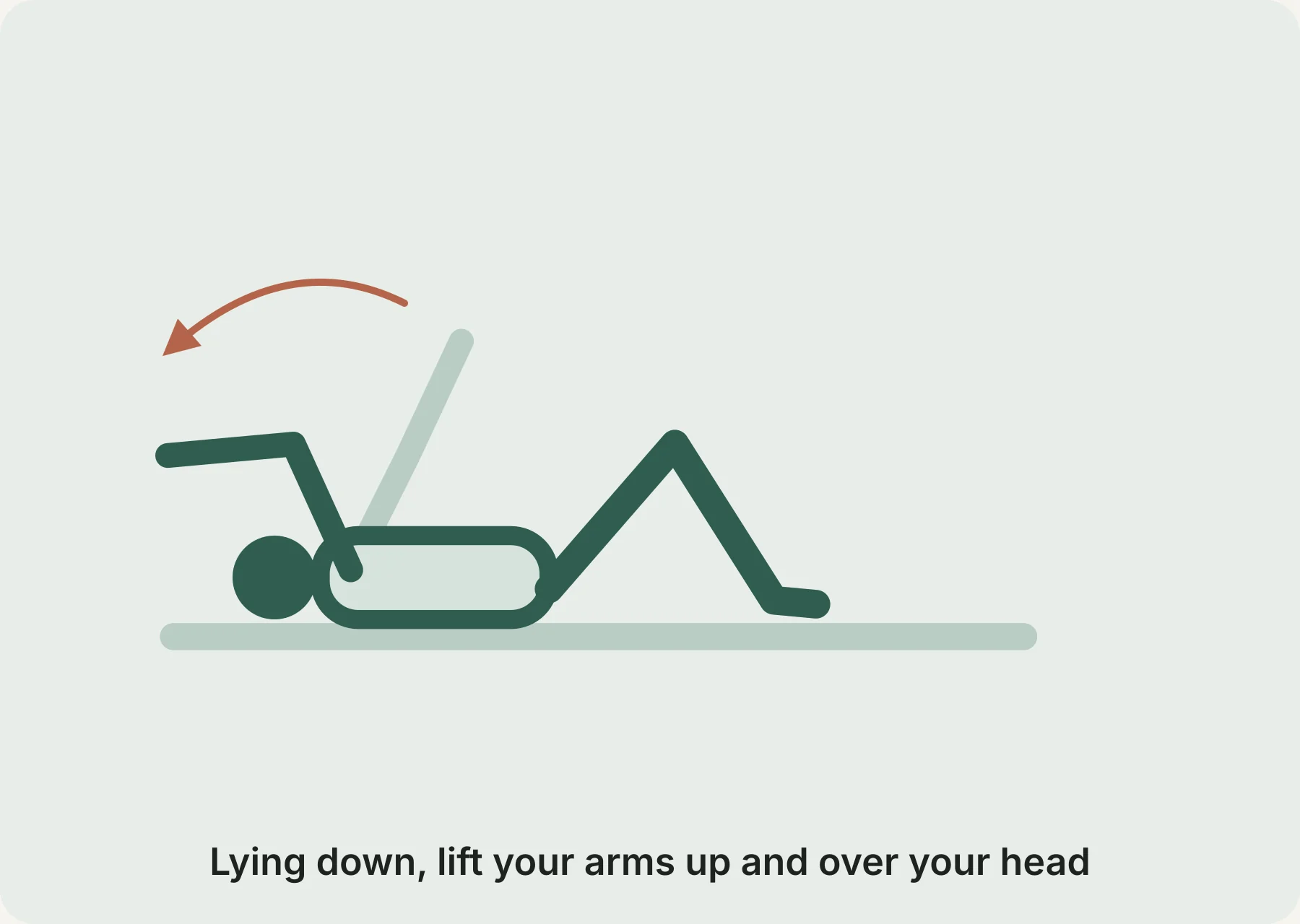
Lie on your back, knees bent. Hold your hands together (or hold a stick or rolled towel) and lift your arms up and back over your head as far as is comfortable. Hold for 10 seconds, then lower.
9. Elbow press
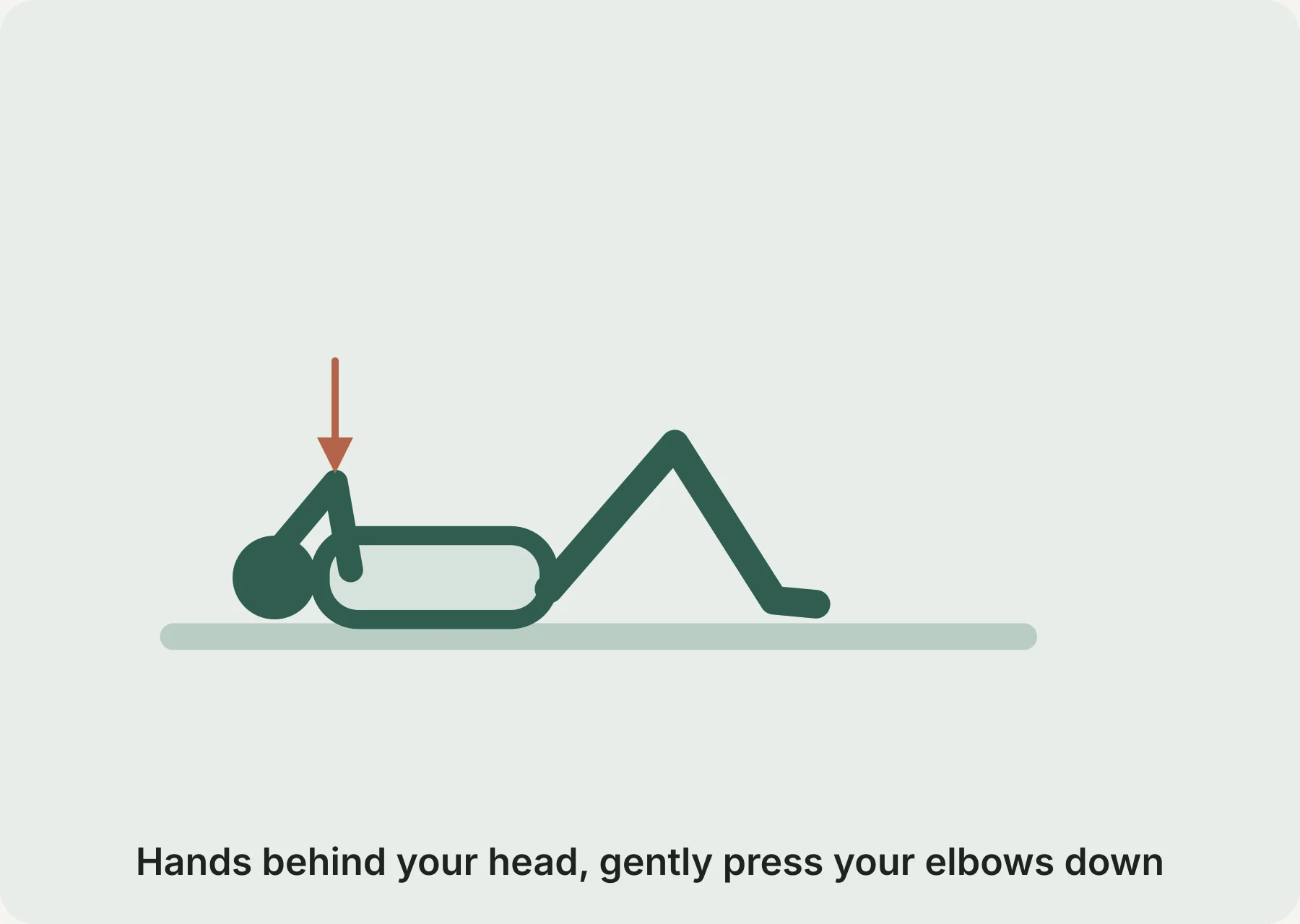
Lie on your back with your hands behind your head. Let your elbows fall out to the sides and gently press them down towards the bed or floor. Hold for 10 seconds.
How long to keep going
Keep going until your arm and shoulder move as well as they did before surgery. If you’re having radiotherapy, carry on through treatment, and afterwards for as long as you feel tightness or stiffness. After three months, many people keep doing a few of the stretches once a day.2
Once you have good movement, gradually building up strength with light weights is safe for most people, including those at risk of lymphoedema. Read strength training after breast cancer.
Cording
Some people develop a tight, cord-like feeling running from the armpit down the inside of the arm, sometimes as far as the hand. This is called cording (axillary web syndrome). It can limit how far you can lift your arm. The exercises often help, but contact your team as soon as possible if it happens, as a physiotherapist can show you specific stretches.2 Read more about cording.
Stop and contact your team if you have…
- signs of wound infection: redness, heat, swelling, discharge, or a high temperature
- a build-up of fluid under the wound (a seroma)
- pain that gets worse during exercise or doesn’t settle afterwards
- swelling in your arm, hand, breast or chest
Restart only when your surgeon, nurse or physiotherapist says it’s safe.2
Prefer a guided plan?
Digital rehab programmes can include arm and shoulder work as part of a full recovery plan, alongside general fitness, nutrition and sleep, with a coach to check your progress. See how digital rehabilitation works.
Apps and support
- bWell is a free app with arm and shoulder exercise videos after breast cancer surgery, developed with patients and physiotherapists.
- Breast Cancer Now publishes a free exercises after breast cancer surgery leaflet, and its nurses can answer questions on 0808 800 6000.
Related pages
- Reducing your risk of lymphoedema
- Lymphoedema: signs, treatment and support
- Wound and scar care after breast surgery
Everyone’s treatment is different, so talk to your cancer team about what is right for you.
References
- Bruce J, Mazuquin B, Canaway A, et al. Exercise versus usual care after non-reconstructive breast cancer surgery (UK PROSPER): multicentre randomised controlled trial and economic evaluation. BMJ. 2021;375:e066542. doi.org/10.1136/bmj-2021-066542
- Breast Cancer Now. Exercises after breast cancer surgery (BCC6). breastcancernow.org/media-assets/yjajew1j/bcc6-exercises-after-breast-cancer-surgery-web.pdf