
The short version
- Cording (axillary web syndrome) is a tight, cord-like band under the skin that runs from the armpit down the inside of the arm, sometimes as far as the wrist.1
- It’s common after lymph node surgery, and usually appears 2 to 8 weeks after the operation.1
- Gentle stretching and physiotherapy are the main treatment. Contact your team if you develop it.2, 1
What is cording?
After surgery to the lymph nodes in the armpit, some people develop one or more tight cords under the skin. They usually start in the armpit and run down the inner arm, sometimes past the elbow, or along the side of the chest. You may be able to see or feel them, especially when you lift your arm.1
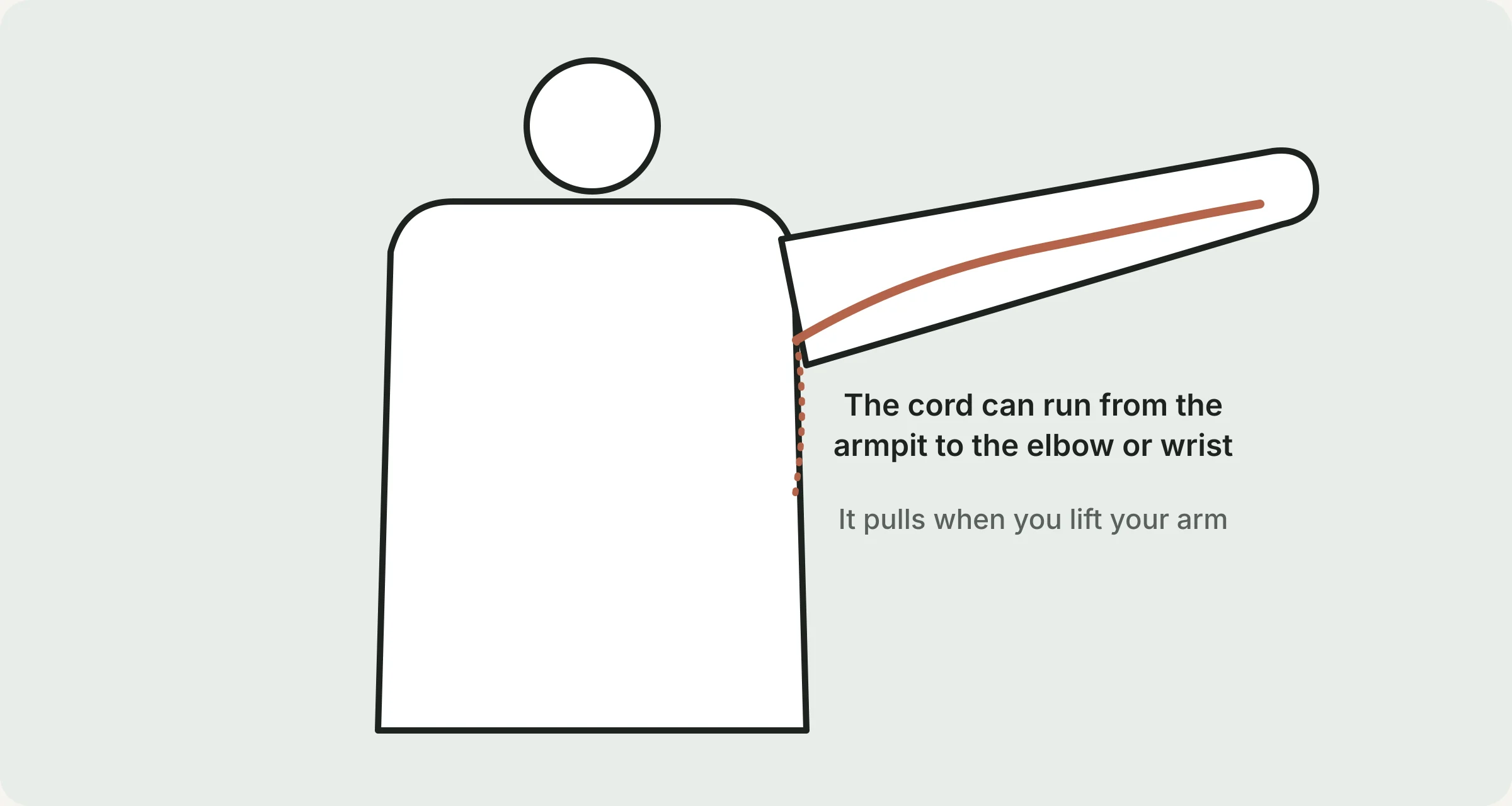
Cording is thought to involve the lymph vessels and surrounding tissue. It is not dangerous, but it can be painful and can limit how far you can move your arm.1
How common is it?
Studies report very different rates, from about 6% to 86% of people, depending on how carefully they looked. Two studies that followed people closely found it in about half. It’s more common after axillary node clearance than after sentinel node biopsy.1
When does it happen?
It usually appears 2 to 8 weeks after surgery, but it can develop months or even years later. It was once thought to clear up within three months, but newer research shows it can last longer, and can go away and come back.1
Symptoms
- a tight, pulling feeling in your armpit or inner arm
- pain when you lift your arm out to the side or forwards
- difficulty straightening your elbow, if the cord crosses it
- a visible or palpable cord when your arm is raised1
What helps
Gentle stretching
Breast Cancer Now’s arm and shoulder exercises can help cording symptoms.2 Stretch slowly to the point of a gentle pull, not pain, and hold. Keep doing your arm and shoulder exercises every day.
Physiotherapy
Physiotherapy is recommended as a safe and effective treatment. A physiotherapist can show you specific stretches, strengthening exercises and gentle hands-on techniques to ease pain and improve movement.1 Ask your breast care nurse for a referral.
Things to avoid
Avoid forcing your arm through pain or using aggressive massage on the cords. Gentle techniques work better.1
Contact your team if…
- you notice cording, so they can arrange physiotherapy if needed2
- your arm, hand or chest becomes swollen, red, hot or more painful, which could be infection or lymphoedema
- you can’t raise your arm enough for radiotherapy positioning
Prefer a guided plan?
A personalised rehabilitation programme can include daily stretching and arm work alongside general fitness, with a coach to check your progress. See how digital rehabilitation works.
Related pages
Everyone’s treatment is different, so talk to your cancer team about what is right for you.
References
- Koehler LA, Haddad TC, Hunter DW, Tuttle TM. Axillary web syndrome following breast cancer surgery: symptoms, complications, and management strategies. Breast Cancer: Targets and Therapy. 2019;11:13–19. doi.org/10.2147/BCTT.S146635
- Breast Cancer Now. Exercises after breast cancer surgery (BCC6). breastcancernow.org/media-assets/yjajew1j/bcc6-exercises-after-breast-cancer-surgery-web.pdf