
Clear, referenced guidance for anyone in the UK diagnosed with breast cancer: what you can do yourself before, during and after treatment, and where to find support that helps you do it.
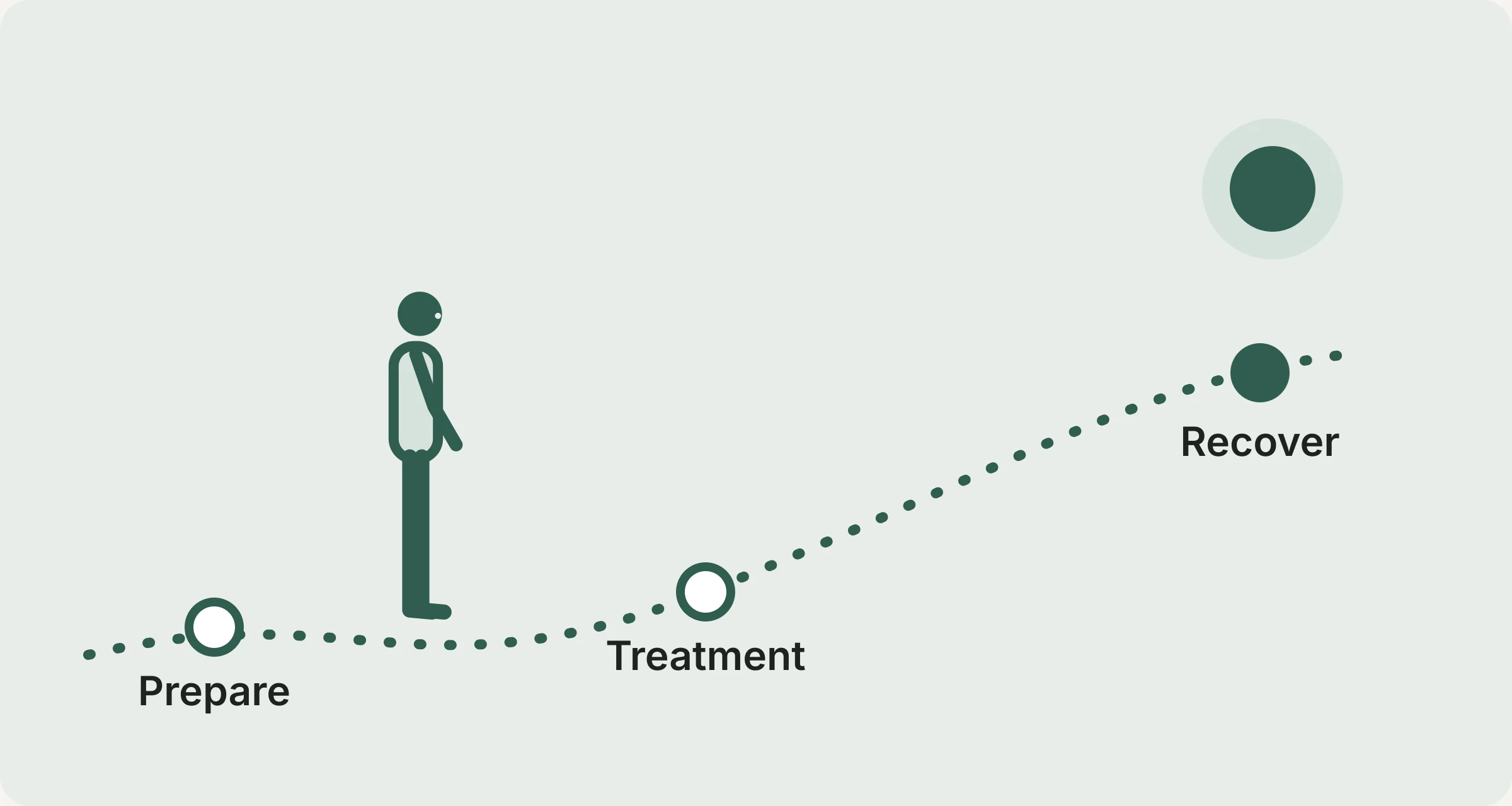
Three phases, one plan
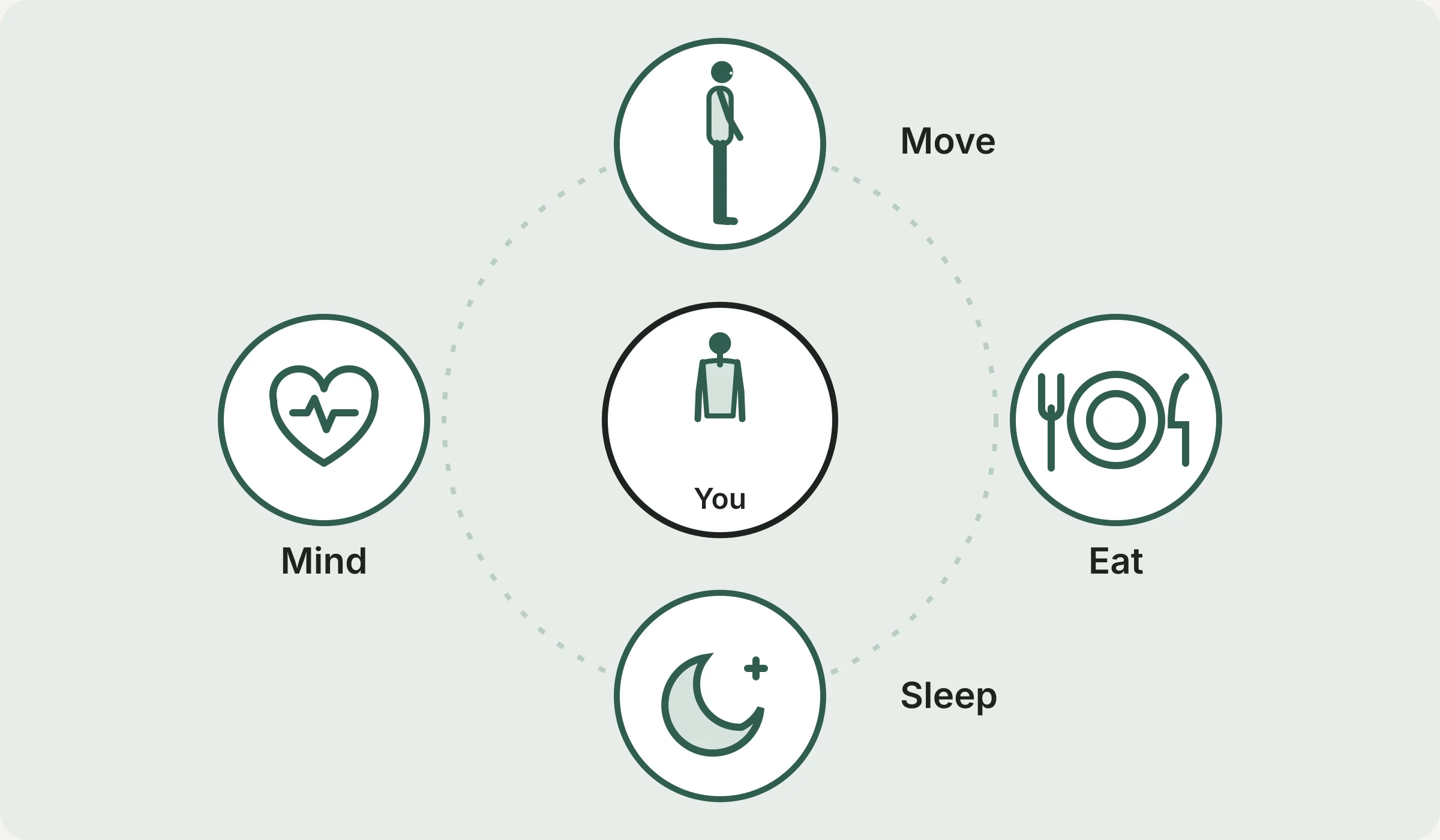
Each phase covers the same four building blocks, movement, nutrition, mind and sleep, so you always know what to focus on next.
1. Prepare
The weeks between diagnosis and treatment are a chance to get stronger. This is called prehabilitation.
- What is prehabilitation?
- Digital prehab: getting ready from home
- Moving more before surgery
- Questions to ask your team
2. Stay strong during treatment
Gentle, regular activity and good nutrition can ease side effects such as fatigue and help you keep doing what matters to you.
- Exercise during chemotherapy
- Managing cancer-related fatigue
- Arm and shoulder exercises after surgery
3. Recover
When hospital treatment ends, support often falls away. Rebuilding strength, energy and confidence takes a plan.
- Digital rehabilitation: recovery support at home
- Lymphoedema: signs, treatment and support
- Getting your strength back
What the evidence says
- Being active during and after treatment is safe for most people and can improve fatigue, anxiety, low mood, physical function and quality of life.1
- Prehabilitation works best when it combines physical activity, nutrition and psychological support, starting as early as possible after diagnosis.2
- England’s National Cancer Plan commits to making prehabilitation available to all cancer patients through a digital-first offer.3
How we choose and check our sources
Want a plan, not just information?
Personalised digital prehab and rehab programmes turn guidance into a few daily steps across movement, nutrition, mind and sleep, built around your treatment and adjusted as you progress.
A personalised option: QuestPrehab
QuestPrehab’s clinically led programmes are used by NHS hospitals and are also open to individuals. Ask your breast care nurse whether your hospital offers it, or start yourself: refer yourself for prehab before treatment, or join QuestPrehab Recover after treatment, a four-week personalised programme for £199 (no payment until suitability is confirmed). Why we mention QuestPrehab.
Compare all UK digital prehab and rehab programmes
UK tools and services
Apps, online courses and programmes, free and self-pay, checked by our team.
| Service | What it offers | Access |
|---|---|---|
| QuestPrehab Recover | Personalised digital rehab after treatment | Self-pay; NHS in some areas |
| Moving Forward | Breast Cancer Now’s course for life after treatment | Free, online or in person |
| Sleepio and Daylight | Digital CBT for sleep and anxiety | Free for people with cancer, via Macmillan |
| Penny Brohn UK | Live online sessions: strength, sleep, nutrition | Free, online |
| Perci Health | Virtual clinic with physiotherapy, nutrition and psychology | Through employers |
Need to talk to someone now?
- Breast Cancer Now nurses: 0808 800 6000
- Macmillan Support Line: 0808 808 00 00
- In an emergency, call 999.
About this site
Breast Cancer Fitness is an independent, non-commercial site that helps people take an active part in their breast cancer care. Every page is referenced to published research and UK guidance. We have no financial links with any service we mention. Read our editorial policy and how this site is funded.
References
- Campbell KL, Winters-Stone KM, Wiskemann J, et al. Exercise guidelines for cancer survivors: consensus statement from international multidisciplinary roundtable. Medicine & Science in Sports & Exercise. 2019;51(11):2375–2390. doi.org/10.1249/MSS.0000000000002116
- Macmillan Cancer Support, Royal College of Anaesthetists and NIHR Cancer and Nutrition Collaboration. Principles and guidance for prehabilitation within the management and support of people with cancer. 2019, updated November 2020. www.macmillan.org.uk/healthcare-professionals/news-and-resources/guides/principles-and-guidance-for-prehabilitation
- Department of Health and Social Care. National Cancer Plan for England. February 2026. Summary of prehabilitation commitments as reported by the Royal College of Anaesthetists and Centre for Perioperative Care. rcoa.ac.uk/news/rcoa-cpoc-respond-release-governments-national-cancer-plan