
The short version
- Cancer-related fatigue is one of the most common side effects of cancer and its treatment. It is different from normal tiredness and often doesn’t go away with rest.1
- The approaches with the best evidence are regular, gentle physical activity and psychological support such as CBT. Both work better than medicines for most people.2
- Pacing (planning your energy across the day and week) helps you do the things that matter most.
What cancer-related fatigue feels like
Cancer-related fatigue is a lasting feeling of physical, emotional or mental exhaustion. You may:
- feel tired after very little activity, or tired even when you’ve slept
- find simple tasks, such as getting dressed, exhausting
- have heavy limbs or feel weak
- struggle to concentrate, remember things or make decisions
- feel low or lose interest in things you usually enjoy
Macmillan describes it as a very common problem that most people with cancer experience at some point. For some people it is mild; for others it affects every part of daily life. It often improves after treatment ends, but it can last for months or even years.1
Why it happens
Doctors don’t fully understand cancer-related fatigue, and there is usually more than one cause.1 Common contributors include:
- the cancer itself and the body’s response to treatment
- anaemia (low red blood cells)
- poor sleep
- eating less, or weight loss
- pain
- anxiety, low mood and stress
- other health conditions, such as an underactive thyroid, and some medicines
Some of these can be treated, so tell your team about fatigue rather than assuming you have to put up with it.
Why rest alone doesn’t fix it
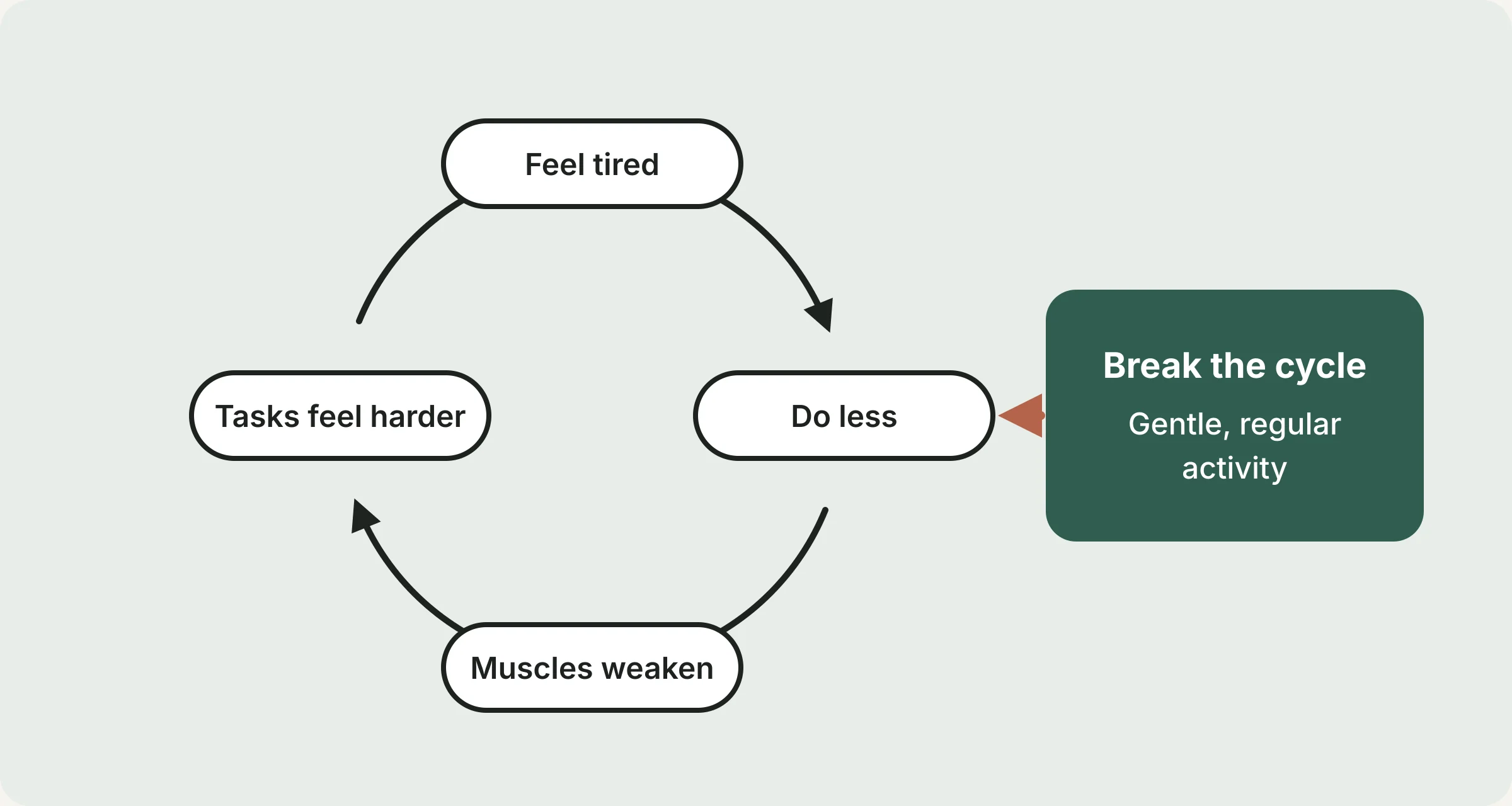
When you feel exhausted, resting seems like the obvious answer. Rest is important, but too much of it can make fatigue worse over time. Muscles lose strength quickly when they aren’t used, so everyday tasks take more effort, which leaves you more tired.
What helps: the evidence
Gentle, regular activity
This is one of the best-researched ways to reduce cancer-related fatigue.
- A Cochrane review of 56 studies with over 4,000 people found that exercise reduced fatigue during and after cancer treatment. Breast cancer was the most studied group, and aerobic exercise such as walking was particularly helpful.3
- A large analysis of 113 trials involving more than 11,500 people compared different treatments. Exercise and psychological approaches both reduced fatigue, while medicines had a much smaller effect.2
- International guidelines suggest about 30 minutes of moderate activity three times a week, plus strength exercises twice a week, to help fatigue.4
If that sounds impossible right now, start with a few minutes. A short walk each day is a good beginning. Read our guide to exercise during chemotherapy.
Psychological support
Talking therapies such as cognitive behavioural therapy (CBT) help people change unhelpful patterns of thinking, sleep and activity, and are about as effective as exercise for fatigue.2 You can ask your GP or cancer team for a referral, or refer yourself to NHS Talking Therapies in England.
Better sleep
Poor sleep and fatigue feed each other. Keep a regular routine, even when you feel like sleeping more. Sleepio, a digital CBT programme for insomnia, is free for people with cancer through Macmillan.5
Eating and drinking well
Eat little and often if your appetite is poor, include some protein at each meal, and drink plenty of fluids. Ask to see a dietitian if you are losing weight.
Pacing: plan, prioritise, pace
Pacing helps you spend your energy where it matters most, rather than doing too much on good days and then crashing.
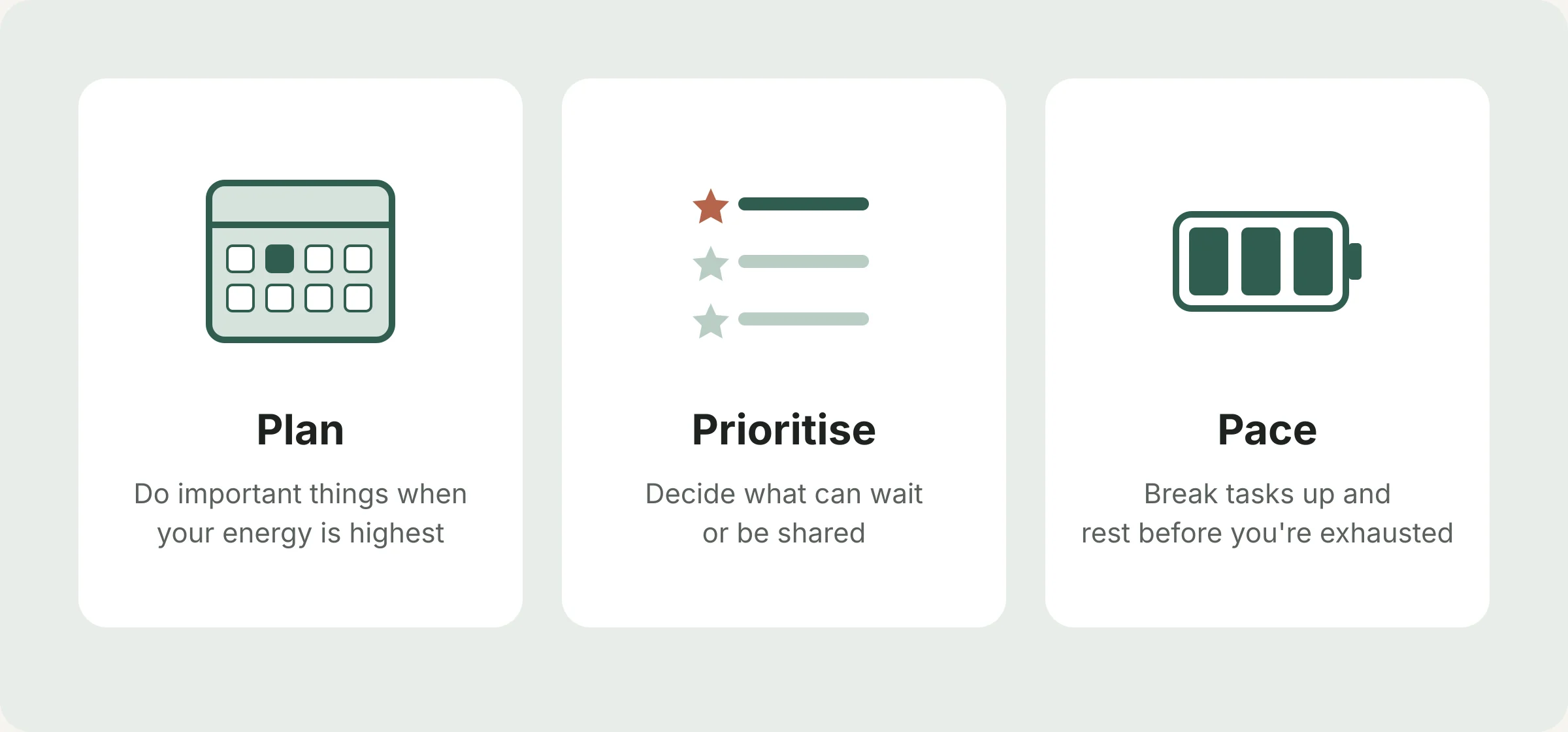
- Plan: Do the most important tasks when you have most energy. For many people that’s the morning.
- Prioritise: Decide what really needs doing today, what can wait and what someone else could do.
- Pace: Break tasks into smaller chunks, sit down when you can, and take short rests before you are exhausted.
A fatigue diary, scoring your energy from 0 to 10 at different times of day, helps you spot patterns and plan ahead. It’s also useful to share with your team.1
Apps and support
- Untire is an app for cancer-related fatigue with education, exercises and tips. In a randomised trial, it reduced fatigue in people with moderate to severe cancer-related fatigue.6
- Sleepio offers free digital CBT for sleep for people with cancer.
- Macmillan’s Support Line (0808 808 00 00) and Breast Cancer Now’s helpline (0808 800 6000) can talk you through what’s available.
Prefer a guided plan?
Multimodal digital programmes combine gentle activity, sleep, nutrition and mindset support into a few daily steps, adjusted to your energy levels. See how digital rehabilitation works, or compare UK programmes.
When to call your team
Tell your cancer team or GP if fatigue is sudden or severe, is getting worse, or comes with breathlessness, dizziness, a racing heart, or a high temperature. These can be signs of anaemia, infection or other problems that need treatment.
Related pages
- Energy pacing: plan, prioritise, pace
- Sleep problems during treatment
- When fatigue doesn’t go away
- Fatigue diary (printable)
Everyone’s treatment is different, so talk to your cancer team about what is right for you.
References
- Macmillan Cancer Support. Tiredness (fatigue) and cancer. www.macmillan.org.uk/cancer-information-and-support/impacts-of-cancer/tiredness
- Mustian KM, Alfano CM, Heckler C, et al. Comparison of pharmaceutical, psychological, and exercise treatments for cancer-related fatigue: a meta-analysis. JAMA Oncology. 2017;3(7):961–968. doi.org/10.1001/jamaoncol.2016.6914
- Cramp F, Byron-Daniel J. Exercise for the management of cancer-related fatigue in adults. Cochrane Database of Systematic Reviews. 2012;(11):CD006145. doi.org/10.1002/14651858.CD006145.pub3
- Campbell KL, Winters-Stone KM, Wiskemann J, et al. Exercise guidelines for cancer survivors: consensus statement from international multidisciplinary roundtable. Medicine & Science in Sports & Exercise. 2019;51(11):2375–2390. doi.org/10.1249/MSS.0000000000002116
- Macmillan Cancer Support and Big Health. Free Sleepio for people with cancer. www.sleepio.com/macmillan
- Spahrkäs SS, Looijmans A, Sanderman R, Hagedoorn M. Beating cancer-related fatigue with the Untire mobile app: results from a waiting-list randomized controlled trial. Psycho-Oncology. 2020;29(11):1823–1834. doi.org/10.1002/pon.5492