
The short version
- Pacing helps you make the most of limited energy during treatment, so you can do the things that matter without crashing afterwards.
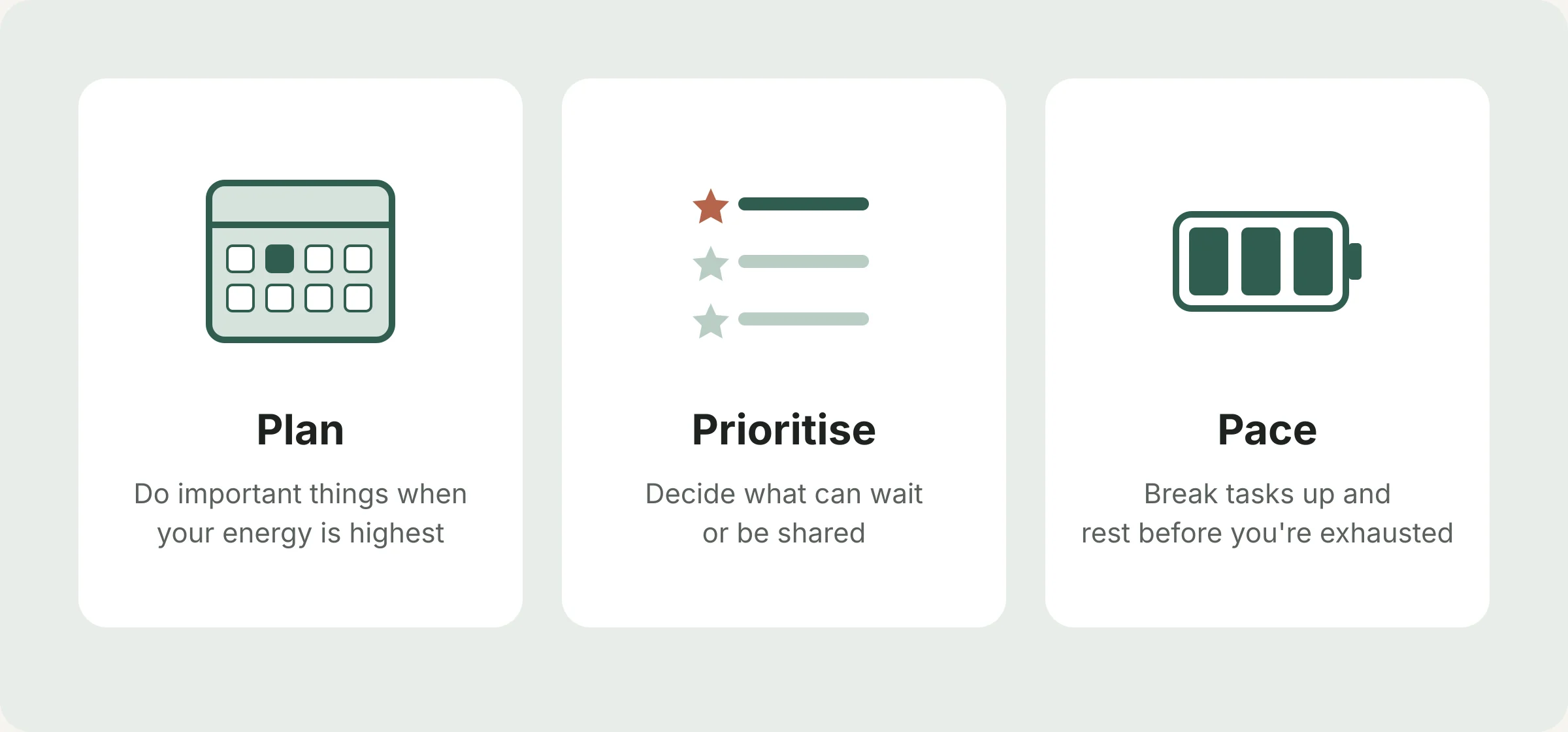
- It has three steps: plan, prioritise and pace.1
- Combine pacing with gentle, regular activity, which is one of the best-evidenced ways to reduce cancer-related fatigue.2, 3
What is pacing?
When you have cancer-related fatigue, it’s tempting to do as much as you can on good days. That often leads to a “boom and bust” pattern: you overdo it, then need days to recover. Pacing means spreading your energy more evenly, so you get more done overall and feel more in control.
1. Plan
- Notice when you have most energy. For many people it’s the morning. A fatigue diary, scoring your energy from 0 to 10 at different times of day, helps you spot your pattern.1
- Plan important tasks for your best times, and lighter ones for when you’re more tired.
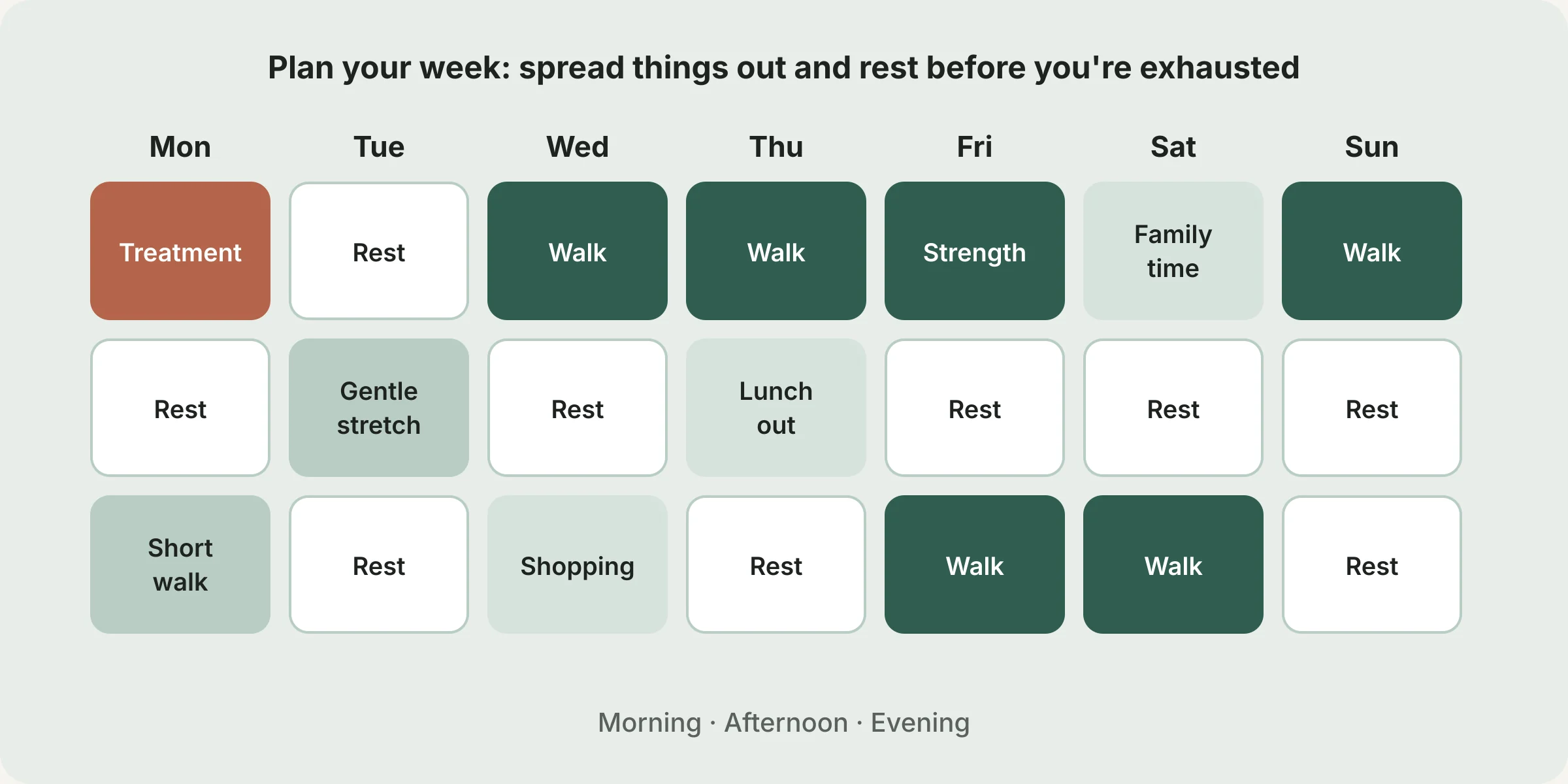
- Spread tasks across the week rather than doing them all at once.1
- Plan around treatment. Keep the days just after chemotherapy free where you can.
2. Prioritise
Ask yourself:
- What really needs doing today?
- What can wait?
- What could someone else do?
- What could I do differently, for example online shopping instead of a trip to the supermarket?
Make sure some of your energy goes on things you enjoy, not just chores.
3. Pace
- Break tasks into smaller chunks with rests in between.
- Rest before you’re exhausted, not after.
- Sit down for tasks where you can, such as preparing vegetables or getting dressed.1
- Balance short rests with light activity through the day.1
- On low-energy days, do less, but try to do something.
Don’t stop moving
Pacing isn’t the same as resting all the time. Too much rest weakens your muscles, which makes everyday tasks harder and fatigue worse. Gentle, regular activity, such as a short daily walk, is one of the best ways to reduce cancer-related fatigue.2, 3 Build activity into your plan like any other important task. See exercise during chemotherapy.
Practical energy savers
- Keep things you use often at waist height.
- Use a bag or trolley to carry things.
- Sit to shower or dry yourself, and use a towelling robe.
- Cook in batches and freeze portions.
- Accept offers of help, and have a list ready of things people could do.
Prefer a guided plan?
Personalised digital programmes plan activity, rest, nutrition and sleep around your energy levels, adjusting week by week, with a coach to support you. See how digital rehabilitation works.
Related pages
Everyone’s treatment is different, so talk to your cancer team about what is right for you.
References
- Macmillan Cancer Support. Tiredness (fatigue) and cancer. www.macmillan.org.uk/cancer-information-and-support/impacts-of-cancer/tiredness
- Cramp F, Byron-Daniel J. Exercise for the management of cancer-related fatigue in adults. Cochrane Database of Systematic Reviews. 2012;(11):CD006145. doi.org/10.1002/14651858.CD006145.pub3
- Mustian KM, Alfano CM, Heckler C, et al. Comparison of pharmaceutical, psychological, and exercise treatments for cancer-related fatigue: a meta-analysis. JAMA Oncology. 2017;3(7):961–968. doi.org/10.1001/jamaoncol.2016.6914