
The short version
Before you start
Check with your team first if you have bone pain, heart or lung problems, dizziness, or you’ve recently had surgery. If you’ve had breast or lymph node surgery, follow your arm and shoulder exercise stages first, and ask before doing upper-body strength work.
How to do these exercises
- Warm up with 5 minutes of marching on the spot or gentle walking.
- Do each exercise slowly and with control. Breathe out on the effort. Don’t hold your breath.
- Start with 1 or 2 sets of 5 to 8 repetitions. Build up to 2 or 3 sets of 10 to 12 over a few weeks.
- Rest for about a minute between sets.
- The last few repetitions should feel challenging but possible. If you can easily do more than 12, make it a little harder.
- Mild muscle soreness for a day or two is normal. Sharp pain is not. Stop if anything hurts.3
The exercises
1. Sit-to-stand
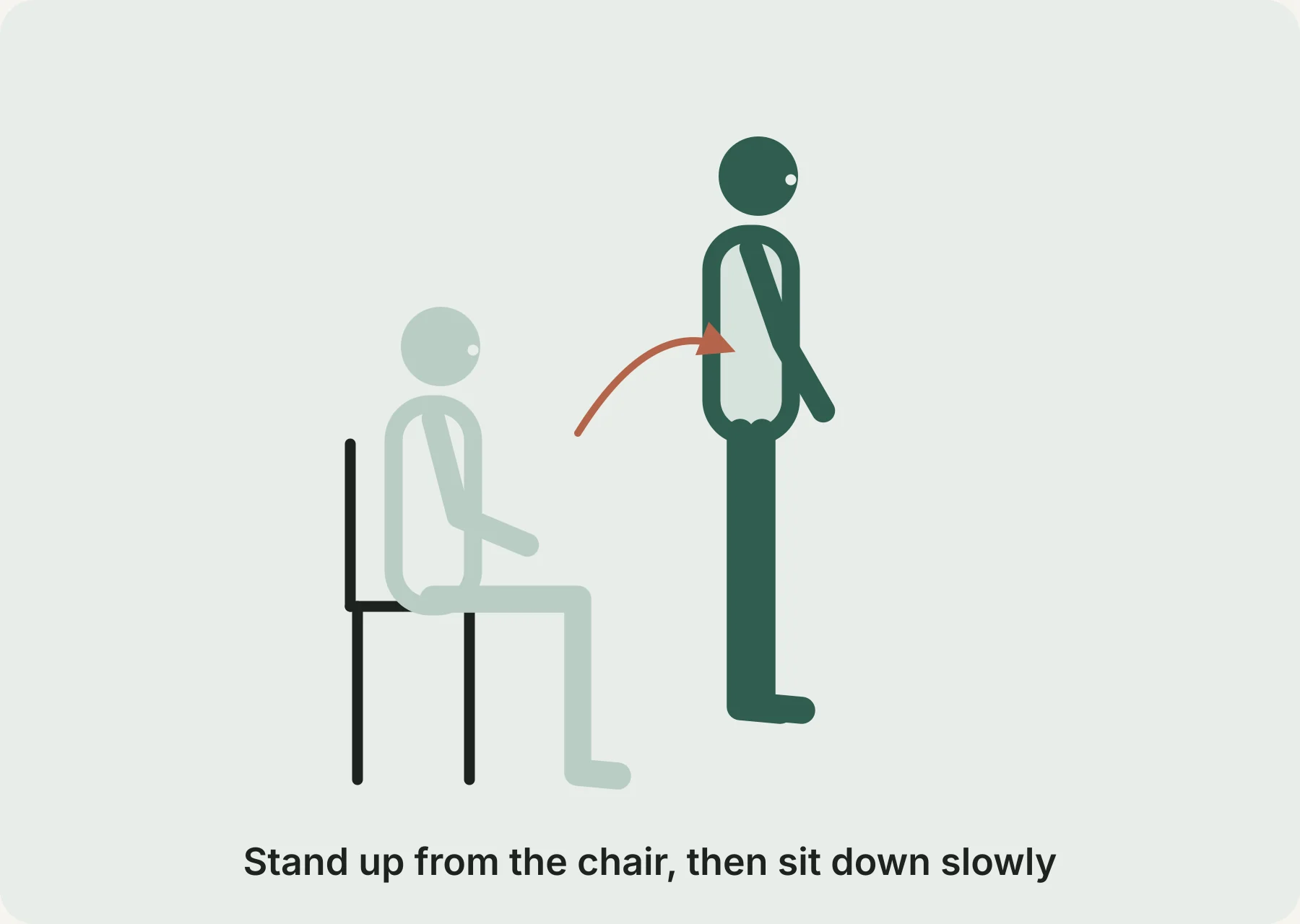
Strengthens your legs and makes getting up from chairs, beds and the toilet easier after surgery.
- Sit near the front of a sturdy chair, feet flat and hip-width apart.
- Lean forward slightly and stand up, using your hands on your knees or the chair if you need to.
- Sit back down slowly and with control.
Make it easier: use a higher chair or push off with your hands. Make it harder: sit down more slowly, or hold a bottle of water to your chest.
2. Wall press-up
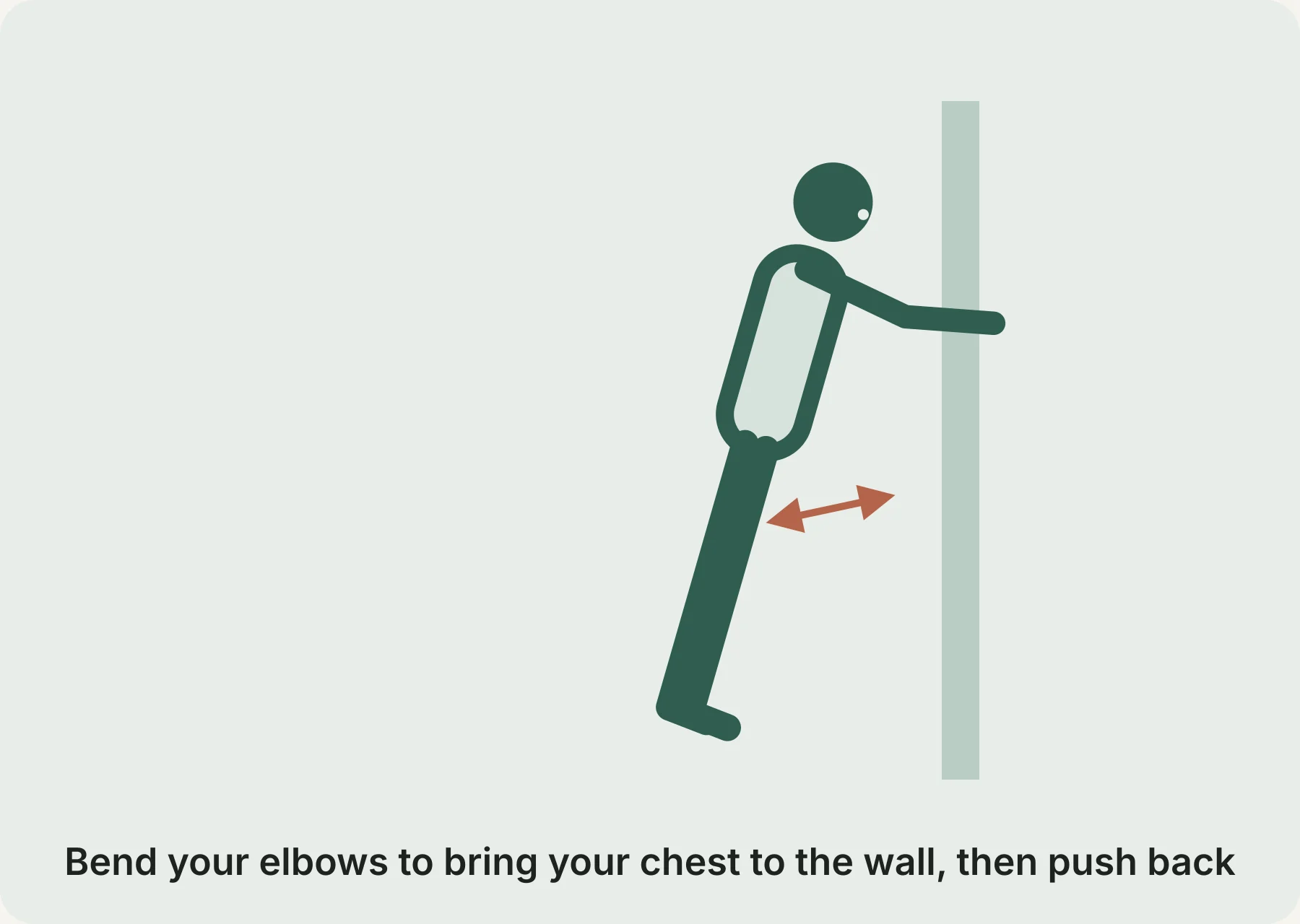
Strengthens your chest, shoulders and arms.
- Stand an arm’s length from a wall and place your hands on it at shoulder height.
- Bend your elbows to bring your chest towards the wall, keeping your body straight.
- Push back to the start.
Make it easier: stand closer to the wall. Make it harder: step your feet further back.
3. Step-ups
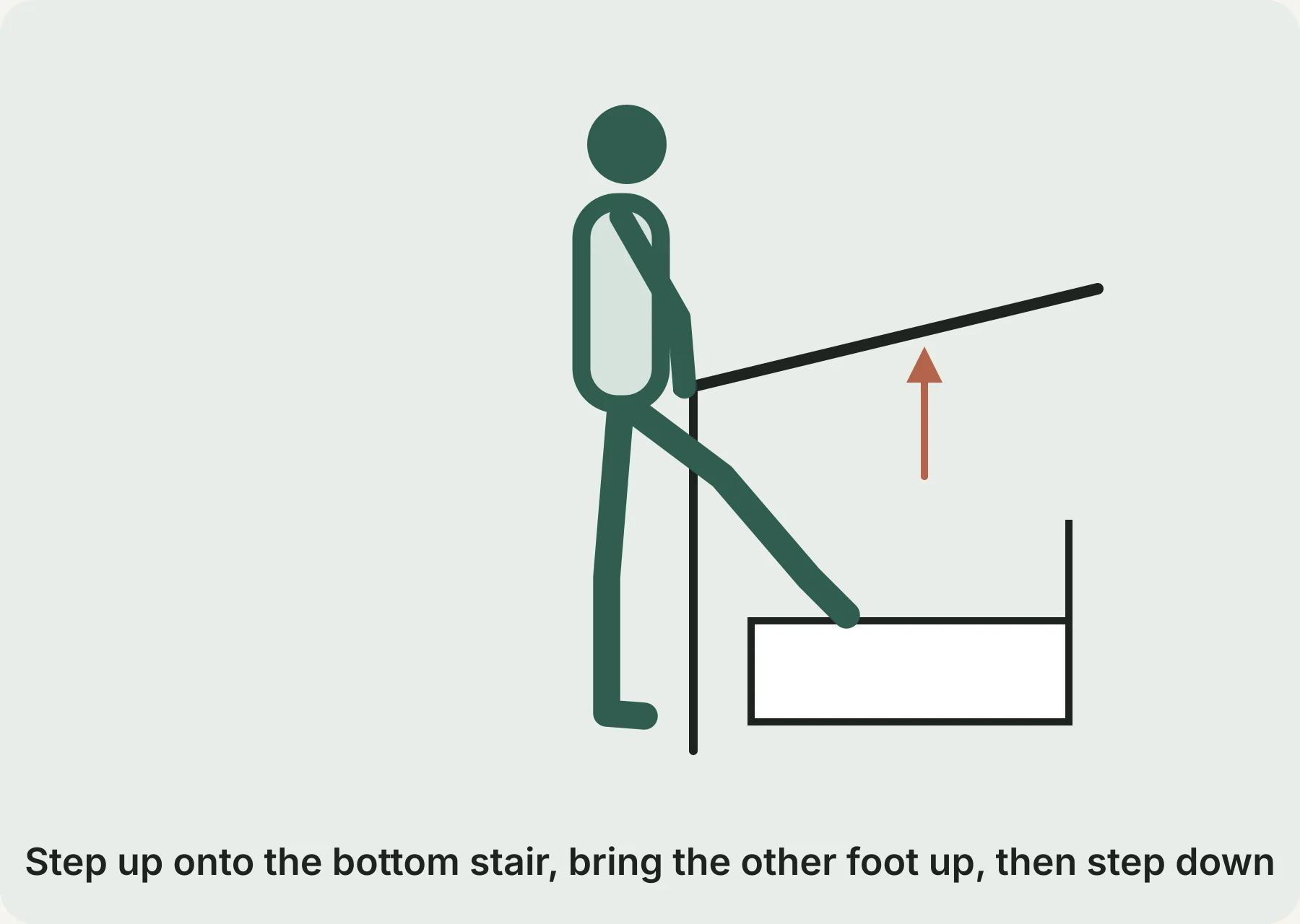
Builds leg strength and stamina, and helps with balance.
- Stand facing the bottom stair, holding the banister.
- Step up with one foot, then bring the other up to join it.
- Step down one foot at a time. Repeat, leading with the other leg.
4. Calf raises
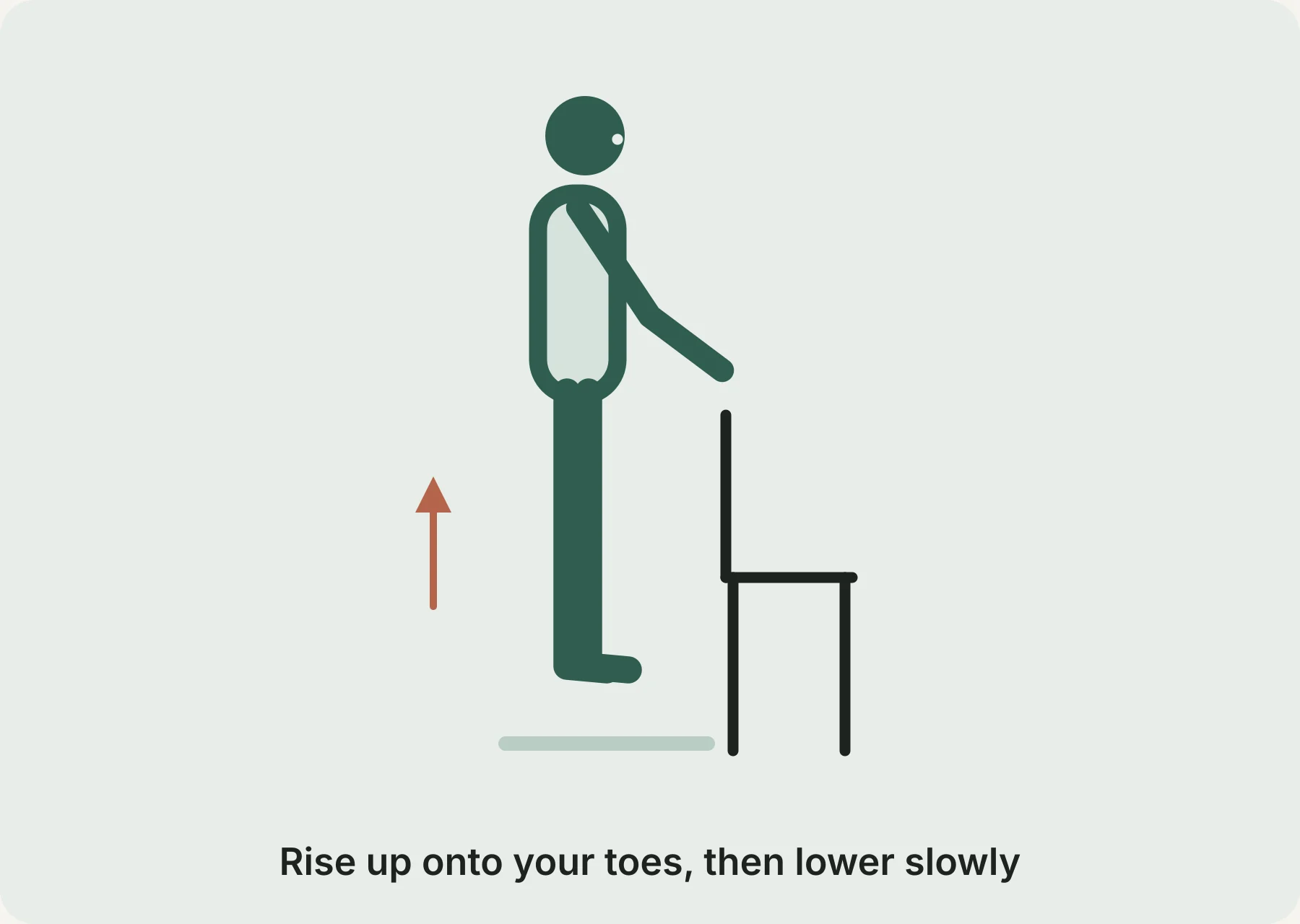
Strengthens your calves and ankles, and helps balance and circulation.
- Stand holding a worktop or the back of a chair.
- Rise up onto your toes, hold for a second, then lower slowly.
5. Bridge
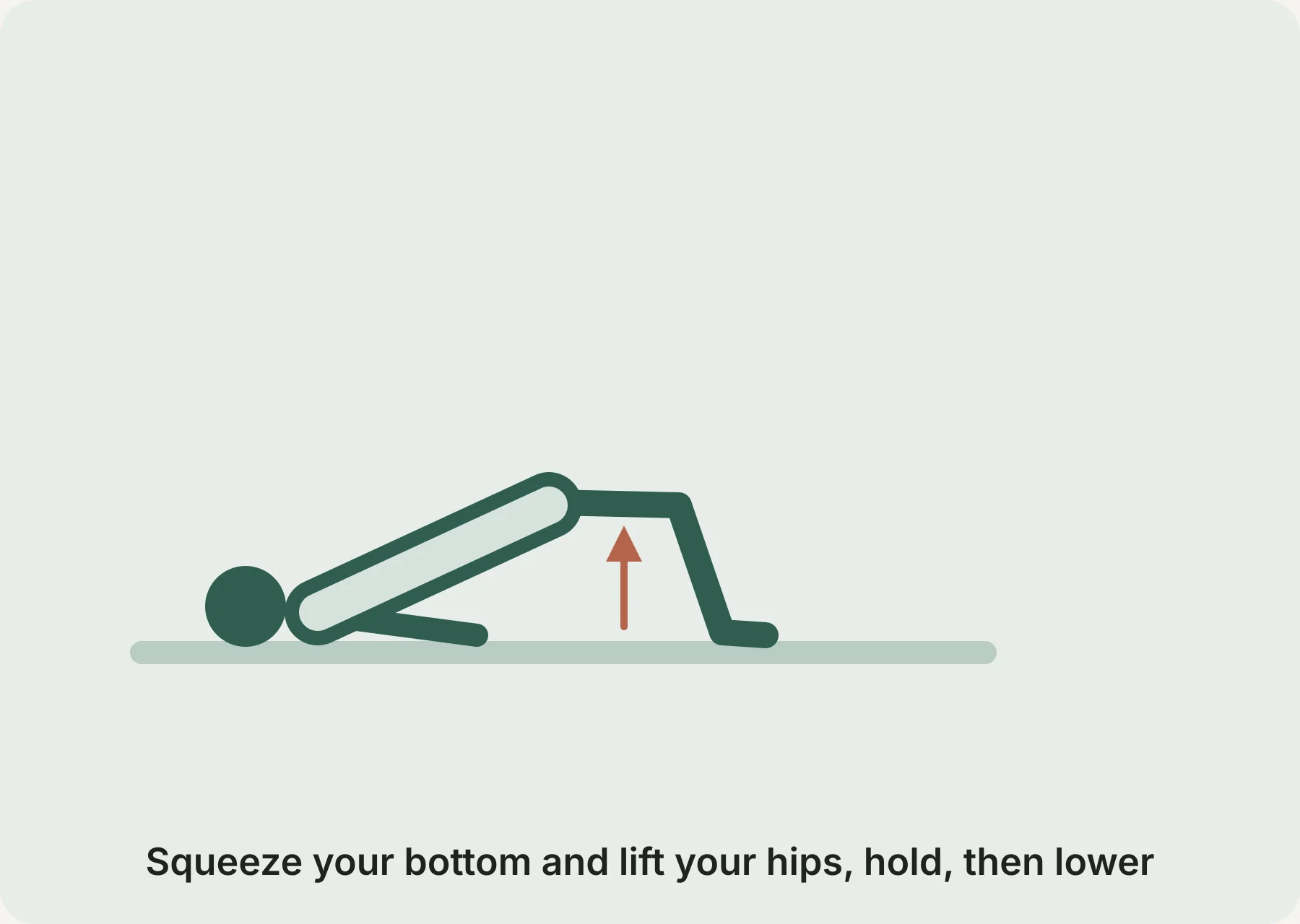
Strengthens your bottom and lower back. You can do it on the floor or on your bed.
- Lie on your back with your knees bent and feet flat.
- Squeeze your bottom and lift your hips until your body makes a straight line from shoulders to knees.
- Hold for 2 or 3 seconds, then lower slowly.
6. Arm curls
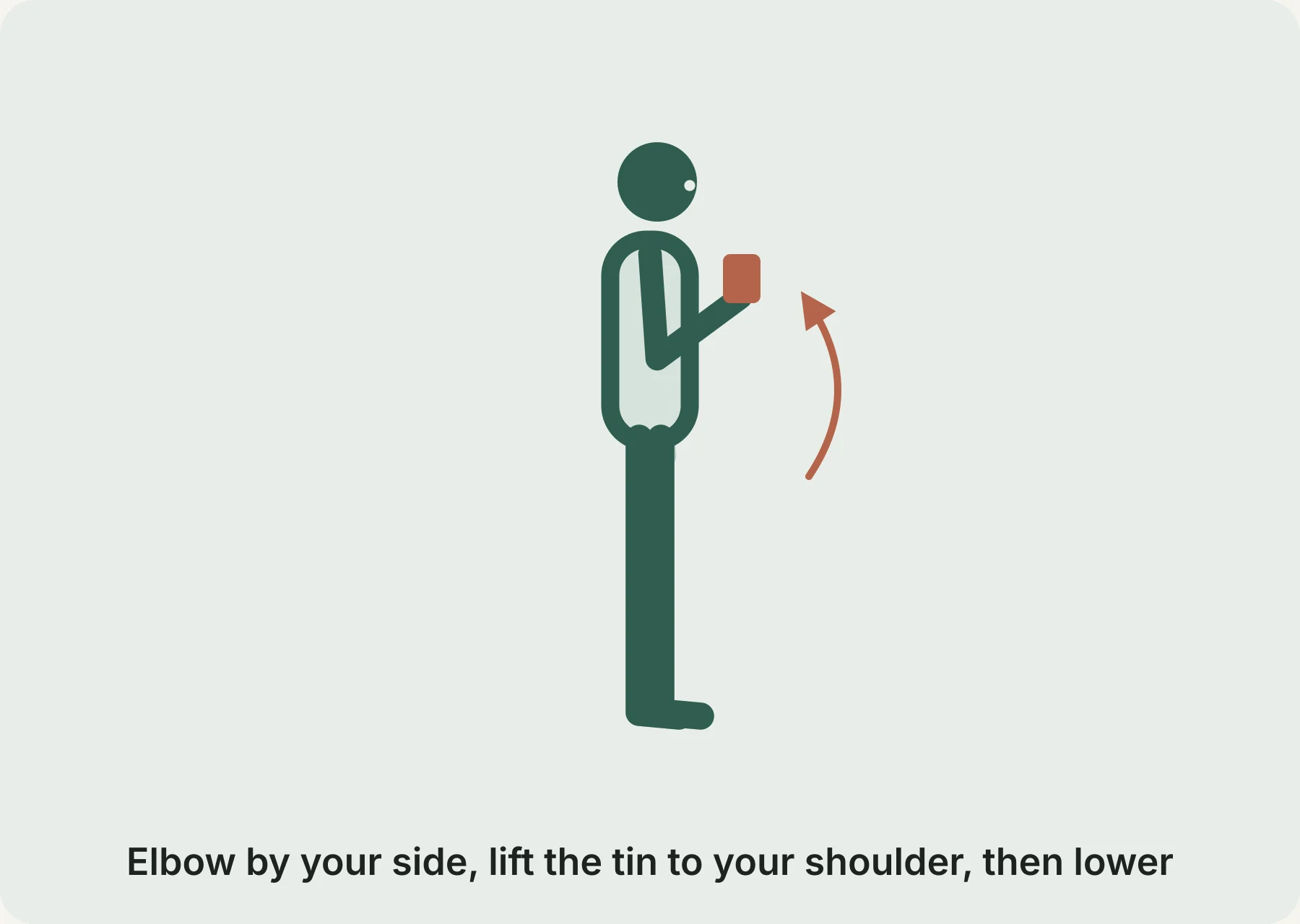
Strengthens your arms for lifting and carrying. If you’re having breast surgery, check with your team when to start this after your operation.
- Sit or stand tall, holding a tin of food or a small water bottle in each hand.
- Keeping your elbows by your sides, bend them to lift the weights towards your shoulders.
- Lower slowly.
A sample session
| Exercise | Week 1–2 | Week 3–4 |
|---|---|---|
| Warm-up | 5 minutes marching or walking | 5 minutes marching or walking |
| Sit-to-stand | 2 × 5 | 3 × 10 |
| Wall press-up | 2 × 6 | 3 × 10 |
| Step-ups | 2 × 5 each leg | 2 × 10 each leg |
| Calf raises | 2 × 8 | 3 × 12 |
| Bridge | 2 × 5 | 3 × 10 |
| Arm curls | 2 × 8 | 3 × 10 |
After surgery
After breast surgery, follow your team’s advice. Start with your arm and shoulder exercises, and avoid heavy lifting or strenuous activity for the first few weeks.4 Leg exercises such as sit-to-stands and calf raises can usually restart sooner. Once you have good shoulder movement, building upper-body strength gradually is safe for most people, including those at risk of lymphoedema.5 See strength training after breast cancer.
Prefer a guided plan?
A personalised programme can set the right level of strength exercise for you and increase it as you improve, with a coach checking your progress. See how digital prehab works.
Related pages
Everyone’s treatment is different, so talk to your cancer team about what is right for you.
References
- UK Chief Medical Officers. Physical activity guidelines for adults and older adults. 2019. www.gov.uk/government/publications/physical-activity-guidelines-adults-and-older-adults/physical-activity-for-adults-and-older-adults-19-and-over-text-of-the-infographic
- Campbell KL, Winters-Stone KM, Wiskemann J, et al. Exercise guidelines for cancer survivors: consensus statement from international multidisciplinary roundtable. Medicine & Science in Sports & Exercise. 2019;51(11):2375–2390. doi.org/10.1249/MSS.0000000000002116
- Macmillan Cancer Support. Physical activity and cancer (MAC12515, 6th edition). November 2023. www.macmillan.org.uk/dfsmedia/1a6f23537f7f4519bb0cf14c45b2a629/18459-10061/mac12515_physical-activity_E06_intpdf_02
- NHS. Mastectomy. www.nhs.uk/tests-and-treatments/mastectomy/
- Schmitz KH, Ahmed RL, Troxel AB, et al. Weight lifting for women at risk for breast cancer-related lymphedema: a randomized trial. JAMA. 2010;304(24):2699–2705. doi.org/10.1001/jama.2010.1837