
The short version
- Simple breathing and relaxation techniques can help you feel calmer before and during treatment, and may help you sleep.
- The NHS suggests slow belly breathing, breathing in and out to a count of 5, for at least 5 minutes a day.1
- They work best with regular practice, not just when you feel anxious.
Slow belly breathing
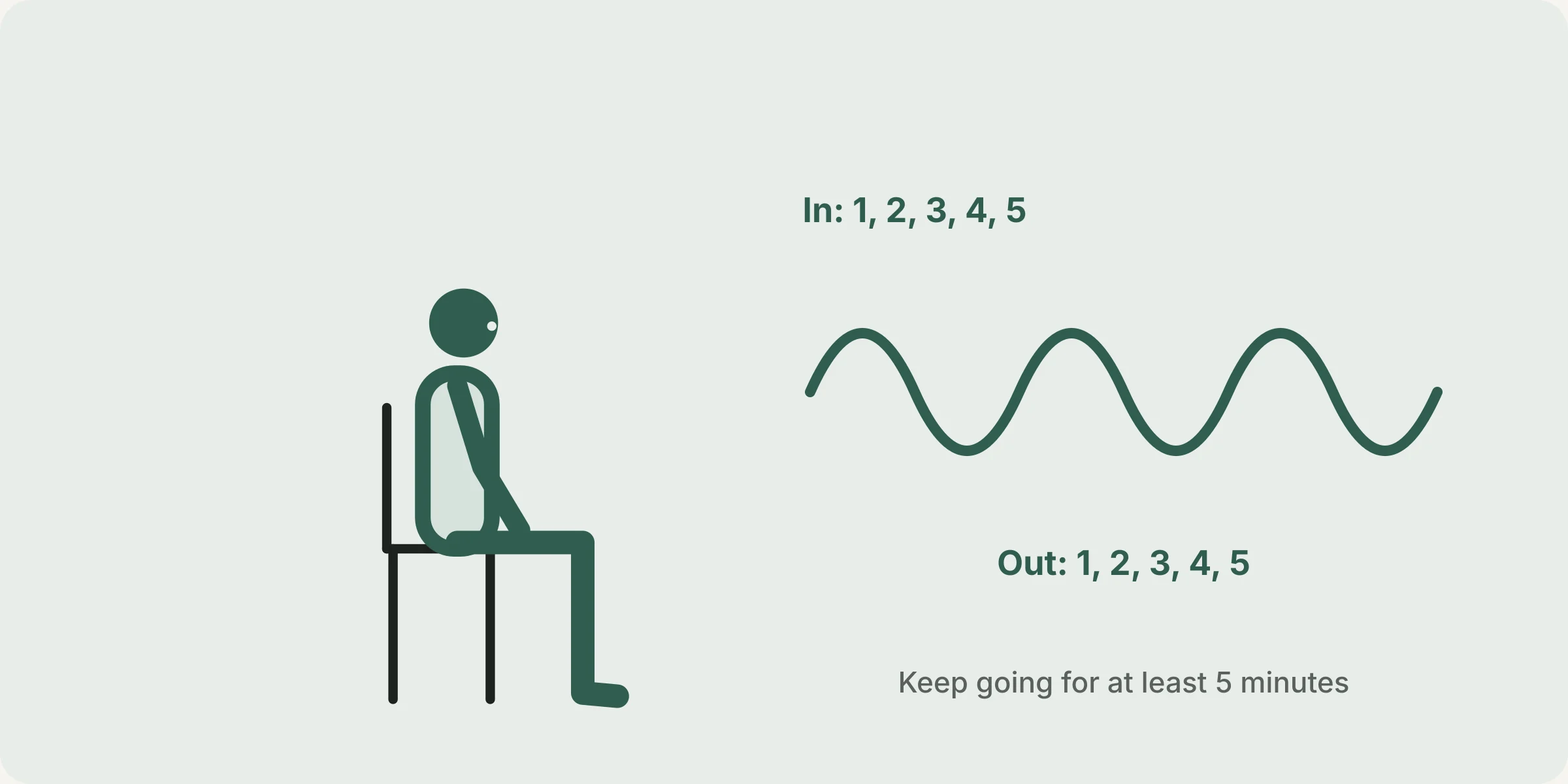
- Get comfortable, sitting, standing or lying down, with your feet flat on the floor if you’re sitting or standing.
- Let your breath flow deep down into your belly, without forcing it.
- Breathe in gently through your nose, counting from 1 to 5.
- Breathe out gently through your mouth, counting from 1 to 5.
- Keep going for at least 5 minutes.1
Try it once or twice a day, and before things that make you anxious, such as scans or appointments.
Progressive muscle relaxation
This helps you notice the difference between tension and relaxation.
- Lie or sit comfortably and close your eyes if you like.
- Starting with your feet, tense the muscles for about 5 seconds, then let go for 10 to 15 seconds.
- Move slowly up your body: legs, bottom, tummy, hands, arms, shoulders and face.
- Finish with a few slow breaths.
After breast surgery, go gently with your chest, arms and shoulders, and skip any area that hurts.
Mindfulness
Mindfulness means paying attention to the present moment, such as your breathing, sounds or how your body feels, without judging it. Relaxation, mindfulness-based approaches and yoga may help with fatigue and stress during cancer treatment.2 Many free guided recordings and apps are available.
A calming picture
Some people find it helps to imagine a calm, safe place in detail: what you can see, hear and feel. You can use this during scans, blood tests or treatment.
When to use these techniques
- Every day, to build the habit
- Before appointments, scans and treatment
- At bedtime, if you can’t switch off. See sleeping better before treatment
- When worry takes over. See managing anxiety while you wait for treatment
Free support
- Daylight, a digital programme for worry and anxiety, is free through Macmillan for anyone living with or beyond cancer in the UK.3
- Maggie’s centres run stress management courses, in person and online.4
- Penny Brohn UK runs free online sessions, including mindfulness and relaxation.5
If anxiety is affecting your daily life, talk to your GP or team, or refer yourself to NHS Talking Therapies in England.6
Related pages
Everyone’s treatment is different, so talk to your cancer team about what is right for you.
References
- NHS. Breathing exercises for stress. www.nhs.uk/mental-health/self-help/guides-tools-and-activities/breathing-exercises-for-stress/
- Macmillan Cancer Support. Tiredness (fatigue) and cancer. www.macmillan.org.uk/cancer-information-and-support/impacts-of-cancer/tiredness
- Macmillan Cancer Support. Big Health apps: Sleepio and Daylight, free for anyone living with or beyond cancer in the UK. orders.macmillan.org.uk/products/bighealth-big-health-apps
- Maggie’s. Fear of cancer returning. www.maggies.org/cancer-support/managing-emotions/fear-cancer-returning/
- Penny Brohn UK. The services we offer. pennybrohn.org.uk/our-approach/services
- NHS. NHS talking therapies for anxiety and depression. www.nhs.uk/mental-health/talking-therapies-medicine-treatments/talking-therapies-and-counselling/nhs-talking-therapies/