
At a glance
- What it is: a UK digital prehabilitation and rehabilitation service. A clinically led team builds a personalised plan covering exercise, nutrition, mental wellbeing and sleep, which you follow at home through an app with coach support.
- How to get it: through some NHS hospitals, by self-referral before treatment, or through QuestPrehab Recover (self-pay) after treatment.
- Track record: used by NHS trusts, published research including a study in the breast cancer pathway, and registered with the MHRA, according to the company.1, 2
Why we mention QuestPrehab
Breast Cancer Fitness has no financial relationship with QuestPrehab or any other service on this site. We describe QuestPrehab in detail because it is used by NHS hospitals, is also open to individuals, and covers exercise, nutrition, mind and sleep together. We list free and other paid options too, so you can choose what suits you. Read how this site is funded.
What QuestPrehab does
QuestPrehab was founded by Professor Rampal. It provides clinically led, personalised prehabilitation (before treatment) and rehabilitation (after treatment) programmes, delivered remotely so people can take part from home.1, 3
Each programme follows the same basic steps:
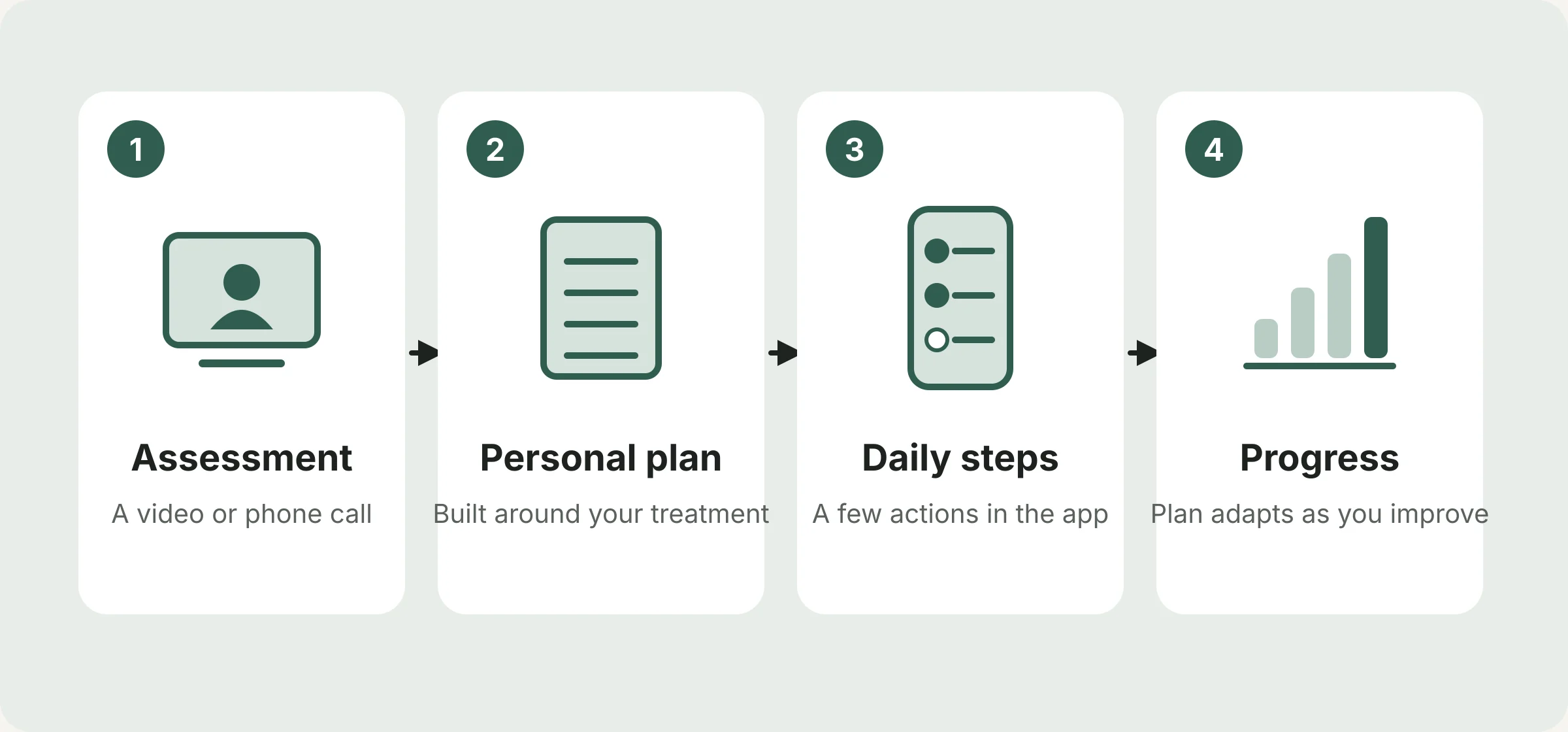
- Assessment. The team talks to you about your diagnosis, treatment, health, fitness and goals.
- Personal plan. Coaches build a plan around your treatment, current fitness and anything that needs extra care, such as lymphoedema risk or recent surgery.
- Daily steps. The app shows a few clear actions each day across movement, nutrition, mind and sleep. Most take 10 to 30 minutes.
- Progress and support. Your plan adapts as you get stronger, with support from the team throughout.1
Use in the NHS
QuestPrehab works with a growing number of NHS organisations. Examples include:
- Kent, a home-based cancer prehabilitation service designed by the QuestPrehab team. NHS England featured it as a case study in its perioperative digital playbook, reporting 76% acceptance and 72% adherence among patients referred.3, 4
- West Hertfordshire Teaching Hospitals NHS Trust, which added QuestPrehab’s digital prehabilitation to its colorectal cancer pathway in 2025.5 According to QuestPrehab, this programme won Surgical Care Safety Initiative of the Year at the 2026 HSJ Patient Safety Awards.1
- Other trusts using it for different groups, including people waiting for liver transplants and joint replacement surgery.
If you’re being treated for breast cancer, ask your breast care nurse whether your hospital offers QuestPrehab or another prehab programme.
The research behind it
QuestPrehab’s team has published studies on remote prehabilitation, including:
- Prehab in the breast cancer pathway: a UK study found that prehabilitation could be delivered alongside breast cancer treatment.6
- Telehealth prehab for people with cancer: of 182 people referred to a home-based programme, 76% took part. Participants reported significantly better self-rated health and less fatigue afterwards.7
- Cost: a digital multimodal prehab service cost around a tenth of the average cost of a hospital stay for cancer surgery in the same group.8
These were feasibility and service studies without a control group. They show the approach is practical, acceptable and affordable, rather than measuring exactly how much it changes outcomes. Wider evidence shows that exercise during and after cancer treatment improves fatigue, mood, physical function and quality of life.9
Regulation and data protection
According to QuestPrehab:1
- it is registered with the UK Medicines and Healthcare products Regulatory Agency (MHRA)
- it is registered with the ICO, complies with UK GDPR and meets the NHS Data Security and Protection Toolkit standard
- its programmes work alongside your NHS care and do not replace your medical team
How to start
Before treatment: prehab
- Through the NHS: ask your breast care nurse whether your hospital offers it.
- On your own: if it isn’t offered locally, you can refer yourself to QuestPrehab. The team will review your details and contact you. The form asks whether you are self-paying or insured; pricing is confirmed with you directly.
After treatment: QuestPrehab Recover
QuestPrehab Recover is a four-week personalised rehabilitation programme for adults in the UK who have had cancer treatment, including people on ongoing hormone therapy. 1 Read our guide to QuestPrehab Recover.
Is it right for me?
QuestPrehab may suit you if you:
- want a personal plan rather than general information
- prefer to work on your fitness at home and at times that suit you
- want movement, nutrition, mind and sleep covered together
- have a smartphone or tablet
It may suit you less if you’d rather exercise in a group, face to face, or you don’t use apps. In that case, see the free classes and courses in our services directory.
Ready to find out more?
Refer yourself for prehab before treatment · Join QuestPrehab Recover after treatment · Compare all UK programmes
Related pages
- Digital prehabilitation: getting ready from home
- Digital rehabilitation: recovery support at home
- How we review apps and services
Last checked: November 2026. Services and prices can change, so check with the provider.
References
- QuestPrehab. QuestPrehab Recover: personalised cancer rehabilitation. Accessed November 2026. questprehab.com/recover/
- QuestPrehab. Research and publications. Accessed November 2026. questprehab.com/research/
- QuestPrehab. QuestPrehab for the NHS. Accessed November 2026. questprehab.com/nhs/
- NHS England Transformation Directorate. Kent and Medway prehabilitation: telehealth-delivered home-based patient optimisation (Perioperative digital playbook). transform.england.nhs.uk/key-tools-and-info/digital-playbooks/perioperative-digital-playbook/Kent-and-Medway-prehabilitation-telehealth-delivered-home-based-patient-optimisation
- Digital Health. NHS trust trials tech-enabled pathway for colorectal cancer patients. November 2025. www.digitalhealth.net/2025/11/nhs-trust-trials-tech-enabled-pathway-for-colorectal-cancer-patients/
- Wu F, Rampal T, et al. The feasibility of prehabilitation as part of the breast cancer treatment pathway. PM&R. 2021. doi.org/10.1002/pmrj.12543
- Wu F, Rotimi O, Laza-Cagigas R, Rampal T. The feasibility and effects of a telehealth-delivered home-based prehabilitation program for cancer patients during the pandemic. Current Oncology. 2021;28(3):2248–2259. doi.org/10.3390/curroncol28030207
- Gkaintatzi E, Nikolaou CK, Rampal T, Laza-Cagigas R, Zand N, McCrone P. Cost analysis of a digital multimodal cancer prehabilitation. Current Oncology. 2022;29(12):9305–9313. doi.org/10.3390/curroncol29120729
- Campbell KL, Winters-Stone KM, Wiskemann J, et al. Exercise guidelines for cancer survivors: consensus statement from international multidisciplinary roundtable. Medicine & Science in Sports & Exercise. 2019;51(11):2375–2390. doi.org/10.1249/MSS.0000000000002116