
The short version
- Many employers offer workplace benefits that include cancer support, but people often don’t know they have them.
- Benefits to check include an employee assistance programme (EAP), group income protection, private medical insurance, critical illness cover and cancer support services.1
- Some include access to virtual cancer clinics, specialist nurses, rehabilitation or return-to-work support.2
Why it’s worth checking
Cancer is one of the most common reasons for claims on employer-funded protection benefits, and these policies often include extra support services, not just payments.1 For example, some group income protection policies give access to virtual cancer clinics with nurses, physiotherapists, dietitians and psychologists, and vocational rehabilitation to help people return to work.2
What to look for
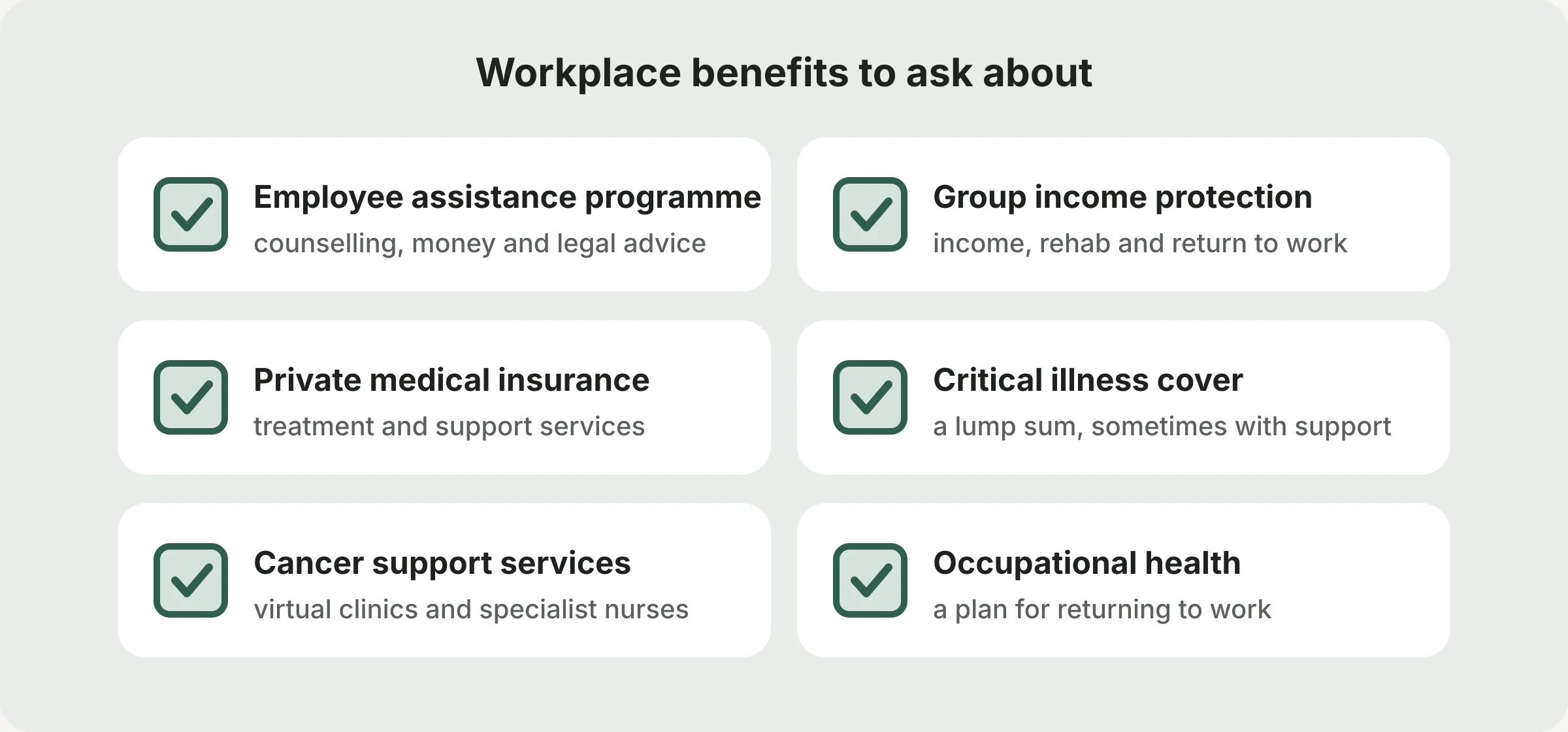
| Benefit | What it might include |
|---|---|
| Employee assistance programme (EAP) | Confidential counselling, and advice on money and legal issues. Often available to family members too.1 |
| Group income protection | Income if you’re off work long term, plus rehabilitation and return-to-work support.1, 2 |
| Private medical insurance | Private treatment, and sometimes cancer support services, prehab or rehab programmes |
| Critical illness cover | A lump sum if you’re diagnosed with a covered illness, sometimes with added support services |
| Cancer support services | Virtual clinics, specialist nurses, or digital programmes such as Perci Health2 |
Questions to ask HR or your benefits provider
- Do we have an employee assistance programme, and how do I contact it?
- Am I covered by group income protection, private medical insurance or critical illness cover?
- Do any of these include cancer support services, such as specialist nurses, a virtual clinic, physiotherapy, psychological support, prehab or rehab?
- Do I need to make a claim or get a referral to use them?
- Is support available to my partner or family?
- Is there occupational health support, and can it help with a return-to-work plan?
You don’t have to share your diagnosis with your manager to ask about benefits. HR and benefits teams should treat your enquiry in confidence.
If you have your own insurance
If you have private health insurance or critical illness cover that you pay for yourself, check your policy documents or call your insurer. Some insurers include cancer support services, such as digital prehabilitation or nurse support.3
If you don’t have workplace support
You can still get a lot of help for free from the NHS and charities, and there are self-pay options. See free or self-pay: choosing the right support.
Related pages
- Returning to work after breast cancer
- Your rights at work after a cancer diagnosis
- Financial help, benefits and grants
References
- HRreview. Five ways group risk benefits can support employees with cancer (Group Risk Development, GRiD). May 2022. hrreview.co.uk/?p=143331
- Legal & General. Legal & General partners with Perci Health, the UK’s first virtual cancer survivorship clinic. January 2024. group.legalandgeneral.com/newsroom/press-releases/2024/1/legal-general-partners-with-perci-health-the-uk-s-first-virtual-cancer-survivorship-clinic/
- Alvie Health. Cancer: Alvie 360 coaching programme. www.alviehealth.com/cancer