
The short version
- Many people notice memory, concentration or thinking problems during treatment, often called “chemo brain” or “brain fog”. It’s usually mild and temporary.1
- It can be linked to treatment, but also to tiredness, poor sleep, anaemia, menopause and anxiety.1
- Lists, reminders, routines and staying active can help you work around it.1
What it can feel like
- forgetting words, names or appointments
- finding it hard to focus, or to do more than one thing at a time
- feeling mentally slower or “foggy”
Why it happens
The cause isn’t fully understood, and it’s probably a mix of things: chemotherapy and other treatments, side effects such as fatigue, anaemia, poor sleep and menopause, and emotions such as anxiety and depression.1
Things that help during treatment
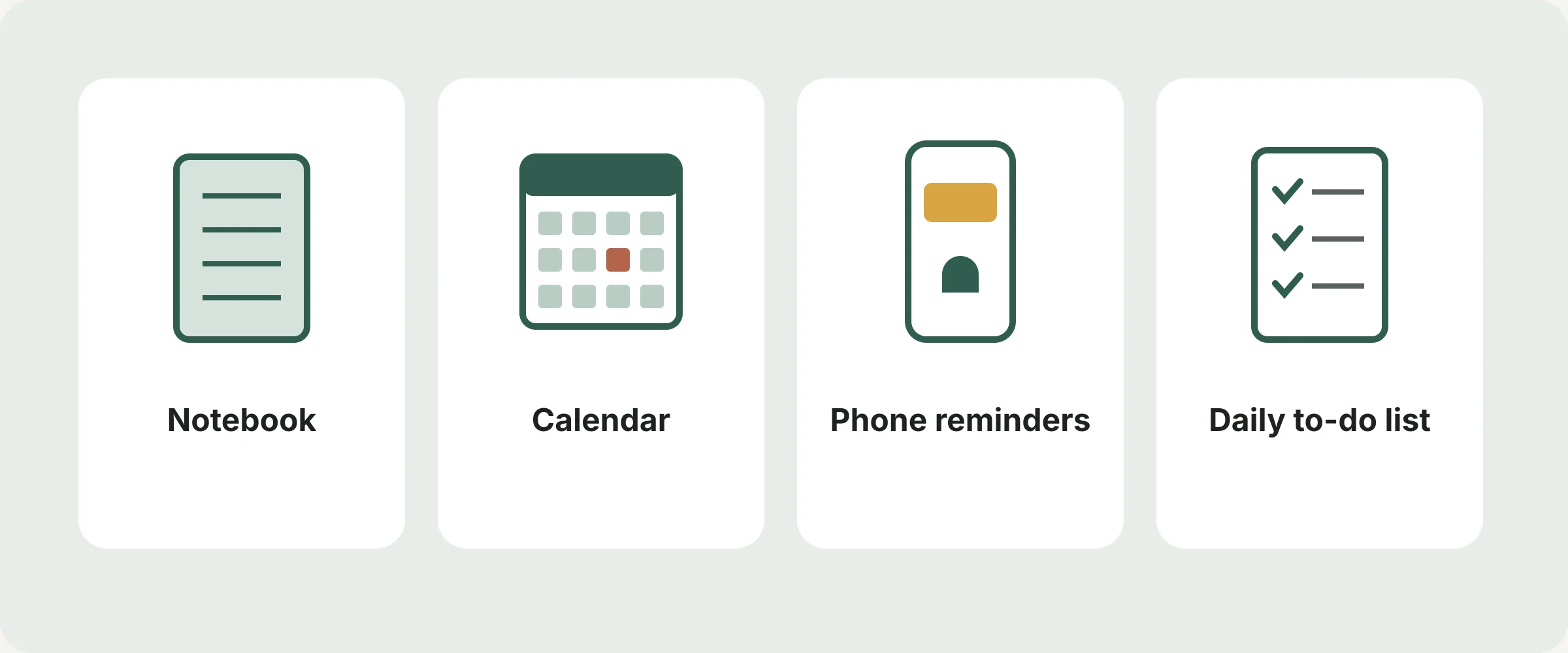
- Write things down: use a notebook, calendar or phone reminders.1
- Keep a routine and do one thing at a time.1
- Plan important tasks for when you have most energy.1
- Take someone to appointments to help remember what was said.
- Stay active: exercise can help you feel more alert and less tired.1
- Rest and sleep: see sleep problems.
- Be kind to yourself, and tell people what helps.
When to tell your team
Tell your doctor or nurse if problems are getting worse, worrying you, or affecting daily life. They can check for things that might be adding to it, such as anaemia, low mood, poor sleep or medicines.1
After treatment
For most people, things improve over time after treatment, but for some it lasts longer.1 See memory and concentration after treatment.
Related pages
Everyone’s treatment is different, so talk to your cancer team about what is right for you.
References
- Macmillan Cancer Support. Cognitive changes (chemo brain). www.macmillan.org.uk/cancer-information-and-support/impacts-of-cancer/chemo-brain