
The short version
- Breast cancer treatment can cause menopause symptoms, such as hot flushes, night sweats, vaginal dryness, poor sleep and mood changes. These are often more intense than a natural menopause.1
- HRT is not usually recommended after breast cancer,2 but there are other options.
- Cognitive behavioural therapy (CBT) has good evidence for reducing how much hot flushes and night sweats bother you.3
Why treatment causes menopause symptoms
Chemotherapy, ovarian suppression and hormone therapies such as tamoxifen and aromatase inhibitors all lower or block oestrogen. This can bring on menopause symptoms, or make existing ones worse. Because the change can be sudden, symptoms are often stronger than in a natural menopause.1
- hot flushes and night sweats, the most common
- vaginal dryness and discomfort, and lower sex drive
- joint pain and stiffness
- poor sleep
- mood changes, anxiety and difficulty concentrating
Hot flushes and night sweats
Things you can try
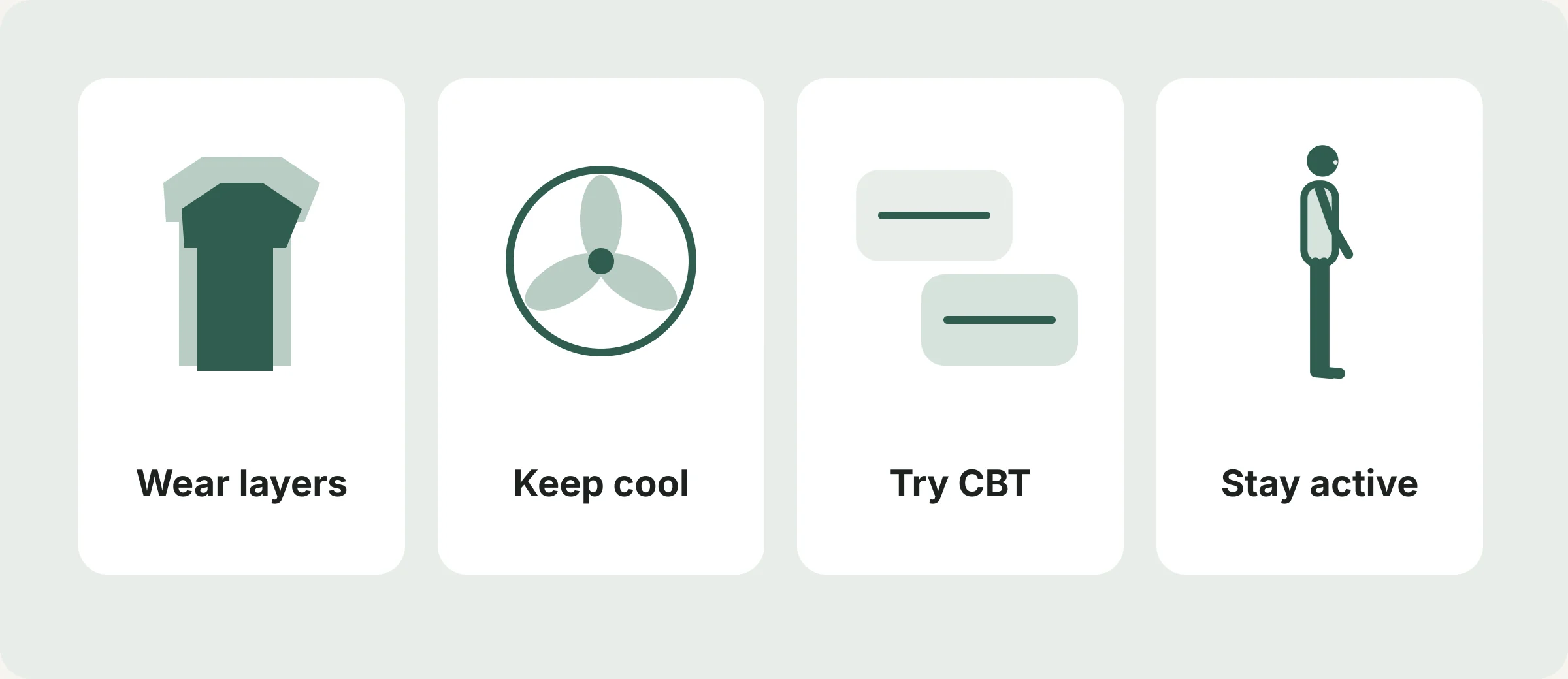
- Wear layers you can remove easily, and choose natural fabrics.
- Keep cool: a fan by the bed, cool drinks, lighter bedding.
- Notice your triggers. Hot drinks, alcohol, spicy food and stress make flushes worse for some people.
- Stay active. Regular activity helps with sleep, mood and fatigue.2
CBT
The UK MENOS 1 trial found that group CBT reduced how problematic hot flushes and night sweats were for women after breast cancer treatment, with the benefits lasting at least six months.3 CBT may be available through your hospital or NHS Talking Therapies. Ask your team.
Medicines
If symptoms are severe, your doctor may suggest non-hormonal medicines that can reduce hot flushes. Ask your team what might suit you. Some herbal remedies can interact with breast cancer treatment, so check before taking anything.
Vaginal dryness
- Vaginal moisturisers (used regularly) and lubricants (used during sex) can help. You can buy them at a pharmacy, or your GP can prescribe them. You may need to try a few to find one that suits you.2
- If symptoms continue, ask your GP or team about other options.
- Get symptoms checked, as an infection can cause similar problems.2
Sleep and mood
Night sweats, joint pain and worry can all disrupt sleep. Sleepio, a digital CBT programme for insomnia, is free for people with cancer through Macmillan.4 See sleep problems during treatment.
If you feel low or anxious, your GP or team can refer you for talking therapies, and relaxation techniques or yoga may help too.2
About HRT
HRT can ease menopause symptoms, but it is not usually recommended for women who have had breast cancer.2 If you were taking HRT when you were diagnosed, you’ll usually be advised to stop. Talk to your team about your situation.
Support
- Breast Cancer Now has detailed information on menopausal symptoms, and nurses you can talk to on 0808 800 6000.
- Personalised rehabilitation programmes that cover activity, sleep and mental wellbeing can also help with several of these symptoms. See digital rehabilitation.
Related pages
Everyone’s treatment is different, so talk to your cancer team about what is right for you.
References
- Breast Cancer Now. Hormone (endocrine) therapy. breastcancernow.org/about-breast-cancer/treatment/hormone-endocrine-therapy
- Breast Cancer Now. Menopausal symptoms and breast cancer. breastcancernow.org/about-breast-cancer/treatment/hormone-endocrine-therapy/menopausal-symptoms-and-breast-cancer
- Mann E, Smith MJ, Hellier J, et al. Cognitive behavioural treatment for women who have menopausal symptoms after breast cancer treatment (MENOS 1): a randomised controlled trial. Lancet Oncology. 2012. doi.org/10.1016/S1470-2045(11)70364-3
- Macmillan Cancer Support and Big Health. Free Sleepio for people with cancer. www.sleepio.com/macmillan