
The short version
- Chemotherapy often changes how food tastes. Many people notice a metallic taste, or that food tastes bland or too strong.1
- Simple changes can help, such as using plastic or wooden cutlery, adding sharp or fresh flavours, and rinsing your mouth before eating.1
- Taste usually recovers after treatment, but it can take a while. Try to keep eating enough, and ask for a dietitian if you’re struggling.1
Tips that help
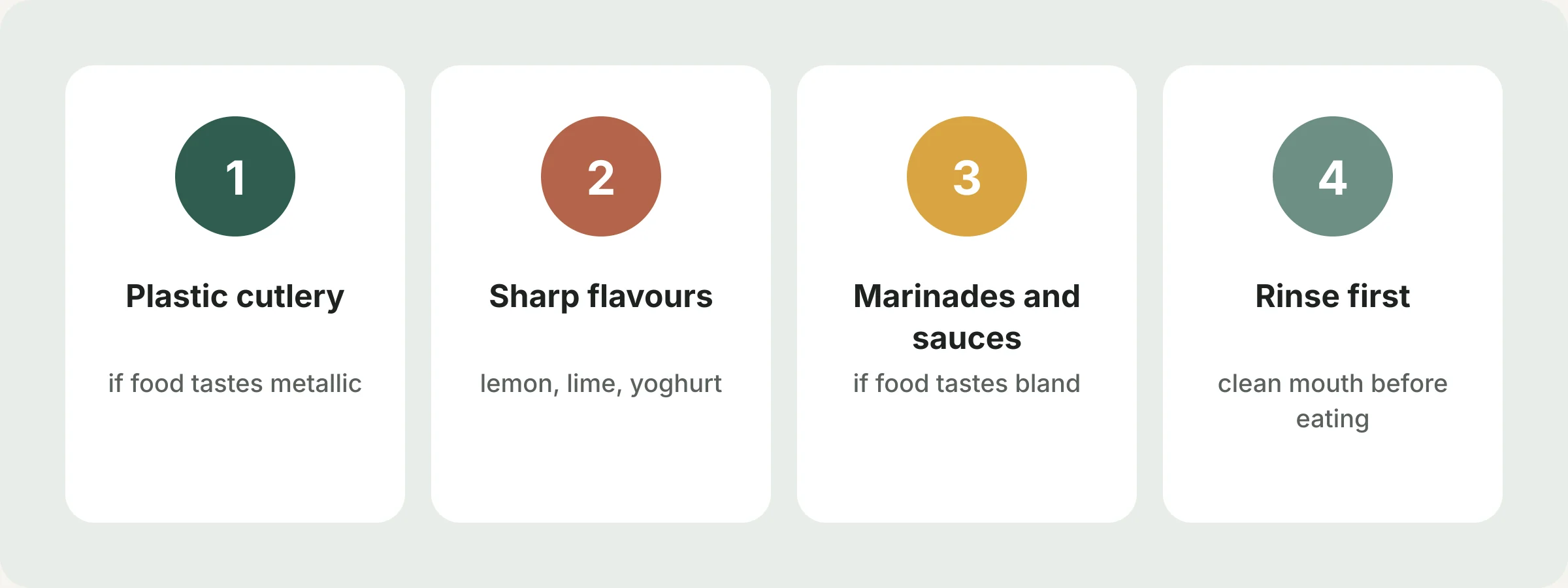
If food tastes metallic1
- Use wooden, bamboo or plastic cutlery instead of metal.
- Try adding honey, basil, cinnamon or thyme.
- Cold meals may taste better.
If food tastes bland1
- Marinate meat or meat substitutes, for example in fruit juice with vinegar or soy sauce.
- Add sauces and chutneys, such as cranberry or apple sauce.
- Try sharp flavours like lemon, lime, vinegar or yoghurt, if your mouth isn’t sore.
If everything tastes too strong1
- Choose neutral foods such as mashed potato, plain pasta or rice.
- Notice whether warm or cold food tastes better.
Mouth care
- Brush your teeth gently and keep your mouth clean.
- Rinse your mouth or have a drink before eating to clear a bad taste.1
- If your mouth is sore, avoid sharp, spicy or very hot foods, and tell your team.
Keeping your appetite up
- Eat little and often, rather than big meals.
- Eat more when you feel best, often in the morning.
- Make each mouthful count: add protein and energy, such as milk, cheese, yoghurt or nut butters. See protein before surgery.
- Try nourishing drinks, such as milkshakes or smoothies.
- Gentle activity, such as a short walk, can help your appetite.
When to ask for help
Ask your team for a dietitian referral if you’re losing weight without trying, or finding it hard to eat enough. Tell your team if you have a sore mouth, mouth ulcers or white patches, as these may need treatment.
Free information
- World Cancer Research Fund has a free guide to eating well during cancer.2
Related pages
Everyone’s treatment is different, so talk to your cancer team about what is right for you.
References
- World Cancer Research Fund. Taste changes: eat well during cancer. www.wcrf.org/uk/here-help/eat-well-during-cancer/common-cancer-side-effects/taste-changes
- World Cancer Research Fund, with the British Dietetic Association Oncology Specialist Group. Eat well during cancer (free guide). www.wcrf.org/living-well/living-with-cancer/eat-well-during-cancer/