
The short version
- Feeling sick is a common side effect of chemotherapy, but anti-sickness medicines work well for most people. Take them as prescribed, and tell your team if they aren’t working.1
- Small, light meals and snacks, eaten often, are usually easier than big meals.1
- Contact your team if you’re being sick a lot or can’t keep food or fluids down.1
Call your 24-hour treatment helpline if you
- are being sick and can’t keep fluids down for more than 24 hours
- have signs of dehydration, such as dark urine, dizziness or passing very little urine
- also have a high temperature or feel very unwell
Anti-sickness medicines
- Your team will usually prescribe anti-sickness medicines to take before and after chemotherapy.
- They usually work best taken before meals and before you start to feel sick.1
- If they aren’t working, tell your team. There are other types to try.
Eating when you feel sick
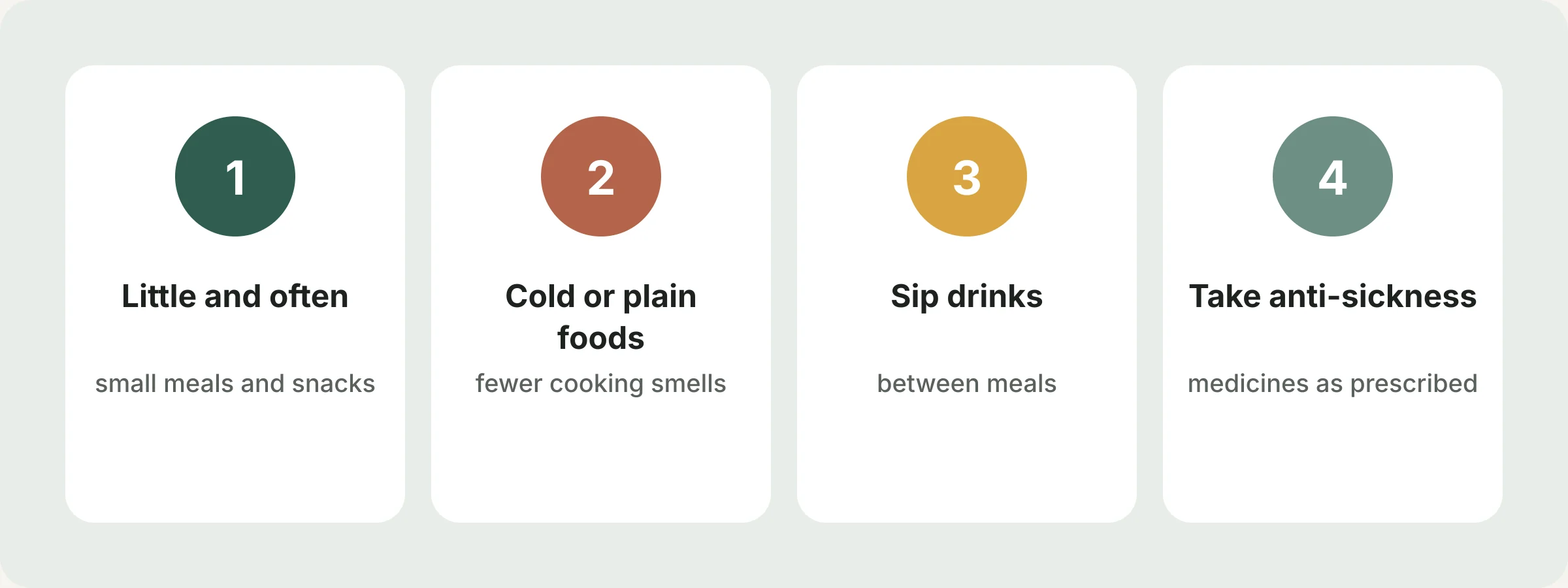
- Eat little and often: small meals and snacks rather than three big meals.1
- Nibble dry foods such as toast, crackers or plain biscuits, especially first thing in the morning.1
- Choose what you fancy: some people prefer bland foods, others salty snacks.1
- Avoid cooking smells: try cold foods, ready meals, or ask someone else to cook.1
- Try ginger or peppermint, which some people find helpful.1
- Sip drinks slowly between meals rather than with them. Chilled fizzy water helps some people.1
- Avoid greasy, fried or spicy food, caffeine and alcohol, if they make you feel worse.1
- Sit up while eating and for a while afterwards.1
- Get fresh air, and wear loose clothes.
Keeping your strength up
If you’re eating less, try to make what you eat count:
- add protein where you can, such as milk, yoghurt, eggs, cheese or nut butters. See protein before surgery
- try nourishing drinks such as milkshakes or smoothies
- eat more on good days
Ask your team about a dietitian if you’re losing weight or struggling to eat.
Gentle activity
A short walk or some fresh air can help some people feel less sick, and staying active helps with fatigue and mood during chemotherapy.2 Rest when you need to. See exercise during chemotherapy.
Free, reliable information
- World Cancer Research Fund has a free guide to eating well during cancer.3
Related pages
Everyone’s treatment is different, so talk to your cancer team about what is right for you.
References
- World Cancer Research Fund. Nausea (feeling sick): eat well during cancer. www.wcrf.org/uk/here-help/eat-well-during-cancer/common-cancer-side-effects/nausea-feeling-sick
- Campbell KL, Winters-Stone KM, Wiskemann J, et al. Exercise guidelines for cancer survivors: consensus statement from international multidisciplinary roundtable. Medicine & Science in Sports & Exercise. 2019;51(11):2375–2390. doi.org/10.1249/MSS.0000000000002116
- World Cancer Research Fund, with the British Dietetic Association Oncology Specialist Group. Eat well during cancer (free guide). www.wcrf.org/living-well/living-with-cancer/eat-well-during-cancer/