
The short version
- Worrying that breast cancer will come back is very common. It’s one of the concerns people mention most after treatment, and it can affect partners and family too.1
- Practical steps, such as knowing which symptoms to report and setting aside “worry time”, can make it easier to live with.2
- If fear is taking over your life, psychological therapy works. Specific therapies for fear of recurrence have been tested in trials.3
Why it happens
After treatment, it’s natural to wonder whether the cancer has really gone. Every ache or new symptom can set off worry. A large review found that fear of cancer recurrence is one of the most common concerns people have after cancer, that it tends not to go away on its own just because time has passed, and that partners and carers often feel it even more strongly.1
Fear often peaks at certain times, such as before a mammogram or follow-up appointment, around the anniversary of your diagnosis, or when you hear about someone else’s cancer.2
Things that can help
Know what to look out for
Much of the fear comes from uncertainty. Ask your team which symptoms you should report, and who to contact.2 Breast Cancer Now has a clear list of changes to be aware of after breast cancer.4 Knowing that you have a plan can make it easier to let go of everyday aches.
Try “worry time”
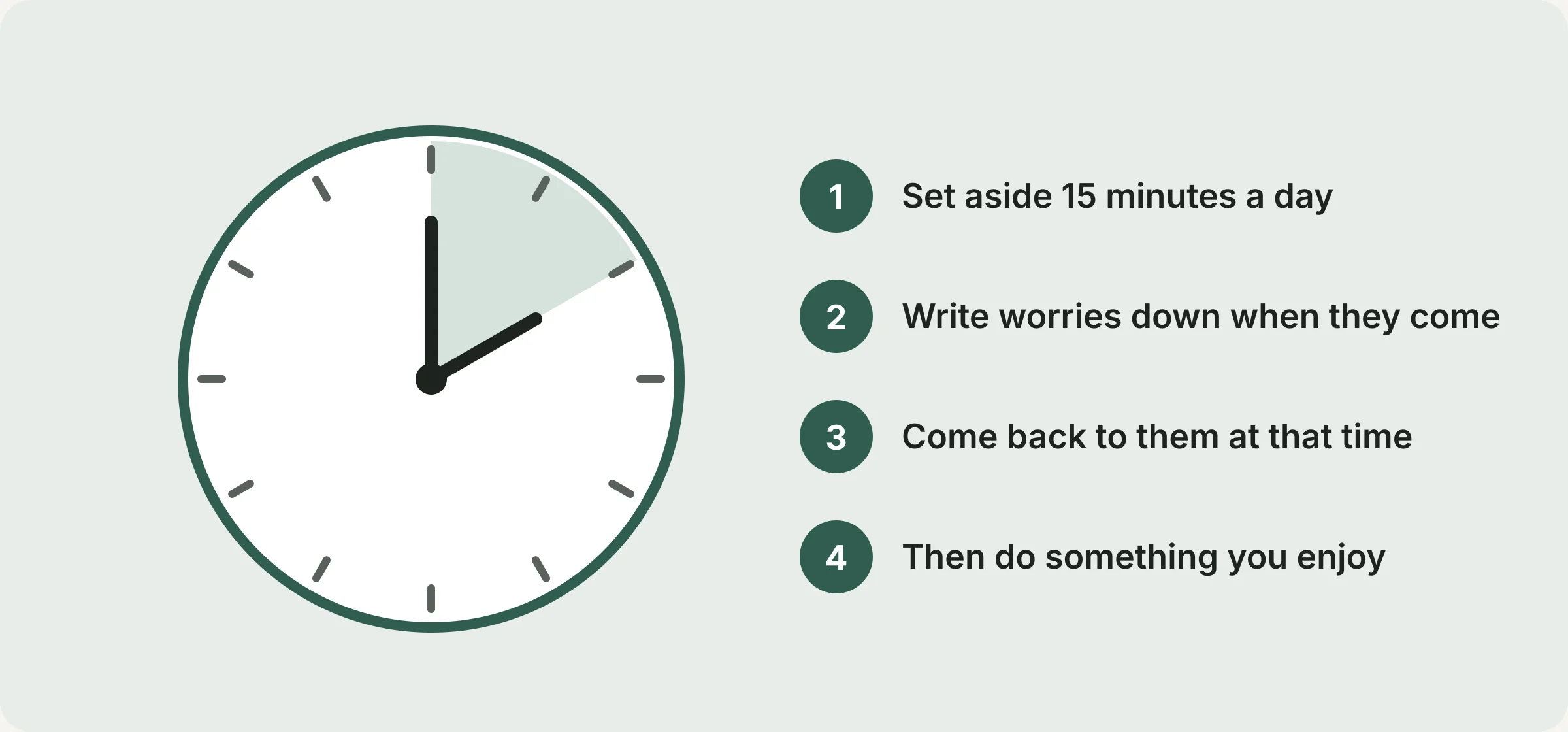
Rather than trying to push worries away, which often makes them stronger, set aside a short time each day to think about them. When a worry comes at another time, write it down and come back to it later. Many people find the worry has shrunk by then.
Plan for appointments
Plan something calming before a scan or appointment, and something you enjoy afterwards.2 Ask how and when you’ll get your results, so you’re not left waiting and wondering.
Look after your body and mind
Exercise, relaxation, mindfulness and hobbies can all help reduce anxiety.2 Being active also improves anxiety and low mood after cancer.5
Talk about it
Tell people close to you how you feel and what helps. Meeting others who understand, in a support group or online forum, can make you feel less alone.2
When to get more help
Contact your GP or breast care nurse if you:2
- check your body for symptoms over and over, and reassurance doesn’t last
- feel anxious or low most of the time
- avoid appointments, or things you used to enjoy
- feel hopeless
Psychological therapy can help. In a trial called ConquerFear, five sessions of a therapy focused on fear of recurrence reduced fear and distress more than relaxation therapy, with benefits lasting at least six months. Most people in the trial had had breast cancer.3 In the UK, you can ask your team about psychological support, or refer yourself to NHS Talking Therapies in England.6
Free support
- Breast Cancer Now helpline: free on 0808 800 6000.
- Moving Forward, Breast Cancer Now’s free course after treatment, includes a session on worries about the cancer coming back.7
- Maggie’s centres offer free support in person across the UK and online, including stress management courses.2
- Macmillan Support Line: free on 0808 808 00 00.
If you’re struggling to sleep because of worry, Sleepio is free for people with cancer through Macmillan.8
Some personalised rehabilitation programmes also include mental wellbeing support alongside exercise and sleep. See how digital rehabilitation works.
Related pages
- Follow-up care and patient-initiated follow-up
- When treatment ends: what to expect
- Managing anxiety before treatment
Everyone’s treatment is different, so talk to your cancer team about what is right for you.
References
- Simard S, Thewes B, Humphris G, et al. Fear of cancer recurrence in adult cancer survivors: a systematic review of quantitative studies. Journal of Cancer Survivorship. 2013;7(3):300–322. doi.org/10.1007/s11764-013-0272-z
- Maggie’s. Fear of cancer returning. www.maggies.org/cancer-support/managing-emotions/fear-cancer-returning/
- Butow PN, Turner J, Gilchrist J, et al. Randomized trial of ConquerFear: a novel, theoretically based psychosocial intervention for fear of cancer recurrence. Journal of Clinical Oncology. 2017;35(36):4066–4077. doi.org/10.1200/JCO.2017.73.1257
- Breast Cancer Now. Changes to be aware of after breast cancer (BCN402). www.breastcancernow.org/media-assets/3xvpi401/bcn402_changes_to_be_aware_of_after_breast_cancer.pdf
- Campbell KL, Winters-Stone KM, Wiskemann J, et al. Exercise guidelines for cancer survivors: consensus statement from international multidisciplinary roundtable. Medicine & Science in Sports & Exercise. 2019;51(11):2375–2390. doi.org/10.1249/MSS.0000000000002116
- NHS. NHS talking therapies for anxiety and depression. www.nhs.uk/mental-health/talking-therapies-medicine-treatments/talking-therapies-and-counselling/nhs-talking-therapies/
- Breast Cancer Now. Moving Forward: support after breast cancer treatment. breastcancernow.org/support-for-you/moving-forward
- Macmillan Cancer Support and Big Health. Free Sleepio for people with cancer. www.sleepio.com/macmillan