
The short version
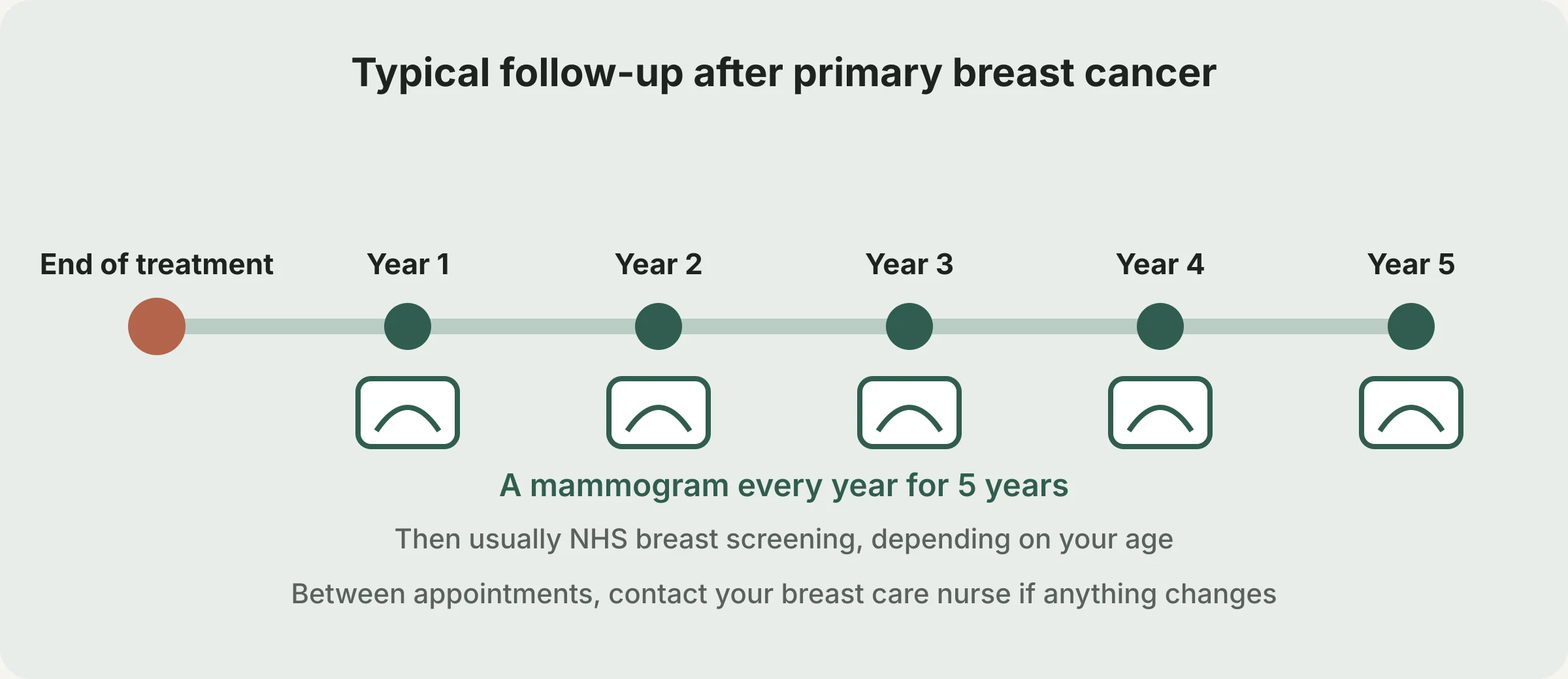
- After treatment for primary breast cancer, you’ll usually have a mammogram every year for five years.1
- Many hospitals now use personalised or patient-initiated follow-up: instead of regular clinic appointments, you contact your breast care team if you have a concern, and they see you quickly.2
- Know the changes to report, and who to contact. Don’t wait for your next mammogram if something worries you.3
What follow-up looks like
Follow-up varies between hospitals. It may include regular check-ups with a cancer doctor, a nurse-led clinic, or regular contact with a breast care nurse.1
Many hospitals now offer personalised follow-up. You may hear it called patient-initiated follow-up (PIFU), open access follow-up or supported self-management.2 With this approach:
- you don’t have routine clinic appointments
- you have mammograms as planned, and get the results by letter
- you can contact your breast care nurse helpline if you have new symptoms, side effects, worries or concerns, and you’ll be given an appointment if needed2
Mammograms
- You’ll usually have a mammogram every year for five years.1
- After breast-conserving surgery, both breasts are checked. After a mastectomy, the other breast is checked. If you’ve had both breasts removed, you won’t usually have mammograms.1
- After five years, if you’re 50 or over, you’ll usually move to the NHS Breast Screening Programme. If you’re under 50, you’ll usually carry on having yearly mammograms until you’re 50.1
If you haven’t had your results within a few weeks, contact your breast care nurse.2
Your treatment summary
At the end of treatment, you should be given an end of treatment summary. It records your treatment, possible side effects, the signs and symptoms to look out for, and who to contact. A copy goes to your GP.4 Keep it somewhere safe.
Symptoms to report
Contact your breast care nurse or GP if you notice anything that’s new, unusual, has no obvious cause, or doesn’t go away.3
In the breast, chest or armpit
- a lump, thickening or swelling on your chest, in your armpit or around your collarbone
- a change in the shape, size or skin of your breast or chest, such as puckering, dimpling, redness or a rash
- a change to your nipple, or discharge without squeezing
- swelling in your arm or hand3
Elsewhere in your body
- pain in your bones, such as your back, hips or ribs
- a dry cough, or feeling out of breath
- severe or ongoing headaches, changes to your vision or speech, or loss of balance, weakness or numbness
- feeling sick most of the time, feeling bloated, or discomfort under your ribs
- losing weight without trying, or loss of appetite
- feeling much more tired than usual3
Most aches and pains are not caused by cancer, but it’s always right to get them checked.
Other things to keep an eye on
- Your bones, if you’re taking an aromatase inhibitor. See bone health after treatment.
- Your heart, if you’ve had certain chemotherapy or targeted treatments. See heart health after treatment.
- Lymphoedema. See lymphoedema: signs, treatment and support.
- Your wellbeing. Follow-up is a good time to ask for help with fatigue, mood, menopausal symptoms or worry.
Free support
- Breast Cancer Now helpline: free on 0808 800 6000.
- Macmillan Support Line: free on 0808 808 00 00.1
Related pages
Everyone’s treatment is different, so talk to your cancer team about what is right for you.
References
- Macmillan Cancer Support. Follow-up after breast cancer treatment. www.macmillan.org.uk/cancer-information-and-support/breast-cancer/follow-up-after-breast-cancer-treatment
- King’s College Hospital NHS Foundation Trust. Breast cancer follow-up after treatment (personalised follow-up). www.kch.nhs.uk/services/cancer/cancer-types/breast-cancer/breast-cancer-follow-up-after-treatment/
- Breast Cancer Now. Changes to be aware of after breast cancer (BCN402). www.breastcancernow.org/media-assets/3xvpi401/bcn402_changes_to_be_aware_of_after_breast_cancer.pdf
- Calderdale and Huddersfield NHS Foundation Trust. End of treatment summary. cht.nhs.uk/services/clinical-services/oncology/end-of-treatment-summary