
The short version
- Some breast cancer treatments, including certain chemotherapy and targeted drugs and, rarely, radiotherapy to the left side, can affect the heart. Your team checks your heart if your treatment needs it.1
- Report symptoms such as breathlessness, swollen ankles, a racing or irregular heartbeat, or chest pain. Call 999 for chest pain that doesn’t go away.1
- Regular activity, a healthy diet and weight, less alcohol and not smoking all help protect your heart.1
Which treatments can affect the heart?
- Chemotherapy. Some chemotherapy drugs can affect the heart muscle, rhythm or blood pressure. With some drugs, the risk is mainly at higher doses.1
- Targeted therapies. Some targeted drugs can affect the heart muscle or blood pressure.1 If you have treatment for HER2-positive breast cancer, such as trastuzumab (Herceptin), you’ll usually have regular heart scans during treatment.
- Radiotherapy to the left side of the chest can rarely affect the heart. Modern techniques, such as breath-hold radiotherapy, reduce the dose to the heart.1
- Hormone therapy doesn’t usually damage the heart directly, but it can affect blood pressure, cholesterol and weight, and an early menopause can raise heart risk over time.1
Many people have no heart problems from their treatment. Your risk depends on the treatment you had, the dose, and things like your age, blood pressure, cholesterol and whether you smoke.
Checks after treatment
Your team may have checked your heart before and during treatment, with tests such as an echocardiogram (heart scan) or ECG. Some people also have checks afterwards, including blood pressure, cholesterol and heart scans, especially if their treatment can cause problems years later, or they have other risk factors.1 Your end of treatment summary should say if you need any heart checks.
It’s a good idea to have your blood pressure and cholesterol checked regularly. In England, adults aged 40 to 74 are offered a free NHS Health Check every five years.
Symptoms to report
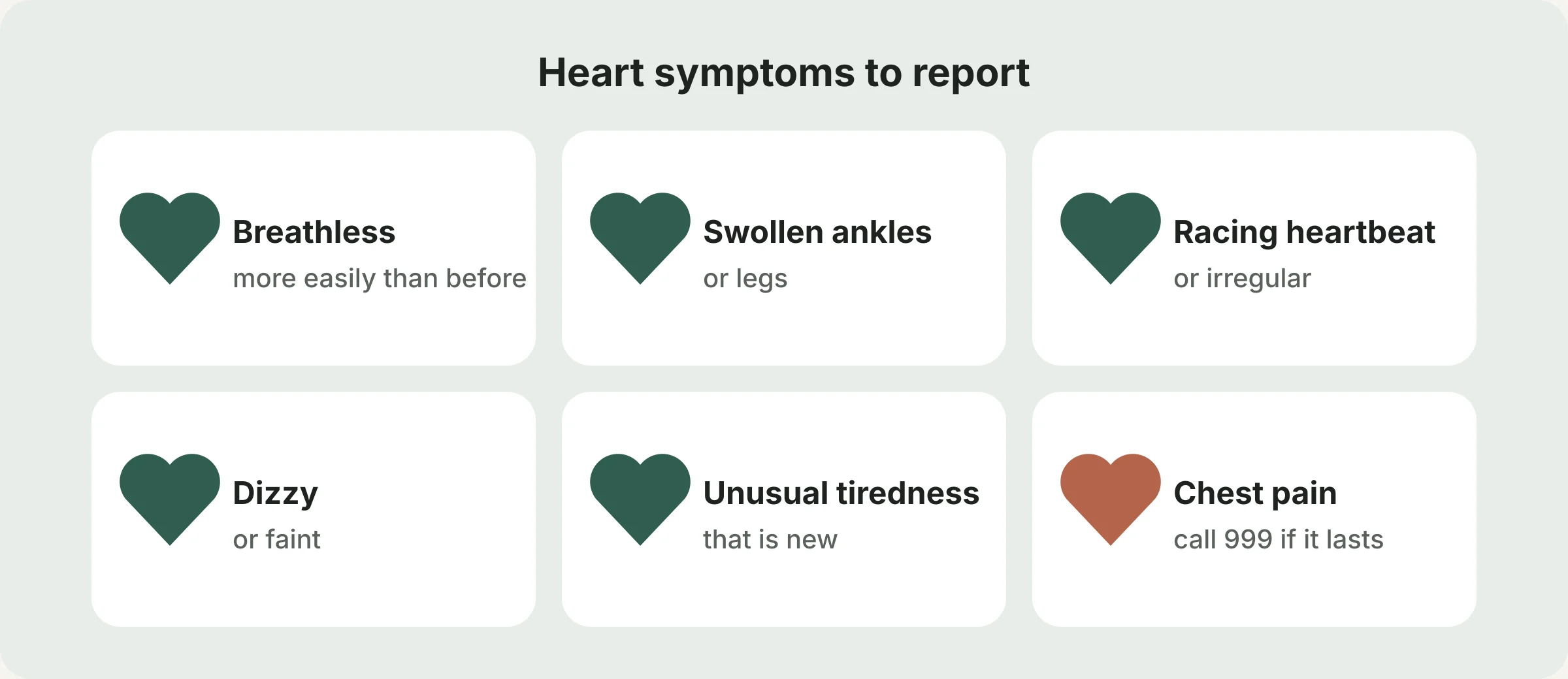
Tell your GP or team as soon as possible if you notice:
- getting breathless more easily, or when lying flat
- swollen ankles or legs
- a racing, pounding or irregular heartbeat
- feeling dizzy or faint
- unusual tiredness
Call 999 if you have
Sudden chest pain or discomfort that doesn’t go away, which may spread to your arms, neck, jaw, back or stomach, especially with sweating, feeling sick, dizziness or breathlessness. It could be a heart attack.1
Looking after your heart
- Be active. Aim for 150 minutes of moderate activity a week, such as brisk walking, plus strength exercise twice a week.2 See our 12-week plan.
- Eat well. Plenty of vegetables, fruit, wholegrains and pulses, and less salt and saturated fat.
- Keep a healthy weight. See managing your weight after treatment.
- Drink less alcohol. See alcohol and breast cancer recurrence.
- Stop smoking. Your GP or local stop smoking service can help.
- Manage stress, for example with activity, relaxation or talking to someone.1
Free support
- British Heart Foundation Heart Helpline: 0808 802 1234, Monday to Friday, 9am to 5pm.1
- Macmillan Support Line: free on 0808 808 00 00.
Prefer a guided plan?
A personalised rehabilitation programme can help you build up regular activity safely after treatment, alongside nutrition, sleep and mental wellbeing. See how digital rehabilitation works.
Related pages
Everyone’s treatment is different, so talk to your cancer team about what is right for you.
References
- Macmillan Cancer Support. Heart health and cancer. www.macmillan.org.uk/cancer-information-and-support/impacts-of-cancer/heart-health
- UK Chief Medical Officers. Physical activity guidelines for adults and older adults. 2019. www.gov.uk/government/publications/physical-activity-guidelines-adults-and-older-adults/physical-activity-for-adults-and-older-adults-19-and-over-text-of-the-infographic