
The short version
- Weight gain is common during and after breast cancer treatment, especially with chemotherapy, steroids, hormone therapy and treatment-related menopause, and with being less active.
- Research links a higher body weight after diagnosis with a higher risk of dying from breast cancer and other causes.1
- The World Cancer Research Fund advises avoiding weight gain if you’re not underweight. Small, steady changes to eating and activity work better than strict diets.1
Why weight changes
Many people gain weight during and after breast cancer treatment. Reasons include:
- being less active, and losing muscle
- steroids given with chemotherapy, which can increase appetite
- treatment-related menopause, or hormone therapy, which can change where you store fat
- tiredness, low mood or stress affecting what and when you eat
Some people lose weight instead, for example because of sickness or a poor appetite. If you’ve lost weight without trying, tell your team.
What the research says
The World Cancer Research Fund’s review of studies in breast cancer survivors found strong evidence that a higher body mass index (BMI) and waist size after diagnosis are linked to a higher risk of death, and limited evidence of a link with the cancer coming back.1
It’s less clear whether deliberately losing weight changes these risks. So WCRF’s advice is to avoid gaining weight during and after treatment if you’re not underweight.1 Being active and eating well have wider benefits too, for your energy, mood, heart and bones.
Realistic steps that help
- Build activity into your week, including strength exercise twice a week to rebuild muscle. Muscle helps your body use energy.2 See our 12-week plan.
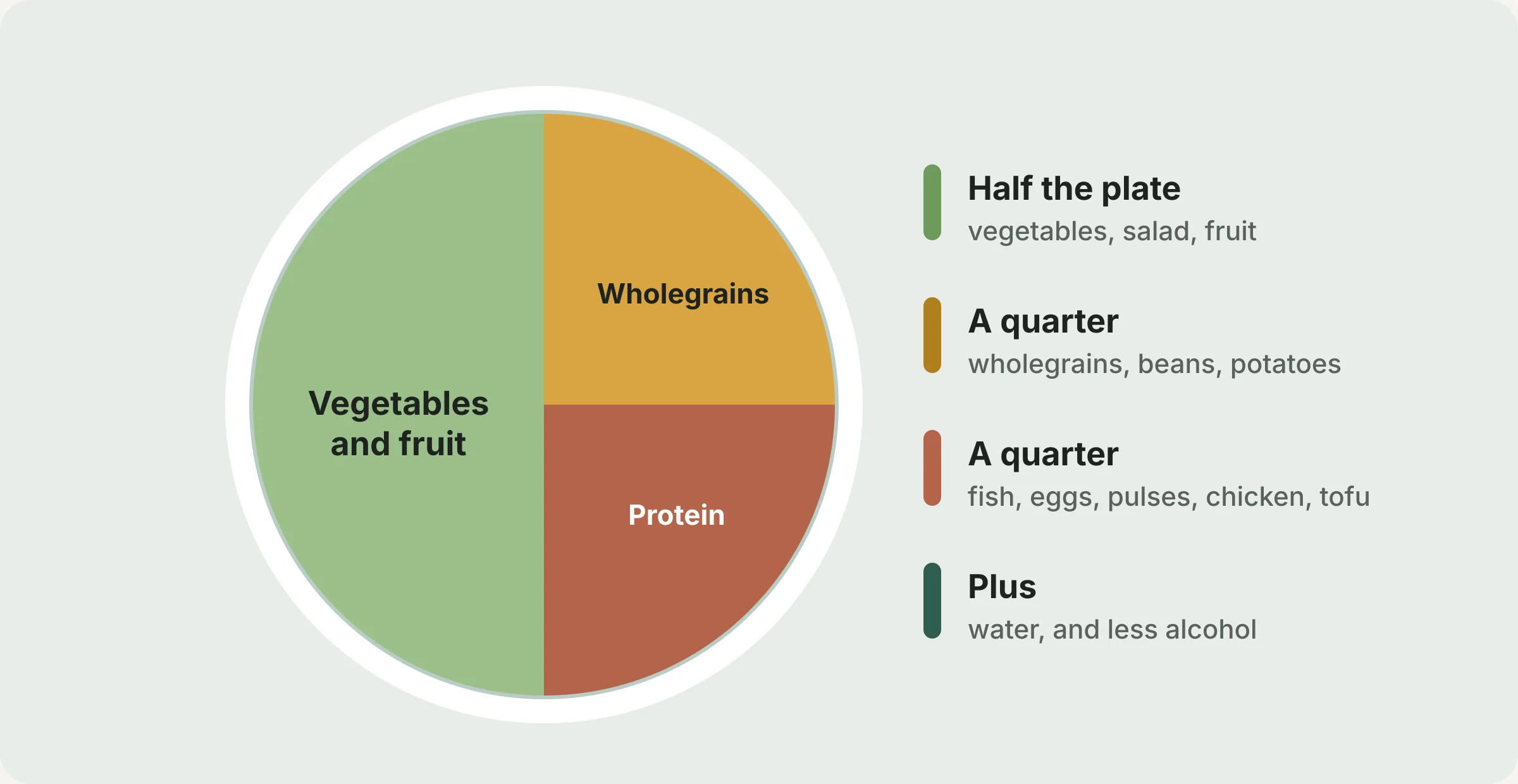
- Fill half your plate with vegetables and fruit, and choose wholegrains, beans and pulses, which are high in fibre.
- Include protein at each meal, such as fish, eggs, beans, lentils, chicken, tofu or yoghurt.
- Cut down on sugary drinks, processed foods and alcohol.
- Notice why you eat. Tiredness, boredom and stress can all lead to snacking.
- Go slowly. If you want to lose weight, aim for a gradual loss. Avoid very strict diets, which are hard to keep up and can make you lose muscle.
Free support
- Your GP can check your weight and health, and tell you about local weight management services.
- The NHS Weight Loss Plan is a free 12-week app with weekly guides, a calorie target and a food diary.3
- Ask your team about seeing a dietitian, especially if you have other health conditions or your weight has changed a lot.
Prefer a guided plan?
Some personalised rehabilitation programmes combine nutrition support with exercise, sleep and mental wellbeing, which can make changes easier to stick to. See how digital rehabilitation works or compare UK programmes.
Related pages
- Diet and breast cancer recurrence: what we know
- Alcohol and breast cancer recurrence
- Menopause symptoms caused by treatment
Everyone’s treatment is different, so talk to your cancer team about what is right for you.
References
- World Cancer Research Fund. Breast cancer survivors: Global Cancer Update Programme (CUP Global) findings on body weight, physical activity and diet after diagnosis. www.wcrf.org/research-policy/evidence-for-our-recommendations/after-a-cancer-diagnosis-follow-recommendations/breast-cancer-survivors-research/
- Campbell KL, Winters-Stone KM, Wiskemann J, et al. Exercise guidelines for cancer survivors: consensus statement from international multidisciplinary roundtable. Medicine & Science in Sports & Exercise. 2019;51(11):2375–2390. doi.org/10.1249/MSS.0000000000002116
- Department of Health and Social Care. NHS Weight Loss Plan (free 12-week app). apps.apple.com/gb/app/nhs-weight-loss-plan/id1519208548