
The short version
- Aromatase inhibitors, ovarian suppression and an early menopause caused by treatment can thin your bones and raise the risk of osteoporosis.1
- Most people starting an aromatase inhibitor have a bone density (DXA) scan. Some have a repeat scan after 2 to 5 years.1
- Strength, impact and balance exercise, calcium and vitamin D, and bone-protecting medicines if you need them, all help keep bones strong.2, 1
Why bones matter after breast cancer
Oestrogen helps keep bones strong. Treatments that lower oestrogen can reduce bone density over time:1
- aromatase inhibitors (anastrozole, letrozole and exemestane)
- ovarian suppression
- chemotherapy that brings on an early menopause
Tamoxifen works differently. After the menopause it slows bone loss, although it may slightly increase bone loss before the menopause.1
Bone scans
A DXA scan is a quick, painless scan that measures bone density.1
- Most people starting an aromatase inhibitor have a scan at the start.
- Some people have a repeat scan after 2 to 5 years, depending on their results and risk.
- If you’re taking a bisphosphonate to protect your bones, you may not need regular scans.1
Your result is given as a T-score:1
| T-score | What it means |
|---|---|
| Above -1 | Normal bone density |
| -1 to -2.5 | Osteopenia (bone density lower than normal) |
| -2.5 or lower | Osteoporosis |
If you haven’t had a scan and are taking an aromatase inhibitor, ask your team or GP.
Medicines that protect bones
- Bisphosphonates (such as alendronate, risedronate or zoledronic acid) strengthen bones and reduce the risk of fractures. They’re taken as tablets or given by a drip.1
- Denosumab is an injection every six months, used mainly if bisphosphonates aren’t suitable.1
- Calcium and vitamin D supplements may be recommended.1
Some people are also offered bisphosphonates as part of their breast cancer treatment, to reduce the risk of the cancer spreading to the bones.3
Exercise for strong bones
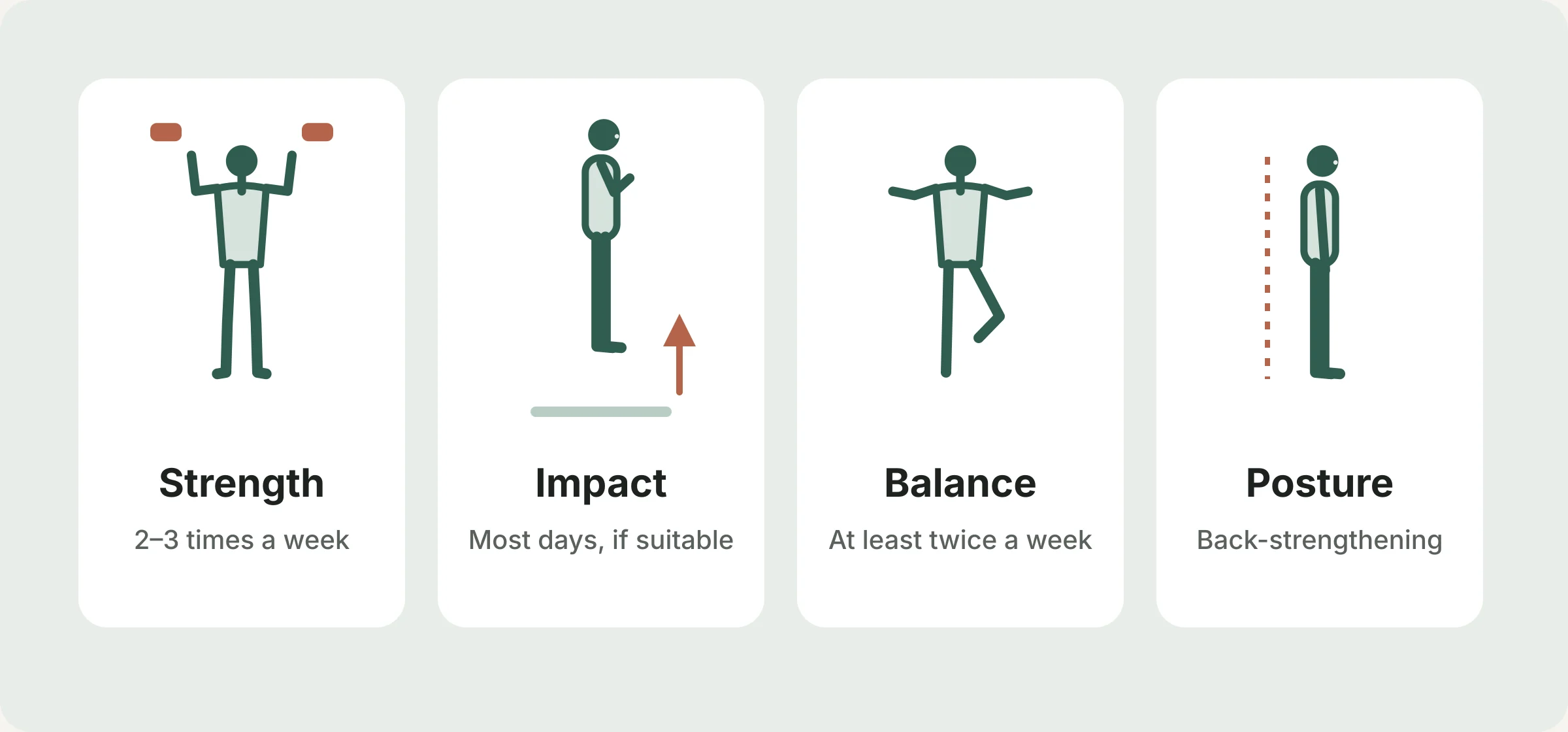
The UK consensus on exercise for bone health recommends:2
- strength exercise 2 to 3 days a week
- impact exercise, such as brisk walking, stair climbing, or jogging or small jumps if suitable, on most days
- balance exercise, such as standing on one leg or tai chi, at least twice a week
- posture exercises to strengthen your back
If you already have osteoporosis or have had a fracture, keep impact to the level of brisk walking, avoid repeated or loaded forward bending such as sit-ups, and ask a physiotherapist for advice.2 See protecting your bones during treatment for more detail, and our 12-week plan.
Everyday bone care
- Calcium from dairy foods, fortified plant milks, tinned fish with bones, tofu and green leafy vegetables.
- Vitamin D from sunlight in the summer months, and a supplement if advised.
- Don’t smoke, and keep alcohol within the UK guidelines.4
- Reduce your risk of falls: clear clutter, use good lighting, and wear well-fitting shoes.
Free support
- Royal Osteoporosis Society helpline: 0300 102 3030, answered by specialist nurses.5
- Breast Cancer Now helpline: free on 0808 800 6000.
Prefer a guided plan?
A personalised programme can build strength, impact and balance work into your week safely, and increase it as you get stronger. See how digital rehabilitation works.
Related pages
- Protecting your bones during treatment
- Living well on long-term hormone therapy
- Strength training after breast cancer
Everyone’s treatment is different, so talk to your cancer team about what is right for you.
References
- Breast Cancer Now. Breast cancer and osteoporosis. breastcancernow.org/about-breast-cancer/treatment/breast-cancer-and-osteoporosis
- Brooke-Wavell K, Skelton DA, Barker KL, et al. Strong, steady and straight: UK consensus statement on physical activity and exercise for osteoporosis. British Journal of Sports Medicine. 2022;56(15):837. bjsm.bmj.com/content/56/15/837
- National Institute for Health and Care Excellence. Early and locally advanced breast cancer: diagnosis and management (NG101). www.nice.org.uk/guidance/ng101
- Department of Health. New alcohol guidelines show increased risk of cancer (UK Chief Medical Officers’ low-risk drinking guidelines). January 2016. www.gov.uk/government/news/new-alcohol-guidelines-show-increased-risk-of-cancer
- Royal Osteoporosis Society. Free osteoporosis helpline. theros.org.uk/information-and-support/free-osteoporosis-helpline/