
The short version
- Most people can travel after breast cancer treatment. Talk to your team before booking, especially if you’re still having treatment.1
- Always declare your cancer to your travel insurer. If you’re refused cover or offered a very high price, the MoneyHelper travel insurance directory lists specialist providers.2
- Flying doesn’t appear to increase the risk of lymphoedema. If you have lymphoedema, ask whether to wear your compression garment on the flight.1
Before you book
- Check with your team that you’re fit to travel, especially if you’re still having treatment or have recently had surgery. If you need a “fit to fly” letter, ask for it at least four weeks before you go.1
- Ask about vaccinations. Live vaccines are usually avoided for a while after chemotherapy.1
- Check your medicines are allowed in the country you’re visiting, especially controlled drugs.1
Travel insurance
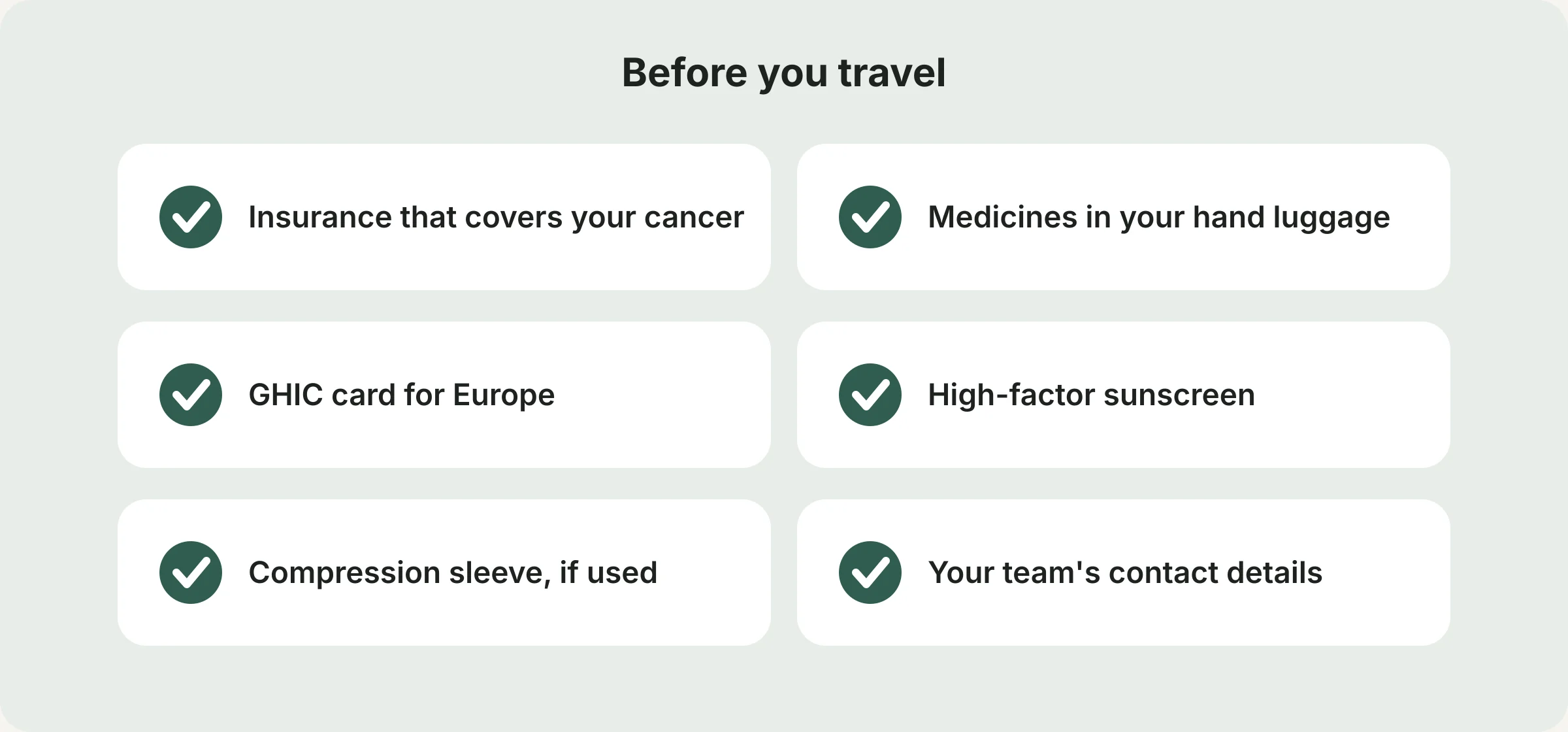
- Declare your cancer and treatment. If you don’t, your policy may not pay out, even for something unrelated. Check whether side effects of treatment, such as blood clots, are covered.1
- Shop around. Prices vary a lot between insurers.
- Use the MoneyHelper directory if you’re refused cover, offered a very high premium, or have your cancer excluded. It lists specialist firms regulated by the Financial Conduct Authority.2
- Timing can matter. Cover may be easier to get, or cheaper, a couple of months after treatment ends.1
In Europe, a free Global Health Insurance Card (GHIC) gives you access to state healthcare. It doesn’t replace travel insurance, and won’t cover things like getting you home.1 Apply only through the official NHS website, where it’s free.
Flying
- Move around during the flight, and do simple arm and leg exercises.1
- Drink plenty of water.
- If you take tamoxifen, or have other risks for blood clots, ask your team about precautions on long journeys.1
- If you have lymphoedema, ask your lymphoedema specialist whether to wear your compression garment while flying.1 Research suggests flying doesn’t increase the risk of developing lymphoedema.1
While you’re away
- Protect your skin from the sun. Chemotherapy and radiotherapy can make skin more sensitive. Use a high-factor sunscreen, cover up and avoid the midday sun. Protect any area that had radiotherapy, even under thin clothing.1
- Look after your arm if you’re at risk of lymphoedema: use insect repellent, and take a small first aid kit for cuts and bites.1 See reducing your risk of lymphoedema.
- Keep your medicines in your hand luggage, with extra in case of delays.1
- Stay active. Walking and swimming are great holiday activities.
- Take your team’s contact details, and a copy of your treatment summary.
Free support
- Breast Cancer Now helpline: free on 0808 800 6000.
- Macmillan Support Line: free on 0808 808 00 00, including advice on travel insurance.
Related pages
Everyone’s treatment is different, so talk to your cancer team about what is right for you.
References
- Future Dreams. Holidaying during and after breast cancer treatment. futuredreams.org.uk/holidaying-breast-cancer-treatment/
- MoneyHelper. Travel insurance directory: find a provider if you have a serious medical condition or disability. traveldirectory.moneyhelper.org.uk/en