
The short version
- Protein helps your body heal after surgery and keep your muscles strong during treatment.
- European guidance suggests people with cancer usually need about 1 to 1.5g of protein per kg of body weight a day, more than most people need.1
- Aim for some protein at every meal and snack, and combine it with strength exercise so your body uses it to build muscle.1
How much do I need?
For most people with cancer, the guideline is 1 to 1.5g of protein per kg of body weight a day.1
| Body weight | Protein a day |
|---|---|
| 50 kg (7 st 12 lb) | about 50 to 75g |
| 60 kg (9 st 6 lb) | about 60 to 90g |
| 70 kg (11 st) | about 70 to 105g |
| 80 kg (12 st 8 lb) | about 80 to 120g |
If you have kidney problems, or have been told to limit protein, check with your team or a dietitian first.
Where to get it
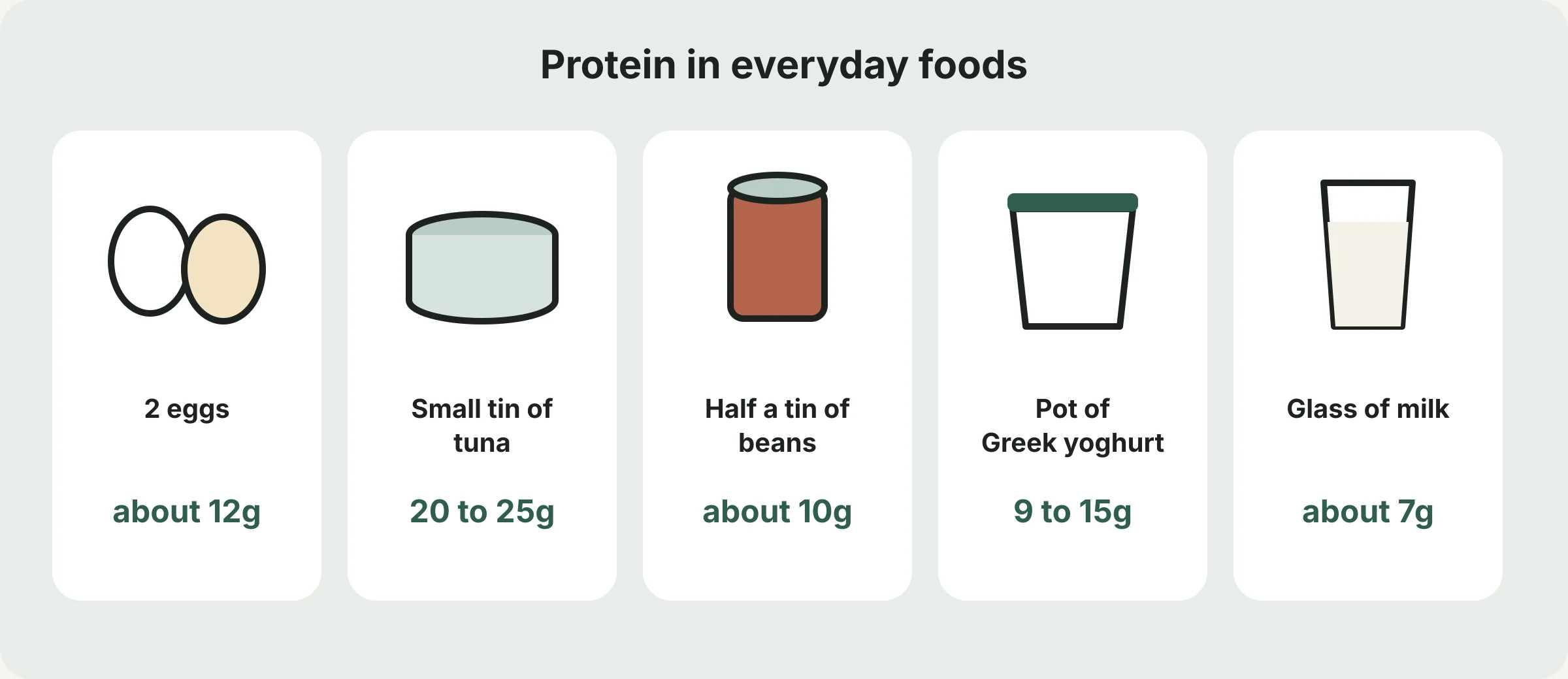
| Food | Roughly how much protein |
|---|---|
| 2 eggs | 12g |
| Small tin of tuna (drained) | 20 to 25g |
| Chicken breast (cooked, 120g) | 35g |
| Half a tin of baked beans | 10g |
| Small pot of Greek or Greek-style yoghurt (150g) | 9 to 15g |
| Glass of milk (200ml) | 7g |
| Handful of nuts (30g) | 5 to 7g |
| Tofu (100g) | 8 to 12g |
| Lentils (cooked, 100g) | 9g |
Amounts are approximate and vary by brand. Check food labels for exact figures.
Tips for getting enough
- Spread it across the day: include protein at breakfast, lunch, dinner and snacks.
- Start the day well: eggs, yoghurt, milky porridge or peanut butter on toast.
- Snack smart: yoghurt, cheese, nuts, hummus, a glass of milk.
- Boost meals: add milk powder to porridge or soup, cheese to vegetables, or beans and lentils to stews.
- If you’re vegetarian or vegan, mix different plant proteins, such as beans, lentils, tofu, soya, nuts and seeds.
- If your appetite is small, eat little and often, and try nourishing drinks such as milkshakes or smoothies with yoghurt.
Combine it with strength exercise
Protein works best when you also use your muscles. Doing strength exercises two or three times a week helps your body turn protein into muscle.1 See strength exercises before treatment.
When to ask for help
Ask your team for a referral to a dietitian if you:
- are losing weight without trying
- have a poor appetite, or find it hard to eat
- have other health conditions that affect what you can eat
Prefer a guided plan?
A personalised prehab programme can set protein and nutrition goals around your treatment, alongside exercise, sleep and mental wellbeing. See how digital prehab works.
Related pages
Everyone’s treatment is different, so talk to your cancer team about what is right for you.
References
- Muscaritoli M, Arends J, Bachmann P, et al. ESPEN practical guideline: Clinical Nutrition in cancer. Clinical Nutrition. 2021;40(5):2898–2913. doi.org/10.1016/j.clnu.2021.02.005