
The short version
- Feeling anxious after a breast cancer diagnosis is normal. Waiting for treatment can be one of the hardest times.
- Simple techniques such as slow breathing, planning and staying active can help you feel calmer.1, 2
- Free help is available, including NHS talking therapies and digital CBT through Macmillan. Ask for help if worry is taking over.
Why waiting is so hard
Between diagnosis and treatment, you may be dealing with tests, decisions, uncertainty and a lot of new information. It’s very common to feel frightened, tearful, irritable, or unable to concentrate or sleep. These feelings are a normal reaction to a stressful situation.
Psychological support is one of the three core parts of prehabilitation, alongside physical activity and nutrition, because preparing your mind matters as much as preparing your body.3
Things that can help
Slow breathing
Slow, deep breathing can calm your body’s stress response. The NHS suggests:1
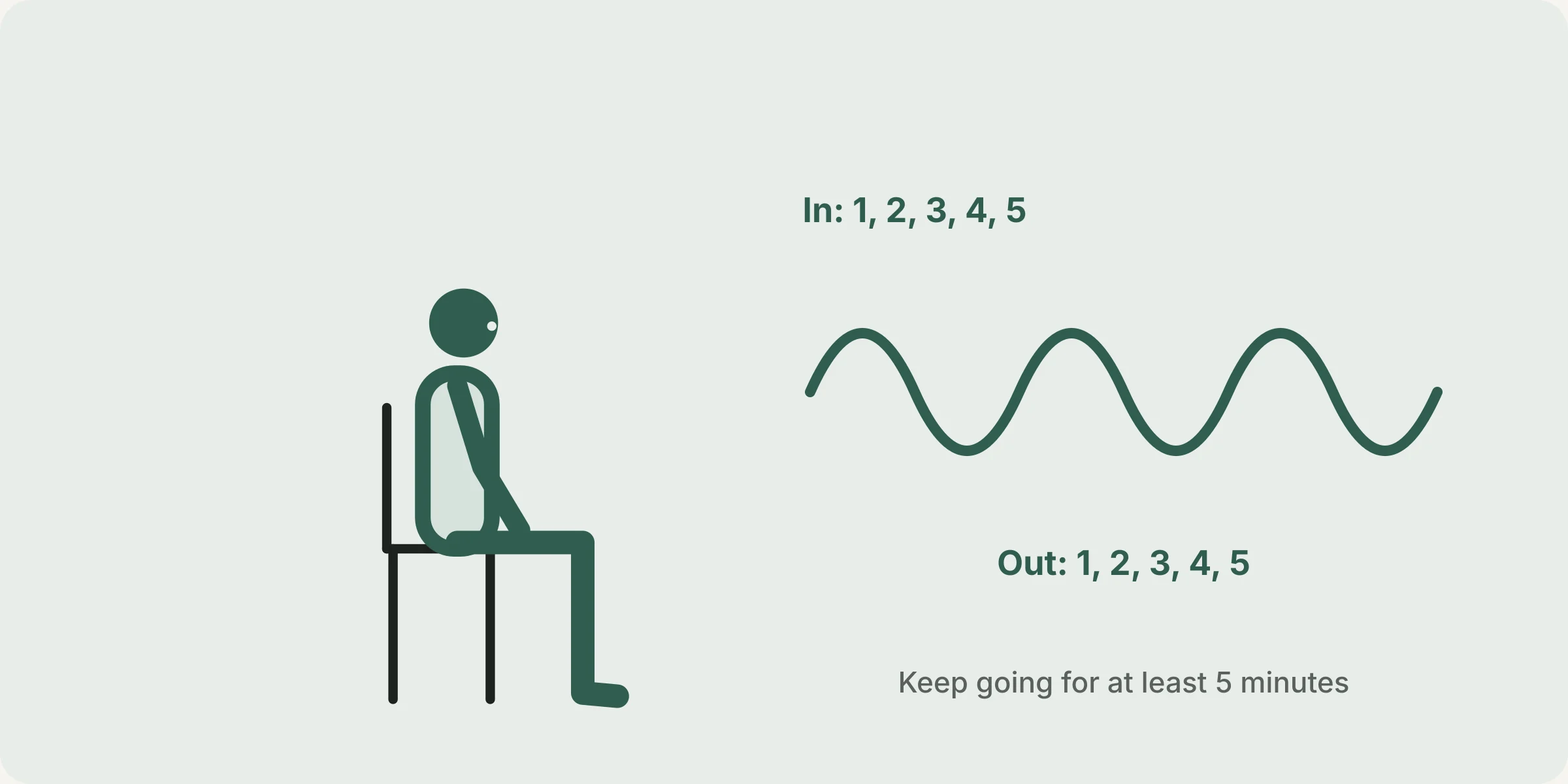
- Get comfortable, sitting, standing or lying down, with your feet flat on the floor.
- Let your breath flow deep down into your belly without forcing it.
- Breathe in gently through your nose, counting from 1 to 5.
- Breathe out gently through your mouth, counting from 1 to 5.
- Keep going for at least 5 minutes.
It gets easier with practice. Try it every day, not just when you feel anxious.
Moving more
Physical activity is one of the best-evidenced ways to reduce anxiety in people with cancer.2 A daily walk, especially outdoors, can lift your mood and help you sleep. See moving more before surgery.
Knowing what to expect
Uncertainty fuels worry. It can help to:
- write down your questions before appointments (see our question card)
- ask your breast care nurse to explain what will happen, step by step
- read trusted information, and avoid late-night internet searching
Planning what you can control
Making practical plans for time off work, help at home or childcare can free up headspace. Doing something positive for your health, like prehab, can help you feel more in control.
Talking
Talking to someone you trust can help. So can talking to people who’ve been through it: Breast Cancer Now has a free helpline (0808 800 6000) and online forum, and Maggie’s centres offer free drop-in support.
When to ask for more help
Speak to your breast care nurse or GP if:
- worry is stopping you from sleeping, eating or getting through the day
- you feel low or hopeless most of the time
- you’re having panic attacks
If you're in crisis
If you feel unable to cope or have thoughts of harming yourself, contact your GP urgently, call NHS 111 (option 2 for mental health in England), or call Samaritans free on 116 123. In an emergency, call 999.
Free support
- NHS Talking Therapies (England): free talking therapies, including CBT and counselling. You can refer yourself without seeing your GP, as long as you’re registered with a GP.4
- Daylight and Sleepio: free digital CBT apps for anxiety and sleep, available to people with cancer through Macmillan.5 See Sleepio and Daylight.
- Macmillan Support Line: 0808 808 00 00.
- Breast Cancer Now helpline: 0808 800 6000.
- Maggie’s: free emotional support at centres beside NHS hospitals, and online.
Prefer a guided plan?
Personalised digital prehab programmes include mental wellbeing as one of their four parts, with relaxation, sleep and coping strategies alongside exercise and nutrition, and a coach you can talk to. See how digital prehab works.
Related pages
- Breathing and relaxation techniques
- Sleeping better before treatment
- Coping with anxiety during treatment
Everyone’s treatment is different, so talk to your cancer team about what is right for you.
References
- NHS. Breathing exercises for stress. www.nhs.uk/mental-health/self-help/guides-tools-and-activities/breathing-exercises-for-stress/
- Campbell KL, Winters-Stone KM, Wiskemann J, et al. Exercise guidelines for cancer survivors: consensus statement from international multidisciplinary roundtable. Medicine & Science in Sports & Exercise. 2019;51(11):2375–2390. doi.org/10.1249/MSS.0000000000002116
- Macmillan Cancer Support, Royal College of Anaesthetists and NIHR Cancer and Nutrition Collaboration. Principles and guidance for prehabilitation within the management and support of people with cancer. 2019, updated November 2020. www.macmillan.org.uk/healthcare-professionals/news-and-resources/guides/principles-and-guidance-for-prehabilitation
- NHS. NHS talking therapies for anxiety and depression. www.nhs.uk/mental-health/talking-therapies-medicine-treatments/talking-therapies-and-counselling/nhs-talking-therapies/
- Macmillan Cancer Support and Big Health. Free Sleepio for people with cancer. www.sleepio.com/macmillan