
The short version
- Hot flushes and night sweats are common with hormone therapy, chemotherapy and treatment-related menopause.1
- HRT isn’t usually offered after breast cancer, but there are non-hormonal options: practical changes, CBT, and some medicines.2, 3
- A newer medicine, elinzanetant, was authorised in the UK in 2026 for hot flushes caused by hormone therapy for breast cancer. Ask your team whether it might suit you.4
Why they happen
Many breast cancer treatments lower oestrogen levels or block its effects, which can cause hot flushes and night sweats. They can be worse if treatment brings on a sudden menopause.1
Practical things to try
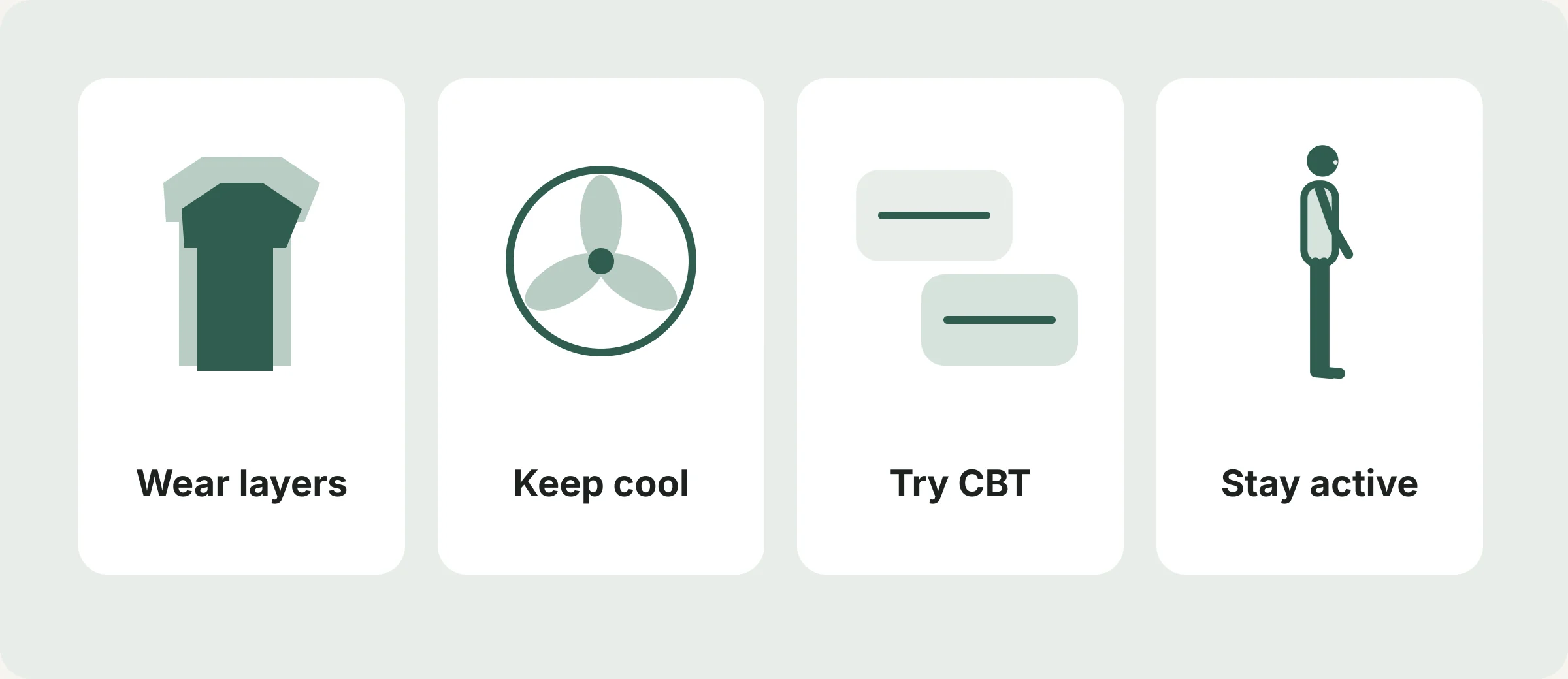
- Wear layers you can take off easily, and choose natural fabrics.
- Keep cool: a fan, cool drinks, and lighter bedding.
- Notice your triggers, such as hot drinks, alcohol, spicy food and stress.
- Stay active, which helps with sleep, mood and wellbeing.1
- Try slow breathing when a flush starts. See breathing and relaxation.
CBT
In the UK MENOS 1 trial, group CBT reduced how much hot flushes and night sweats bothered women after breast cancer treatment, with benefits lasting at least six months.3 Ask your team or GP whether CBT for menopausal symptoms is available. Sleepio, free through Macmillan, may help if night sweats are disturbing your sleep.5, 6
Medicines
If hot flushes are severe, your doctor may discuss medicines. NICE guidance says:2
- HRT should usually be stopped after a breast cancer diagnosis, and only offered in exceptional circumstances, after discussion with your oncologist.
- Some SSRI antidepressants, such as paroxetine and fluoxetine, may help, but shouldn’t be used with tamoxifen, because they can interfere with it.
- Clonidine, venlafaxine or gabapentin can be used, once you’ve been told about their possible side effects.
Elinzanetant (Lynkuet) is a non-hormonal medicine. In August 2026, the UK medicines regulator authorised it for moderate to severe hot flushes caused by hormone therapy for breast cancer.4 Whether it’s available to you on the NHS may depend on local decisions, so ask your team.
Herbal and “natural” remedies
Some herbal remedies for menopause, such as those containing plant oestrogens or St John’s wort, may not be safe with breast cancer or may interact with your treatment. Check with your team or pharmacist before taking anything.
When to talk to your team
Talk to your team if hot flushes are affecting your sleep, mood or daily life, or making you think about stopping hormone therapy. There’s usually something that can help. See living well on long-term hormone therapy.
Related pages
Everyone’s treatment is different, so talk to your cancer team about what is right for you.
References
- Breast Cancer Now. Menopausal symptoms and breast cancer. breastcancernow.org/about-breast-cancer/treatment/hormone-endocrine-therapy/menopausal-symptoms-and-breast-cancer
- GPnotebook. HRT in patients with breast cancer (summarising NICE NG101 recommendations on menopausal symptoms). gpnotebook.com/pages/gynaecology/hormone-replacement-therapy-hrt-in-patients-with-breast-cancer
- Mann E, Smith MJ, Hellier J, et al. Cognitive behavioural treatment for women who have menopausal symptoms after breast cancer treatment (MENOS 1): a randomised controlled trial. Lancet Oncology. 2012. doi.org/10.1016/S1470-2045(11)70364-3
- PharmaFile. MHRA authorises Lynkuet (elinzanetant) for hot flushes linked to breast cancer therapy. August 2026. pharmafile.com/?p=43282
- Macmillan Cancer Support. Big Health apps: Sleepio and Daylight, free for anyone living with or beyond cancer in the UK. orders.macmillan.org.uk/products/bighealth-big-health-apps
- Brennan D, et al. Sleepio After Cancer (SAC) randomised trial. Presented at the ESMO Congress, October 2026 (abstract LBA91); reported by Healio. www.healio.com/news/hematology-oncology/20261027/digital-app-immensely-powerful-in-treating-insomnia-among-women-with-cancer