
The short version
- Sleep problems are very common during breast cancer treatment, caused by worry, hot flushes, pain, steroids and changes to your routine.
- CBT for insomnia is one of the most effective treatments, and it works well online. Sleepio, a NICE-recommended digital CBT programme, is free for people with cancer through Macmillan.1, 2
- Simple habits help too: a fixed wake-up time, a wind-down routine and daytime activity.3
Why sleep suffers during treatment
Many things can disrupt sleep during treatment:
- worry and racing thoughts
- hot flushes and night sweats, from treatment-induced menopause or hormone therapy
- pain, including after surgery or joint pain
- steroids given with chemotherapy
- napping a lot during the day, and being less active
- hospital stays and changes to your routine
Poor sleep can make fatigue, mood and concentration worse, so it’s worth tackling.
Habits that help
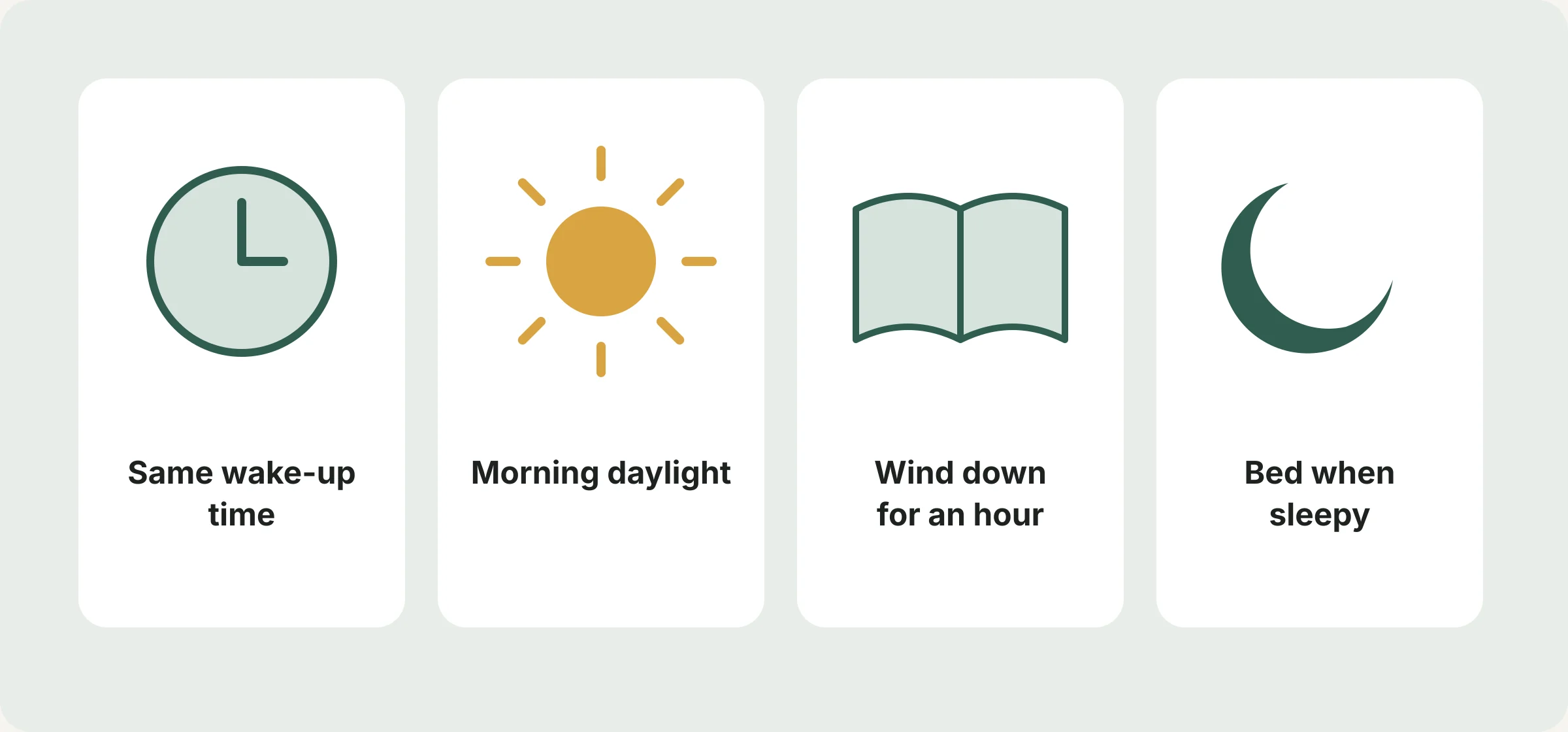
The NHS suggests:3
- get up at the same time every day, even after a bad night
- wind down for an hour before bed: a bath, reading, relaxation
- only go to bed when you feel sleepy
- avoid caffeine, alcohol and smoking for 6 hours before bed
- avoid screens just before bed
- avoid daytime naps, or keep them short and early if you need one during treatment
Being active during the day, especially outdoors, helps you sleep better at night.4
If you’re awake for a long time, get up, do something calm in dim light, and go back to bed when you feel sleepy.
CBT for insomnia
Cognitive behavioural therapy for insomnia (CBT-I) helps change the thoughts and habits that keep you awake. It can be done face to face or through an online programme.3
Sleepio is a digital CBT programme for insomnia that NICE recommends for treating insomnia in primary care.1 It’s free for people with cancer through Macmillan.2 A trial presented in October 2026, in women with cancer and insomnia (most had breast cancer), found that Sleepio led to better sleep than sleep education alone, and also improved fatigue, mood, anxiety and hot flushes.5 See Sleepio and Daylight.
Sleeping tablets
GPs rarely prescribe sleeping tablets now because of side effects and the risk of dependence. They’re usually only used for a few days or weeks when insomnia is very bad.3 Talk to your GP or team before taking any sleep aid, including those from a pharmacy.
When to ask for help
Talk to your GP or team if poor sleep is affecting your daily life, or has gone on for weeks or months.3 Also tell them if pain, hot flushes or worry are keeping you awake, as these can often be treated.
Support
- Sleepio and Daylight: free digital CBT for sleep and anxiety, through Macmillan
- Macmillan Support Line: 0808 808 00 00
- Personalised rehabilitation programmes include sleep alongside activity, nutrition and mental wellbeing. See digital rehabilitation.
Related pages
- Managing cancer-related fatigue
- Menopause symptoms caused by treatment
- Managing anxiety while you wait for treatment
Everyone’s treatment is different, so talk to your cancer team about what is right for you.
References
- National Institute for Health and Care Excellence. Sleepio to treat insomnia and insomnia symptoms (MTG70). 2022. www.nice.org.uk/guidance/mtg70
- Macmillan Cancer Support and Big Health. Free Sleepio for people with cancer. www.sleepio.com/macmillan
- NHS. Insomnia. www.nhs.uk/conditions/insomnia/
- Campbell KL, Winters-Stone KM, Wiskemann J, et al. Exercise guidelines for cancer survivors: consensus statement from international multidisciplinary roundtable. Medicine & Science in Sports & Exercise. 2019;51(11):2375–2390. doi.org/10.1249/MSS.0000000000002116
- Brennan D, et al. Sleepio After Cancer (SAC) randomised trial. Presented at the ESMO Congress, October 2026 (abstract LBA91); reported by Healio. www.healio.com/news/hematology-oncology/20261027/digital-app-immensely-powerful-in-treating-insomnia-among-women-with-cancer