
The short version
- Alcohol is a known cause of breast cancer. In the UK, it’s linked to about 8% of breast cancer cases.1
- Whether drinking after diagnosis affects the chance of breast cancer coming back is less clear: studies have had mixed results.2
- The UK guidelines say to drink no more than 14 units a week, spread over three or more days, with several drink-free days. Drinking less is better for your health in other ways too.3
What we know
Alcohol and breast cancer risk. Any amount of alcohol increases the risk of developing breast cancer. Drinking about one drink (10g of alcohol) a day raises the risk by about 7% compared with not drinking.1
Alcohol after diagnosis. The research on whether drinking after breast cancer affects recurrence is mixed. For example, a large US study of more than 3,600 women followed for over 11 years found no clear link between drinking around the time of diagnosis and recurrence or survival. But it only looked at drinking around the time of diagnosis, and relied on women remembering how much they drank.2
Why cutting down can still help
Even without a clear answer on recurrence, drinking less can:
- lower your risk of a new breast cancer, and other cancers1
- improve sleep and energy
- reduce hot flushes for some people
- help with weight, as alcohol contains a lot of calories
- protect your bones, heart and liver
The UK low-risk drinking guidelines
The UK Chief Medical Officers advise that, to keep health risks low:3
- drink no more than 14 units a week
- spread your drinking over three or more days, rather than saving it up
- have several drink-free days each week
They also say that drinking any level of alcohol increases the risk of a range of cancers.3
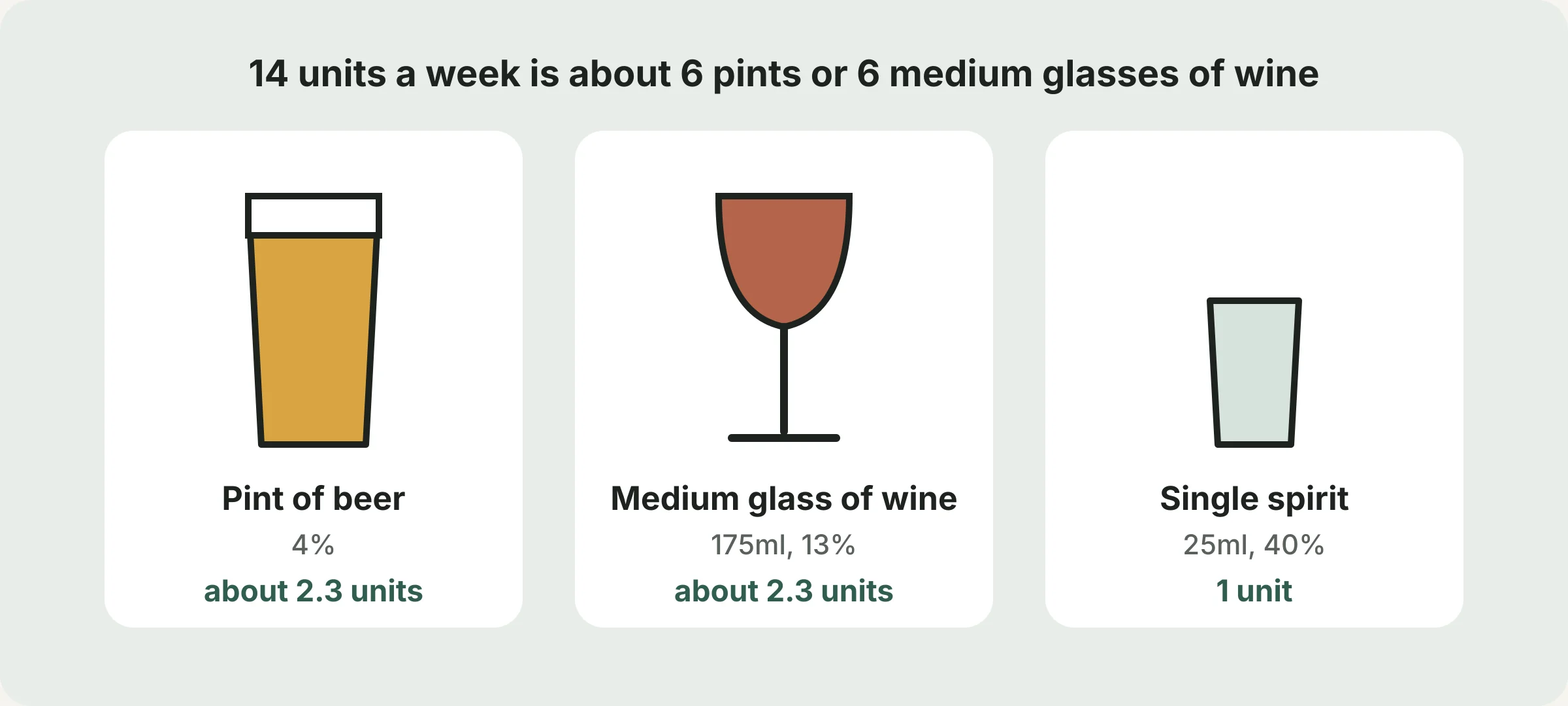
Tips for cutting down
- Plan drink-free days and stick to them.
- Choose smaller glasses, and lower-strength or alcohol-free drinks.
- Alternate alcoholic drinks with water or soft drinks.
- Keep track with an app such as Drinkaware’s free app.
- Tell people you’re cutting down. It makes it easier to say no.
Support
- Drinkline: a free, confidential helpline (England) if you’re worried about your own or someone else’s drinking: 0300 123 1110.4
- Your GP can tell you about local alcohol support services.
Related pages
Everyone’s treatment is different, so talk to your cancer team about what is right for you.
References
- Alcohol Change UK. Alcohol and cancer (fact sheet). alcoholchange.org.uk/alcohol-facts/fact-sheets/alcohol-and-cancer
- The Pathways Study (Kaiser Permanente). Alcohol consumption and prognosis and survival in breast cancer survivors. Cancer. December 2023. pubmed.ncbi.nlm.nih.gov/37555890/
- Department of Health. New alcohol guidelines show increased risk of cancer (UK Chief Medical Officers’ low-risk drinking guidelines). January 2016. www.gov.uk/government/news/new-alcohol-guidelines-show-increased-risk-of-cancer
- Drinkline, the national alcohol helpline (listing by Derbyshire Healthcare NHS Foundation Trust). www.derbyshirehealthcareft.nhs.uk/getting-help/community-support-near-you-infolink/drinkline-national-alcohol-helpline