
The short version
- Problems with memory, concentration and thinking after cancer treatment, sometimes called “chemo brain” or “brain fog”, are common. They’re usually mild and improve over time, but for some people they last longer.1
- They can be caused by treatment, but also by fatigue, poor sleep, menopause, anxiety and low mood, many of which can be treated.1
- Memory aids, routines, being active and managing stress can all help.1
What it can feel like
You might notice that you:
- forget words, names or appointments
- find it hard to concentrate, or to do more than one thing at a time
- take longer to think things through, or to learn something new
- lose your train of thought
It can be frustrating and worrying, especially at work. It’s not “all in your head”, and it’s not a sign that you’re coping badly.
What causes it
The exact cause isn’t clear, and it’s probably a combination of things.1 These can include:
- cancer treatments, including chemotherapy, hormone therapy, radiotherapy and steroids
- side effects such as anaemia, fatigue, sleep problems, poor nutrition and menopause
- anxiety and depression
- some other medicines, such as certain painkillers or anti-sickness medicines1
How long it lasts
For most people, problems are mild and improve over time. For some, they can carry on for months or years after treatment.1
Things that help
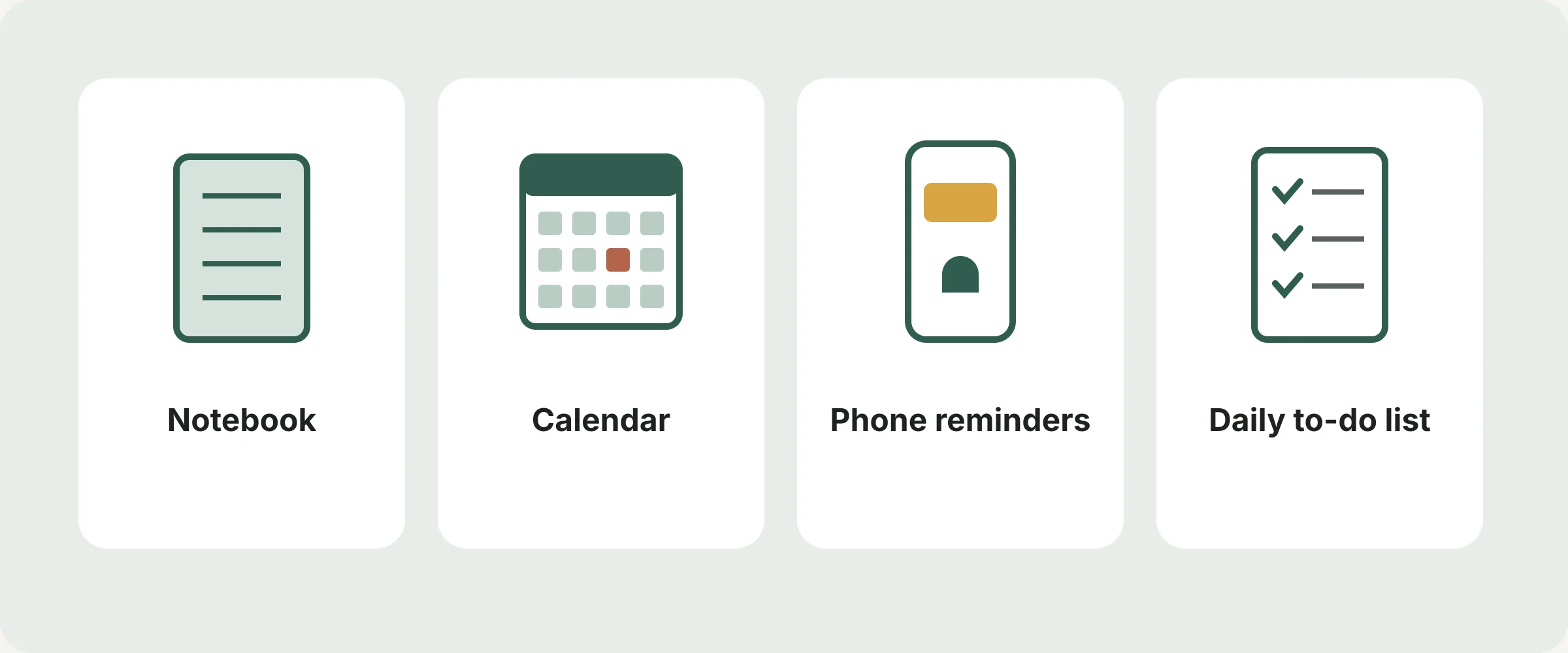
Use memory aids1
- Keep a notebook or use a phone app for lists, notes and reminders.
- Use a calendar or diary for appointments.
- Keep things like keys in the same place.
Plan your day
- Do demanding tasks when you feel freshest.
- Focus on one thing at a time, and limit distractions.
- Take regular breaks, and keep a daily routine.1
- Keep a diary to spot patterns and see your progress.1
Look after your brain and body
- Be active. Exercise can help you feel more alert and reduce fatigue.1 See our 12-week plan.
- Sleep well. Poor sleep makes concentration much harder. See sleep problems.
- Manage stress, with relaxation, music, walking or yoga.1
- Keep your mind active: puzzles, reading, learning something new or a hobby.1
- Eat a balanced diet.
Tell people Let family, friends and colleagues know what helps, such as written instructions or reminders. At work, you can ask for reasonable adjustments. See returning to work.
When to see your doctor
Talk to your GP or team if problems are getting worse, affecting your work or daily life, or you’re worried. Before your appointment, write down what you’ve noticed and how it affects you. Your doctor can check for things that might be adding to the problem, such as anaemia, low mood, poor sleep or medicines, and refer you for more support if needed.1
Free support
- Macmillan Support Line: free on 0808 808 00 00.1
- Breast Cancer Now helpline: free on 0808 800 6000.
Prefer a guided plan?
A personalised rehabilitation programme can help with the things that affect concentration, such as fatigue, sleep, stress and fitness, with a coach to support you. See how digital rehabilitation works.
Related pages
Everyone’s treatment is different, so talk to your cancer team about what is right for you.
References
- Macmillan Cancer Support. Cognitive changes (chemo brain). www.macmillan.org.uk/cancer-information-and-support/impacts-of-cancer/chemo-brain