
The short version
- There’s a lot of confusing advice about diet and cancer. No single food causes or cures breast cancer.
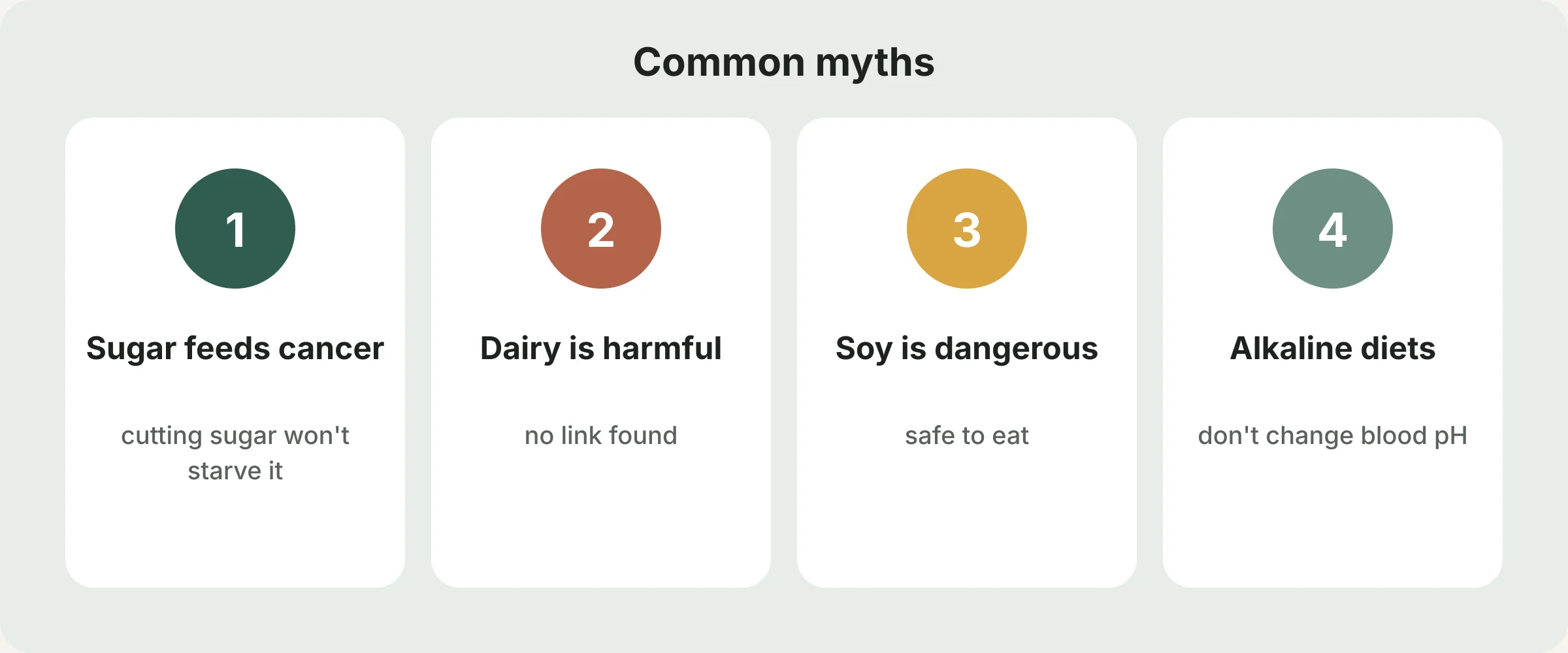
- UK specialist dietitians say that cutting out sugar doesn’t starve cancer cells, dairy doesn’t promote breast cancer, and alkaline diets don’t work.1
- The best-supported approach is a balanced, mainly plant-based diet, avoiding weight gain, and being active.2
Common myths
“Sugar feeds cancer”
Myth. All cells, including healthy ones, use glucose for energy. Cutting sugar out of your diet doesn’t stop glucose reaching cancer cells.1 It’s still sensible to cut down on sugary drinks and sweets, as they’re linked to weight gain,1 but you don’t need to avoid fruit or starchy foods.
“Dairy causes or feeds breast cancer”
Myth. British dietitians say there’s no link between diets containing dairy and the risk of cancer, or cancer growth because of hormones, and some evidence suggests dairy may even be protective for breast cancer.1
“Soy is dangerous after breast cancer”
Myth. The World Cancer Research Fund found limited evidence that eating soy foods is linked to a lower risk of death after breast cancer. There’s no need to stop eating soy foods such as tofu and soya milk.2
“An alkaline diet can cure cancer”
Myth. There’s no scientific evidence that an alkaline diet cures cancer, and the food you eat doesn’t change your blood’s pH.1
“Supplements prevent cancer coming back”
Not supported. There’s no good evidence that supplements prevent breast cancer coming back, and some vitamins and minerals could interfere with treatment. Check with your team before taking any.1, 3 Vitamin D in autumn and winter is recommended for most people in the UK.1
“Fasting makes chemotherapy work better”
Not proven. Some early research suggests short-term fasting might affect chemotherapy, but the evidence is preliminary. Don’t fast during treatment without advice from your team, especially if you’ve lost weight or have other health conditions.1
What does help
- Avoiding weight gain after diagnosis, if you’re not underweight.2
- More fibre, from wholegrains, vegetables, fruit and pulses.2
- A healthy overall eating pattern.2
- Less alcohol. See alcohol and recurrence.
- Being active.4
See diet and breast cancer recurrence: what we know.
Spotting unreliable advice
Be wary of claims that:
- promise to cure cancer or “boost” your immune system
- tell you to cut out whole food groups
- rely on personal stories rather than research
- are linked to products for sale
Ask your team or a registered dietitian if you’re unsure.
Related pages
Everyone’s treatment is different, so talk to your cancer team about what is right for you.
References
- British Dietetic Association Oncology Specialist Group. Cancer diets: myths and more. January 2024. www.bda.uk.com/resource/cancer-diets-myths-and-more.html
- World Cancer Research Fund. Breast cancer survivors: Global Cancer Update Programme (CUP Global) findings on body weight, physical activity and diet after diagnosis. www.wcrf.org/research-policy/evidence-for-our-recommendations/after-a-cancer-diagnosis-follow-recommendations/breast-cancer-survivors-research/
- Cancer Research UK. Safety of complementary and alternative therapies. www.cancerresearchuk.org/about-cancer/cancer-in-general/treatment/complementary-alternative-therapies/about/safety
- Campbell KL, Winters-Stone KM, Wiskemann J, et al. Exercise guidelines for cancer survivors: consensus statement from international multidisciplinary roundtable. Medicine & Science in Sports & Exercise. 2019;51(11):2375–2390. doi.org/10.1249/MSS.0000000000002116