
The short version
- Complementary therapies, such as massage, relaxation and yoga, can help you feel better alongside medical treatment. Alternative therapies, used instead of medical treatment, have no evidence that they can cure or control cancer.1
- Some supplements and herbal remedies can interact with cancer treatment, making it less effective or side effects worse.1
- Always tell your team or pharmacist before taking any supplement or starting a therapy.1
Complementary or alternative?
- Complementary therapies are used alongside your medical treatment, to help you cope and feel better.1
- Alternative therapies are used instead of medical treatment. There’s no scientific evidence that any alternative therapy can cure or control cancer.1
If you’re thinking of stopping medical treatment, please talk to your team first. They can still help with symptoms such as pain and sickness.1
Supplements: what to watch out for
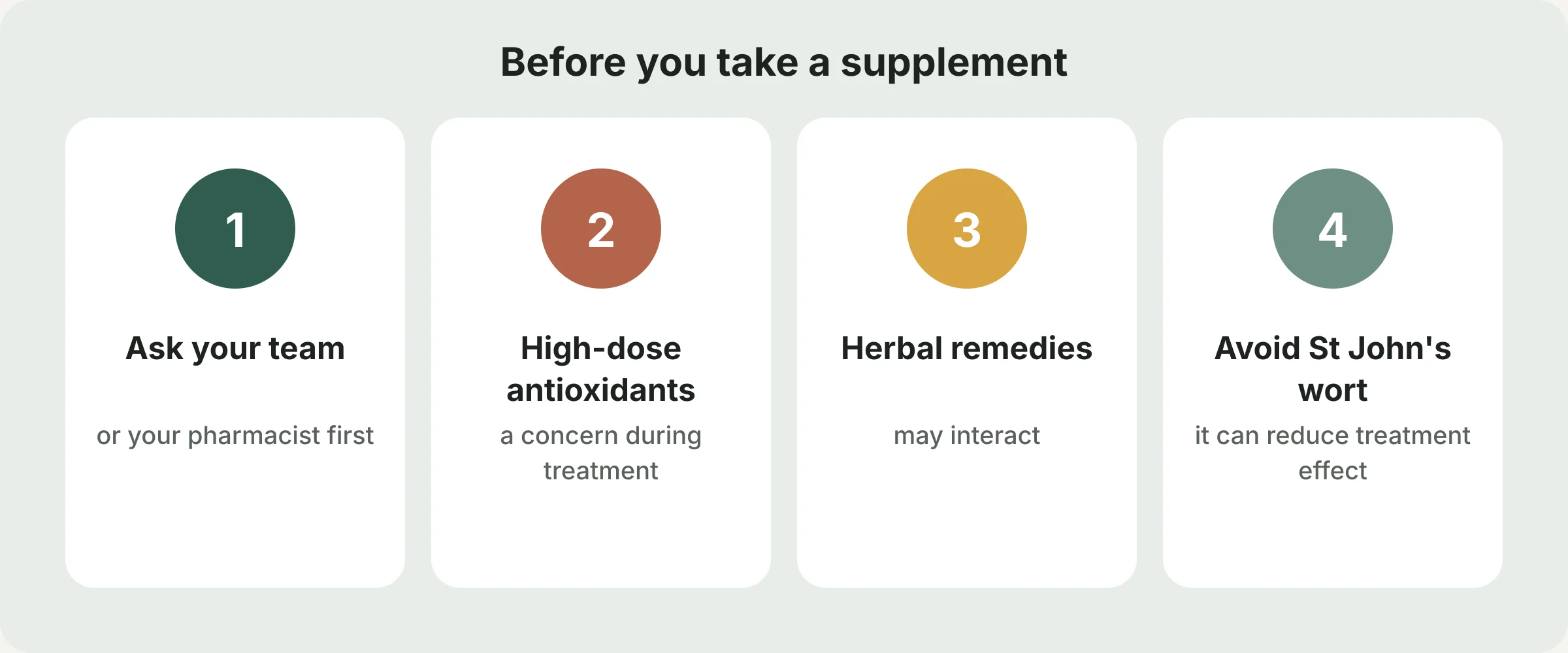
- St John’s wort can make some cancer treatments less effective.2
- High-dose antioxidants, such as vitamins A, C and E or selenium, are a concern during chemotherapy and radiotherapy, as they could protect cancer cells from treatment. The evidence isn’t clear.1
- Herbal remedies for menopause, including those containing plant oestrogens, may not be safe after breast cancer. See hot flushes.
- Vitamin D and calcium may be recommended if you’re having treatment that affects your bones. Take them as your team advises. See bone health.
There’s no good evidence that supplements prevent breast cancer coming back.3 A varied diet is the best way to get the nutrients you need. See diet and breast cancer recurrence.
Complementary therapies that may help
- Relaxation, mindfulness and yoga may help with fatigue, stress and sleep.4 See yoga and Pilates and breathing and relaxation.
- Massage and aromatherapy may help you relax. Tell the therapist about your treatment, and avoid massage on areas affected by surgery, radiotherapy or lymphoedema unless you’ve had specialist advice.
- Acupuncture may be offered by some hospitals. Check with your team first, especially if your blood counts are low.
Many hospitals and cancer support centres offer complementary therapies free of charge. Ask your breast care nurse.
Tips for staying safe
- Tell your team about everything you take or use, including vitamins, herbal remedies and teas.1
- Tell your therapist about your cancer and treatment.1
- Be wary of products or practitioners that promise to cure cancer, ask for large sums of money, or tell you to stop medical treatment.
- Check qualifications: use a practitioner registered with a recognised professional body.
Related pages
Everyone’s treatment is different, so talk to your cancer team about what is right for you.
References
- Cancer Research UK. Safety of complementary and alternative therapies. www.cancerresearchuk.org/about-cancer/cancer-in-general/treatment/complementary-alternative-therapies/about/safety
- Macmillan Cancer Support. Depression and cancer. www.macmillan.org.uk/cancer-information-and-support/impacts-of-cancer/depression
- World Cancer Research Fund. Breast cancer survivors: Global Cancer Update Programme (CUP Global) findings on body weight, physical activity and diet after diagnosis. www.wcrf.org/research-policy/evidence-for-our-recommendations/after-a-cancer-diagnosis-follow-recommendations/breast-cancer-survivors-research/
- Macmillan Cancer Support. Tiredness (fatigue) and cancer. www.macmillan.org.uk/cancer-information-and-support/impacts-of-cancer/tiredness