
The short version
- Joint pain and stiffness are common side effects of aromatase inhibitors (anastrozole, letrozole and exemestane), especially in the hands, feet, knees, hips and back.1, 2
- Regular exercise helps. In a year-long trial, aerobic exercise plus strength training cut worst joint pain by 29%.3
- Don’t stop your treatment without talking to your team. Painkillers, physiotherapy or switching to a different drug can help.1
What it feels like
Aromatase inhibitors lower oestrogen levels, which can cause aches and stiffness in the joints and sometimes the muscles. It’s most common in the hands and feet, but can also affect the knees, hips, lower back and shoulders. Many people notice it most in the morning. The pain may be constant or come and go.1
If you’ve only recently started an aromatase inhibitor, the pain may ease over the next few months as your body adjusts.1
Exercise: one of the best-evidenced treatments
A US trial followed 121 women taking aromatase inhibitors who had joint pain. Half did 150 minutes of aerobic exercise a week and supervised strength training twice a week for a year. Their worst joint pain fell by 29%, while it rose slightly in the group that didn’t exercise. Other measures of pain and stiffness also improved, and there were no exercise-related problems.3
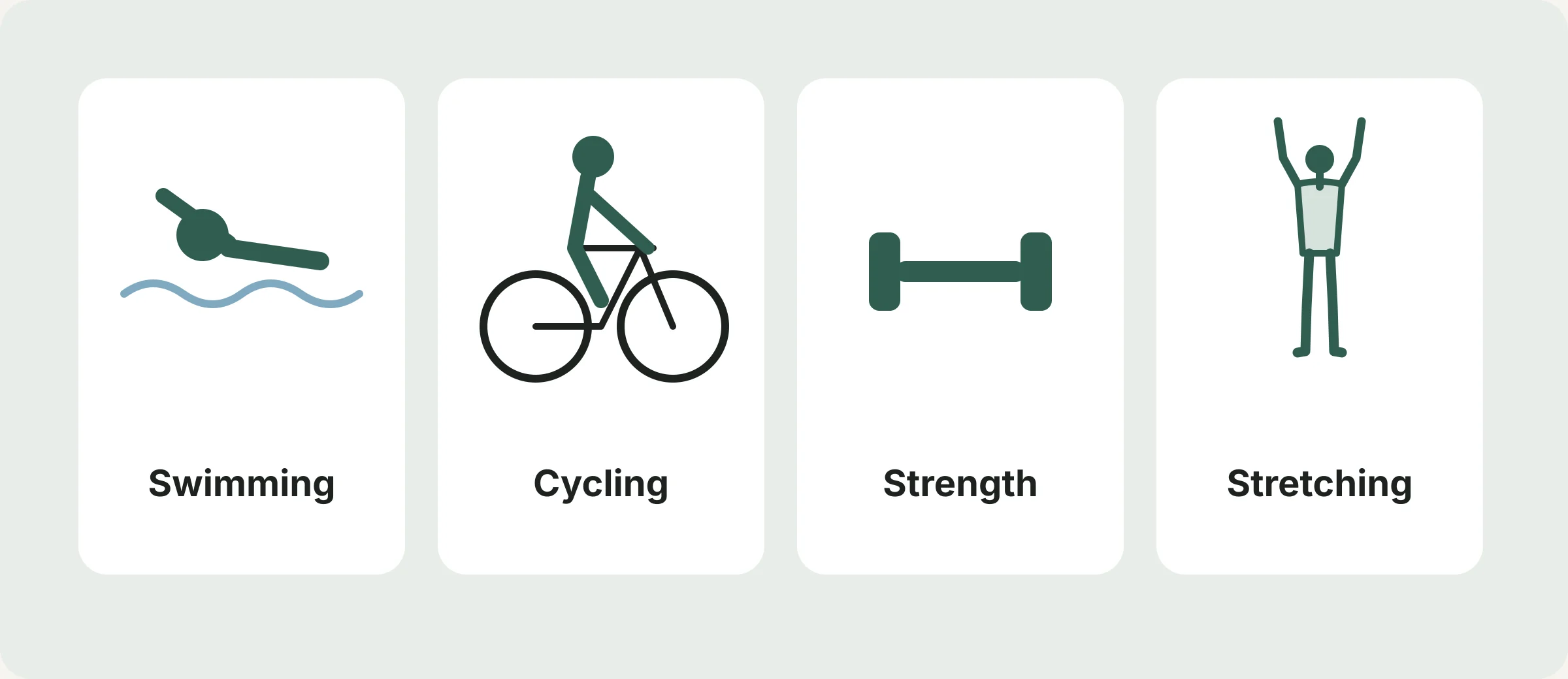
Joint-friendly ways to be active:2, 1
- swimming and cycling, which take weight off sore joints
- strength exercises, such as squats, wall press-ups, resistance bands or light weights, to strengthen the muscles around your joints
- stretching, yoga, tai chi or Pilates for stiffness
- walking, building up gradually
Start gently and build up. A little soreness after exercise is normal; sharp or worsening pain is not. See our strength exercises and exercise on hormone therapy.
Other things that can help
- Painkillers such as paracetamol or ibuprofen. Check with your doctor or pharmacist that they’re suitable for you.1, 2
- Physiotherapy. Your team can refer you for exercises tailored to your symptoms.2
- Heat or ice packs, good posture and regular breaks from sitting.2
- A healthy weight. If you’re overweight, losing some weight can reduce pressure on your joints.2
- Acupuncture or massage may help some people. Check with your team first.1
- Vitamin D, if your levels are low. Ask your doctor before taking supplements.1
Switching or pausing treatment
If joint pain is hard to manage, your team may suggest switching to a different aromatase inhibitor, changing to tamoxifen (which causes fewer joint problems), trying a different brand, or a short break.1, 2
Talk to your team before stopping
Hormone therapy lowers the chance of breast cancer coming back. Don’t stop taking it without talking to your team first, as there’s usually a way to ease the pain.1 Also contact your team if pain is unmanageable, keeps you awake, affects your balance or mobility, or comes with changes in feeling.2
Prefer a guided plan?
A personalised programme can build up strength and activity safely around your joint pain, with coaches who adjust it as you go. See how digital rehabilitation works.
Related pages
Everyone’s treatment is different, so talk to your cancer team about what is right for you.
References
- Macmillan Cancer Support. Joint and muscle pain from hormone therapy for breast cancer. www.macmillan.org.uk/cancer-information-and-support/impacts-of-cancer/pain-when-taking-hormone-therapy-for-breast-cancer
- Breast Cancer Now. Joint and muscle pain during breast cancer treatment. breastcancernow.org/about-breast-cancer/treatment/hormone-endocrine-therapy/joint-and-muscle-pain-during-breast-cancer-treatment
- Irwin ML, Cartmel B, Gross CP, et al. Randomized exercise trial of aromatase inhibitor-induced arthralgia in breast cancer survivors. Journal of Clinical Oncology. 2015. doi.org/10.1200/JCO.2014.57.1547