
The short version
- Treatment for primary breast cancer is usually a combination of surgery, radiotherapy, chemotherapy, hormone therapy and targeted therapy. Most people don’t have all of them.1
- Surgery is usually the main treatment. Some people have chemotherapy or hormone therapy first to shrink the cancer.1
- Prehab fits before treatment and between treatments, and rehab after. Being active is safe and helpful at every stage for most people.2
Common pathways
Your specialist team will recommend a plan based on the type, size and spread of the cancer, test results such as hormone receptor and HER2 status, and your own health and wishes.1, 3 These are common patterns:
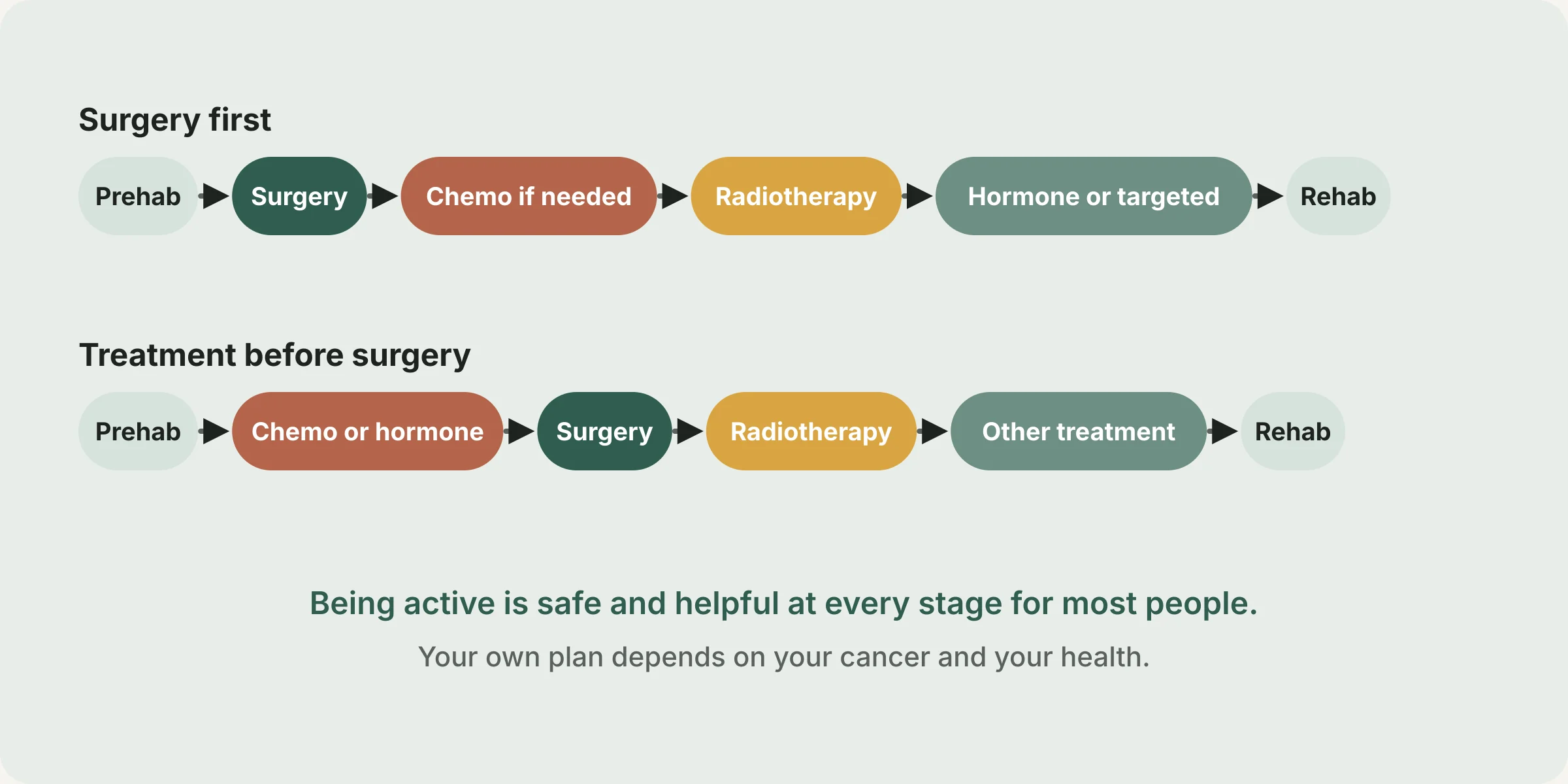
Surgery first
- Surgery: breast-conserving surgery (lumpectomy) or mastectomy, usually with surgery to some lymph nodes in the armpit.
- Chemotherapy, if needed, for example if the cancer has spread to lymph nodes or is growing quickly.1
- Radiotherapy, to lower the chance of the cancer coming back.1
- Hormone therapy for hormone receptor positive cancer, usually for 5 to 10 years.4
- Targeted therapy, for example for HER2-positive cancer.
Treatment before surgery
- Chemotherapy (and targeted therapy if HER2-positive), or sometimes hormone therapy, to make the cancer smaller before surgery.1
- Surgery.
- Radiotherapy and other treatments as needed.
Where prehab and rehab fit
| Stage | What helps | Read more |
|---|---|---|
| Before treatment | Prehab: moving more, strength exercises, eating well, preparing your mind | Preparing for treatment |
| Before surgery | Arm and shoulder movement, strength and fitness | Preparing for a mastectomy |
| During chemotherapy | Staying active around your treatment cycle | Exercise during chemotherapy |
| After surgery | Arm and shoulder exercises | Arm and shoulder exercises |
| On hormone therapy | Strength and impact exercise for bones and joints | Exercise on hormone therapy |
| After treatment | Rehab: rebuilding strength, energy and confidence | Recovering after treatment |
International guidelines say exercise is safe during and after cancer treatment for most people, and improves fatigue, anxiety, depression, physical function and quality of life.2
How long it takes
Timings vary a lot. As a rough guide, surgery recovery takes a few weeks, chemotherapy usually lasts several months, and radiotherapy usually takes one to three weeks. Hormone therapy continues for years. In England, treatment should usually start within 31 days of agreeing your treatment plan.5
Questions to ask about your plan
- Which treatments will I have, and in what order?
- Why is this the best plan for me? Are there other options?
- How long will each treatment take, and when will it start?
- How can I prepare? Is there a prehab programme?
See more questions to ask after a breast cancer diagnosis.
Prefer a guided plan?
A personalised programme can plan exercise, nutrition, rest and wellbeing around your treatment dates, before, during and after treatment. See how digital prehab works or compare UK programmes.
Related pages
Everyone’s treatment is different, so talk to your cancer team about what is right for you.
References
- NHS. Treatment for breast cancer in women. www.nhs.uk/conditions/breast-cancer-in-women/treatment-for-breast-cancer-in-women
- Campbell KL, Winters-Stone KM, Wiskemann J, et al. Exercise guidelines for cancer survivors: consensus statement from international multidisciplinary roundtable. Medicine & Science in Sports & Exercise. 2019;51(11):2375–2390. doi.org/10.1249/MSS.0000000000002116
- NHS. Tests and next steps for breast cancer in women. www.nhs.uk/conditions/breast-cancer-in-women/tests-and-next-steps-for-breast-cancer-in-women/
- Breast Cancer Now. Hormone (endocrine) therapy. breastcancernow.org/about-breast-cancer/treatment/hormone-endocrine-therapy
- Calderdale and Huddersfield NHS Foundation Trust. National cancer waiting time standards. www.cht.nhs.uk/services/clinical-services/oncology/information-support/national-standards