
The short version
- Walking is one of the simplest ways to get fitter before treatment. You don’t need any equipment, and you can start from wherever you are now.
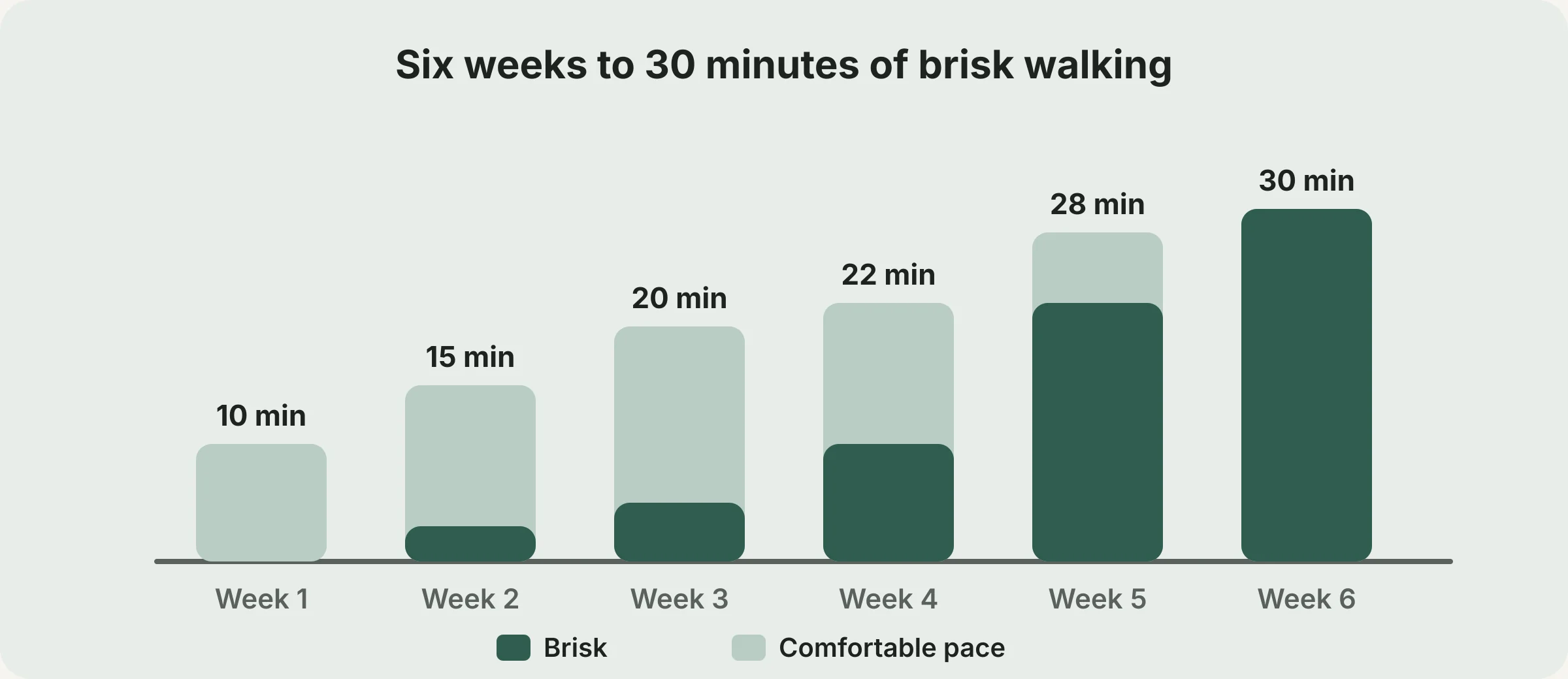
- This six-week plan builds from 10 minutes a day towards 30 minutes of brisk walking on most days, in line with UK activity guidelines.1
- Aim for “moderate” effort: breathing faster, but still able to talk.1
Why walk before treatment?
Being fitter before surgery and other treatment can help you cope with treatment and recover more quickly.2 Being active also helps with anxiety, mood, sleep and fatigue.3 Walking is easy to fit into your day and to keep going during treatment.
How hard should it feel?
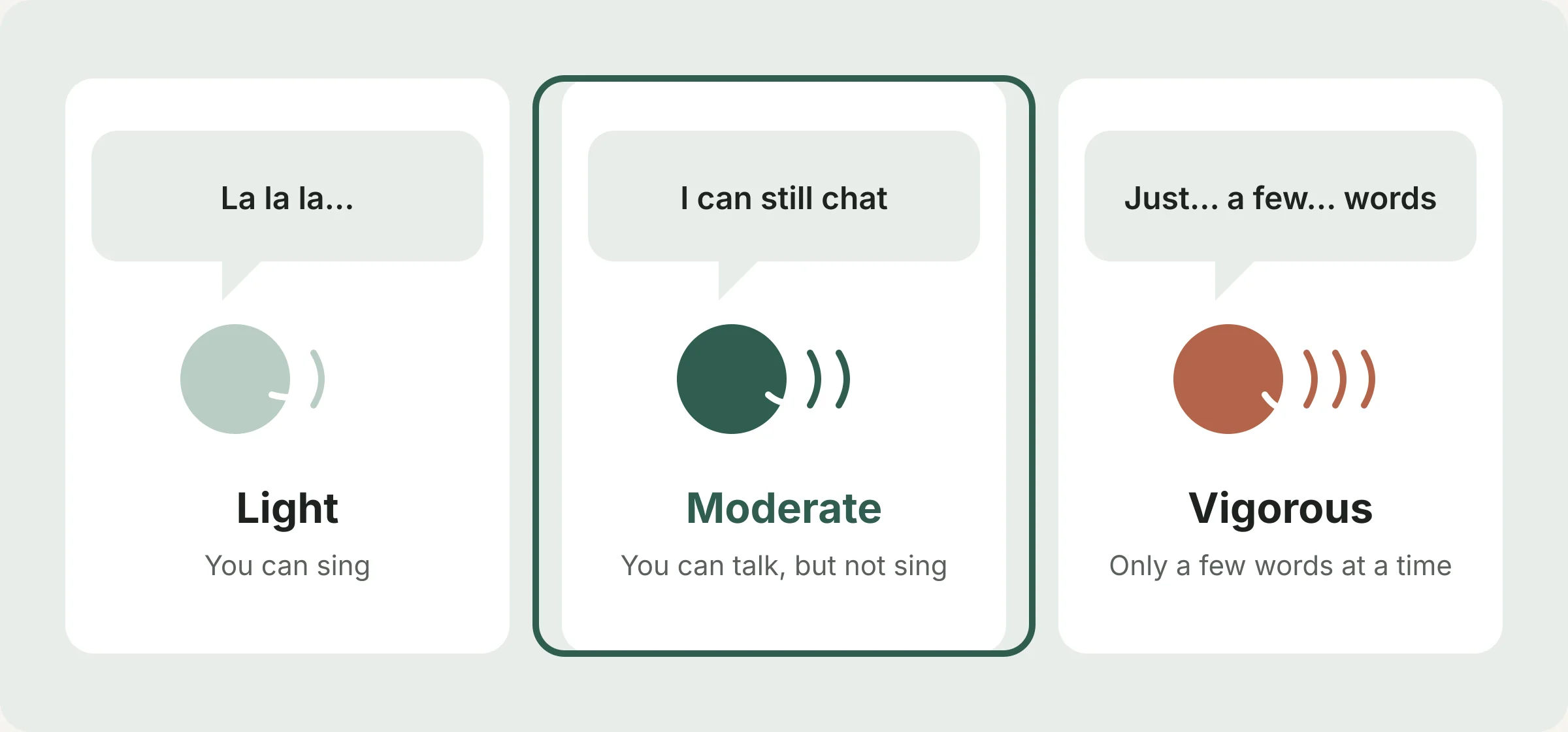
Use the talk test. At a moderate pace you can talk, but not sing.1 If you can only say a few words, slow down a little.
The six-week plan
| Week | What to do |
|---|---|
| Week 1 | 10 minutes a day, at a comfortable pace. Split into two 5-minute walks if you need to |
| Week 2 | 15 minutes a day, including a few minutes a little faster |
| Week 3 | 20 minutes a day, with 5 minutes at a brisk pace |
| Week 4 | 20 to 25 minutes, with 10 minutes brisk |
| Week 5 | 25 to 30 minutes, mostly brisk, and include a gentle hill or stairs |
| Week 6 | 30 minutes of brisk walking on most days |
The UK guidelines suggest building up to 150 minutes of moderate activity a week, and doing strength exercises on two days a week too.1 See strength exercises before treatment.
Short on time? If treatment is coming up quickly, any extra walking helps. Start now and do what you can.
Tips to keep going
- Put it in your diary, like an appointment.
- Walk with someone, or join a walking group.
- Use a step counter on your phone and try to beat last week’s total.
- Build walking into your day: get off the bus a stop early, or walk to the shops.
- Wear comfortable shoes, and take water when it’s warm.
- Repeat a week if it felt hard. There’s no rush.
Safety
- If you have a heart or lung condition, joint problems, or are unsure, check with your GP or team before starting.
- Stop and seek advice if you have chest pain, feel faint, or are much more breathless than usual.
- On chemotherapy, adjust to how you feel each day. See when to rest.
Prefer a guided plan?
A personalised prehab programme can set walking and strength goals around your treatment dates and adjust them as you go, with a coach to support you. See how digital prehab works.
Related pages
Everyone’s treatment is different, so talk to your cancer team about what is right for you.
References
- UK Chief Medical Officers. Physical activity guidelines for adults and older adults. 2019. www.gov.uk/government/publications/physical-activity-guidelines-adults-and-older-adults/physical-activity-for-adults-and-older-adults-19-and-over-text-of-the-infographic
- Macmillan Cancer Support, Royal College of Anaesthetists and NIHR Cancer and Nutrition Collaboration. Principles and guidance for prehabilitation within the management and support of people with cancer. 2019, updated November 2020. www.macmillan.org.uk/healthcare-professionals/news-and-resources/guides/principles-and-guidance-for-prehabilitation
- Campbell KL, Winters-Stone KM, Wiskemann J, et al. Exercise guidelines for cancer survivors: consensus statement from international multidisciplinary roundtable. Medicine & Science in Sports & Exercise. 2019;51(11):2375–2390. doi.org/10.1249/MSS.0000000000002116