
The short version
- Hormone therapy such as tamoxifen or an aromatase inhibitor (anastrozole, letrozole or exemestane) is usually taken for 5 to 10 years.1 Staying active is one of the best things you can do alongside it.
- Regular exercise, especially strength training, can ease joint pain on aromatase inhibitors, help protect your bones, and help with fatigue, mood and weight.2, 3
- Don’t stop your hormone therapy because of side effects without talking to your team. There’s usually a way to help.1
Why activity matters on hormone therapy
Hormone therapy lowers or blocks oestrogen, which helps stop hormone-sensitive breast cancer coming back. Because it’s taken for years, its side effects can affect daily life for a long time. Common ones include:1
- hot flushes and night sweats
- joint pain and stiffness, especially with aromatase inhibitors
- effects on the bones, with aromatase inhibitors
- fatigue, low mood and changes in weight
Regular physical activity can help with several of these at once.
What the evidence says
- Joint pain: in a year-long trial of women taking aromatase inhibitors who had joint pain, those who did 150 minutes of aerobic exercise a week plus supervised strength training twice a week saw their worst joint pain fall by 29%. In the comparison group it rose slightly.2
- Fatigue, mood and quality of life: exercise improves fatigue, anxiety, depression, physical function and quality of life during and after cancer treatment.3
- Bones: strength training and impact exercise help keep bones strong, which matters if you’re taking an aromatase inhibitor.4
What to aim for
- Aerobic activity: build up to 150 minutes a week, for example 30 minutes on five days. Swimming and cycling can feel kinder on sore joints.5
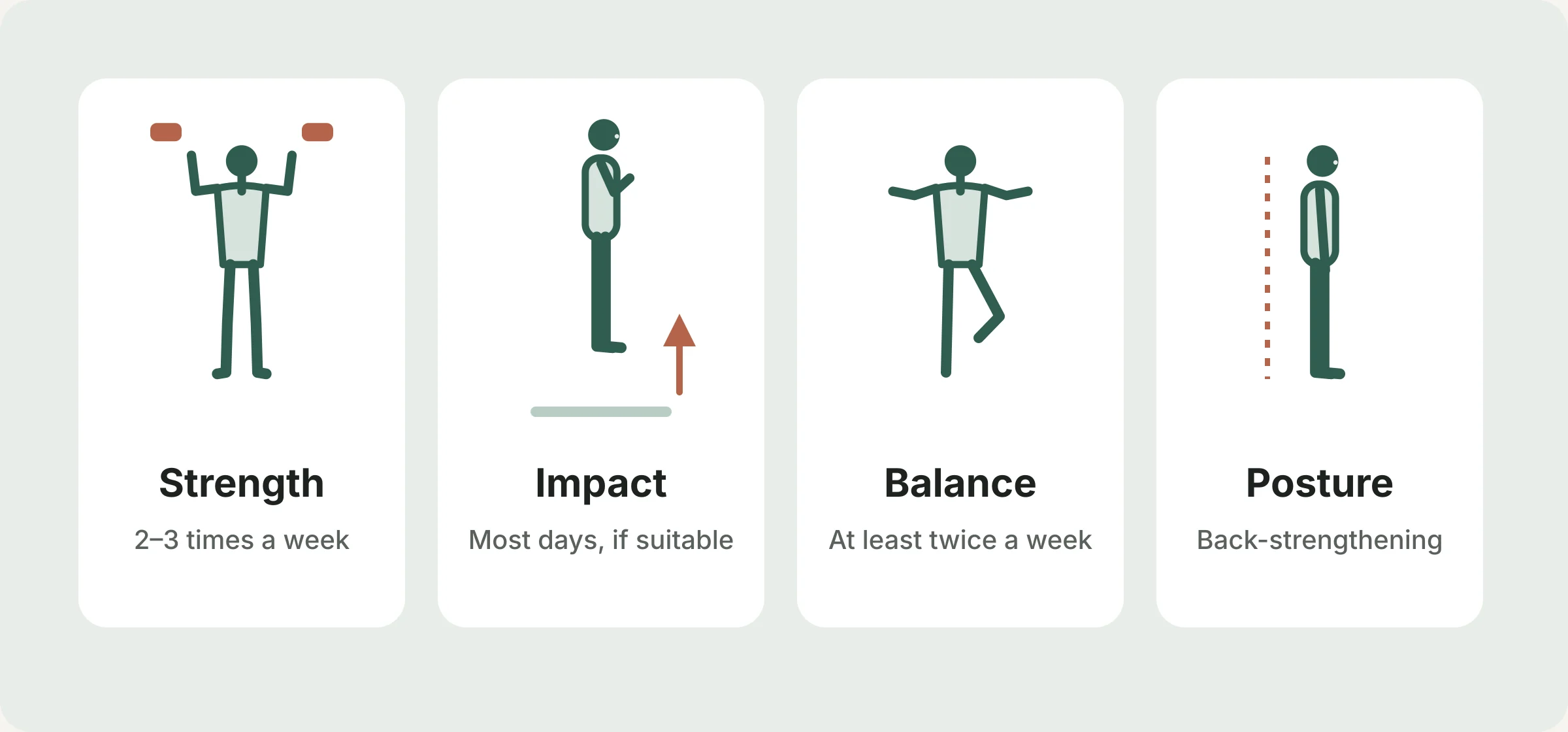
- Strength training: two or three times a week, working the main muscle groups. Gradually increase the weight or resistance.4, 3
- Impact exercise, if your bones are healthy and your team agrees: brisk walking, stair climbing, or gentle jogging or hopping on most days.4
- Stretching and balance: yoga, tai chi or Pilates can help with stiffness.6
Tips for staying active long term
- Find something you enjoy. You’re more likely to keep it up for years.
- Mix it up: walking, swimming, a class, gardening.
- Build strength gradually, starting with body-weight exercises such as sit-to-stands and wall press-ups. See our strength exercises.
- Warm up well if your joints are stiff, especially in the morning.
- Plan around hot flushes: exercise at cooler times of day, wear layers and keep water to hand.
Getting help with side effects
Talk to your team or GP if side effects are hard to live with. Options include painkillers, physiotherapy, switching to a different hormone therapy, or a short break, depending on your situation.1, 5 Read more:
- Joint pain on aromatase inhibitors
- Protecting your bones during treatment
- Menopause symptoms caused by treatment
Prefer a guided plan?
A personalised programme can build a long-term routine of strength, activity, nutrition and sleep around your hormone therapy, with coaches to help you stick with it. QuestPrehab Recover is open to people on ongoing hormone therapy. Compare UK programmes.
Related pages
Everyone’s treatment is different, so talk to your cancer team about what is right for you.
References
- Breast Cancer Now. Hormone (endocrine) therapy. breastcancernow.org/about-breast-cancer/treatment/hormone-endocrine-therapy
- Irwin ML, Cartmel B, Gross CP, et al. Randomized exercise trial of aromatase inhibitor-induced arthralgia in breast cancer survivors. Journal of Clinical Oncology. 2015. doi.org/10.1200/JCO.2014.57.1547
- Campbell KL, Winters-Stone KM, Wiskemann J, et al. Exercise guidelines for cancer survivors: consensus statement from international multidisciplinary roundtable. Medicine & Science in Sports & Exercise. 2019;51(11):2375–2390. doi.org/10.1249/MSS.0000000000002116
- Brooke-Wavell K, Skelton DA, Barker KL, et al. Strong, steady and straight: UK consensus statement on physical activity and exercise for osteoporosis. British Journal of Sports Medicine. 2022;56(15):837. bjsm.bmj.com/content/56/15/837
- Macmillan Cancer Support. Joint and muscle pain from hormone therapy for breast cancer. www.macmillan.org.uk/cancer-information-and-support/impacts-of-cancer/pain-when-taking-hormone-therapy-for-breast-cancer
- Breast Cancer Now. Joint and muscle pain during breast cancer treatment. breastcancernow.org/about-breast-cancer/treatment/hormone-endocrine-therapy/joint-and-muscle-pain-during-breast-cancer-treatment