
The short version
- Some people keep working during treatment, some reduce their hours, and some take time off. There’s no right choice: it depends on your treatment, your job and how you feel.
- You don’t have to tell your employer you have cancer, but telling them can help you get support and adjustments.1
- Cancer is treated as a disability under the Equality Act from diagnosis, so your employer must consider reasonable adjustments.2
Telling your employer
You don’t have to tell your employer, but doing so means they can make changes to help, and you can ask them to keep it confidential.1 It can help to:
- plan what you want to say, and what you’d like to keep private
- ask for a meeting with your manager or HR
- agree what colleagues will be told, if anything
Time off and pay
- There’s no legal right to paid time off for medical appointments, so agree a plan with your employer early. Options may include sick leave, reduced or flexible hours, or annual or unpaid leave.1
- Statutory Sick Pay is paid from the first day you’re off sick, since April 2026.3 Check your contract for company sick pay.
- You’ll need a fit note if you’re off sick for more than 7 days. Any healthcare professional treating you can give you one.1
Reasonable adjustments
These are changes that help you keep working, such as:1, 4
- time off for treatment and appointments
- reduced or flexible hours
- working from home on some days
- changes to your duties, such as less lifting or travel
Access to Work can help pay for practical support.5 See your rights at work.
Managing at work
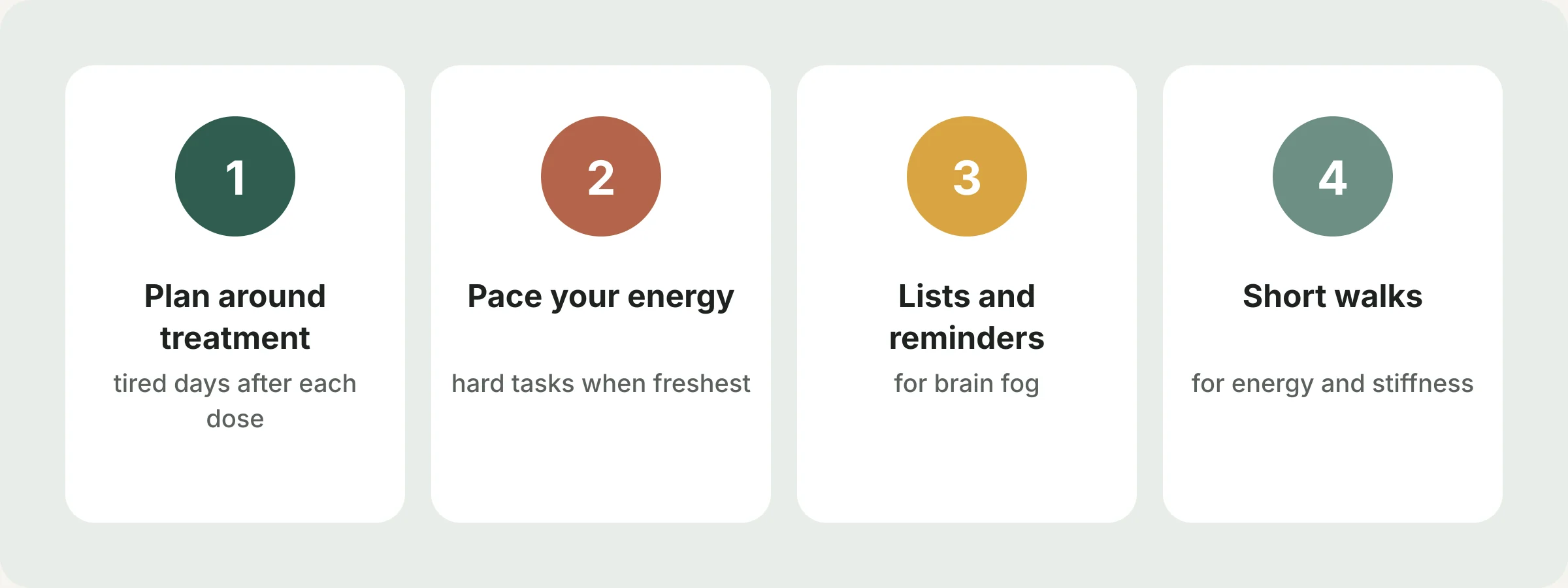
- Plan around treatment: many people feel worse for a few days after each chemotherapy dose, and tiredness can build during radiotherapy.
- Pace yourself: do demanding tasks when you have most energy. See energy pacing.
- Use lists and reminders if concentration is harder. See brain fog (chemo brain).
- Take short walks and breaks to help with energy and stiffness.
- Reduce infection risk during chemotherapy: ask about working from home when your blood counts are low. See staying active with a low immune system.
If you’re self-employed
Think about who could cover your work, and whether you can get help such as Access to Work or benefits. Macmillan’s money advisers can help on 0808 808 00 00.1, 6
Related pages
- Returning to work after breast cancer
- Check what your employer or insurer offers
- Financial help, benefits and grants
Everyone’s treatment is different, so talk to your cancer team about what is right for you.
References
- Macmillan Cancer Support. Work and cancer FAQs. www.macmillan.org.uk/cancer-information-and-support/impacts-of-cancer/work-and-cancer/faqs
- GOV.UK. Definition of disability under the Equality Act 2010. www.gov.uk/definition-of-disability-under-equality-act-2010
- Acas. Statutory Sick Pay (SSP). www.acas.org.uk/checking-sick-pay/statutory-sick-pay-ssp
- Cancer Research UK. The Disability Discrimination Act, Equality Act and cancer. www.cancerresearchuk.org/about-cancer/coping/practically/the-disability-discrimination-act-equality-act-and-cancer
- GOV.UK. Access to Work: get support if you have a disability or health condition. www.gov.uk/access-to-work
- Macmillan Cancer Support. Welfare rights advice. macmillan.org.uk/cancer-information-and-support/get-help/financial-help/welfare-rights-advice