
The short version
- Being more active before breast cancer surgery is safe for most people and helps you go into treatment feeling stronger and more in control.
- Aim to build up towards about 30 minutes of moderate activity, three times a week, plus strength exercises twice a week.1 Start smaller if you need to.
- Learn your arm and shoulder exercises before surgery, so they’re familiar afterwards.2
Why move more before surgery?
Getting fitter before an operation is one of the main parts of prehabilitation. UK guidance recommends physical activity, alongside nutrition and emotional support, as early as possible after a cancer diagnosis.3
For breast cancer specifically, studies show that exercise before surgery is safe and practical, and it mostly improves physical function, quality of life and wellbeing.4, 5 There is also strong evidence that staying active during and after treatment helps with fatigue, mood and physical function.1 Starting before surgery means the habit is already in place when you need it most.
Being active can also:
- give you something positive to focus on while you wait
- help you sleep better and feel less anxious
- make it easier to get moving again after surgery
How much activity?
The UK guideline for all adults is 150 minutes of moderate activity a week, plus strength exercises on at least two days.6 For people with cancer, international guidance suggests that about 30 minutes of moderate activity three times a week, plus strength exercises twice a week, is enough to help.1
That’s a target to work towards. If you haven’t been active for a while, start with 10 minutes a day and build up.
How hard?
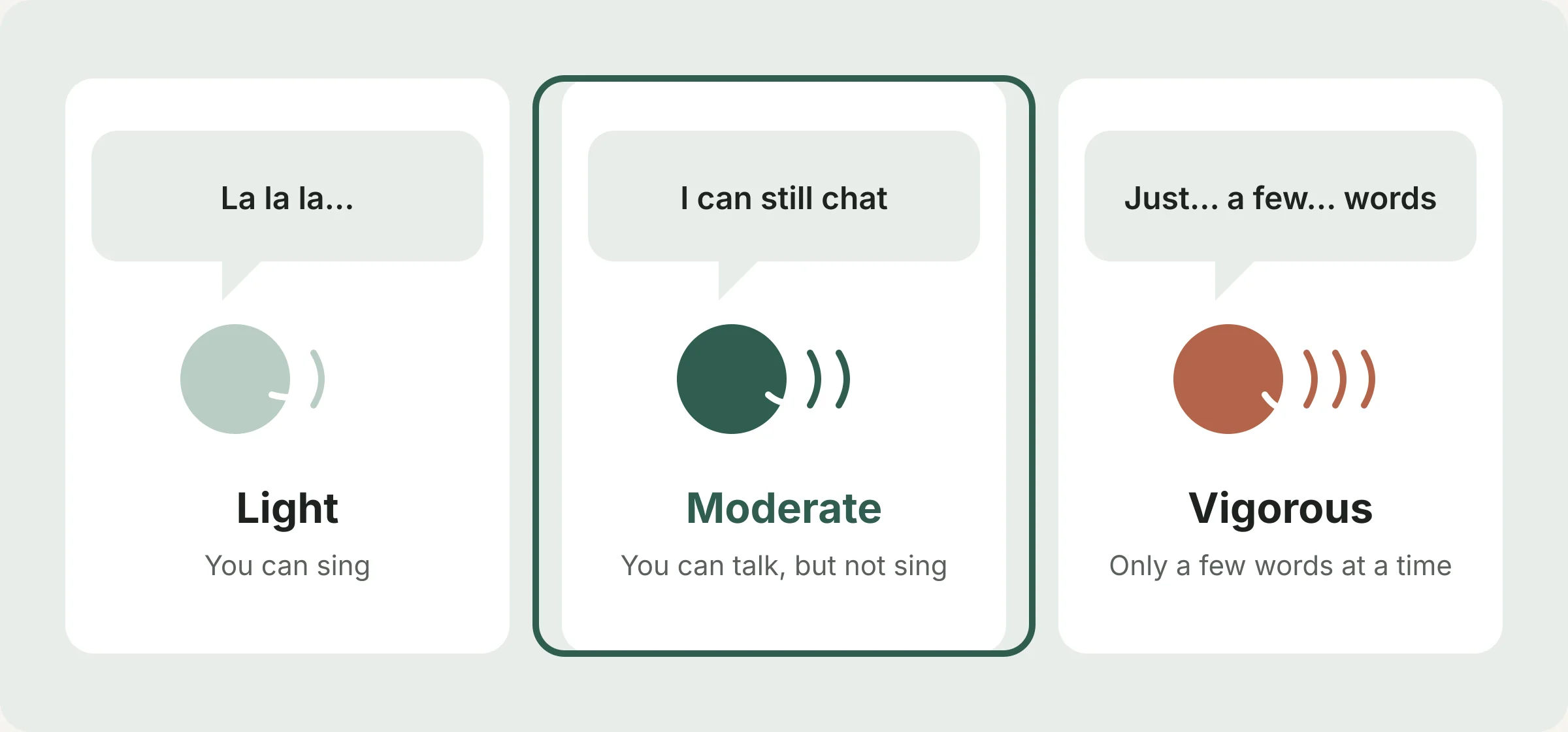
Moderate activity makes you breathe faster, but you can still hold a conversation.6
What kind of activity?
Walking
Walking is free, easy to adjust and suits most people. A simple way to build up:
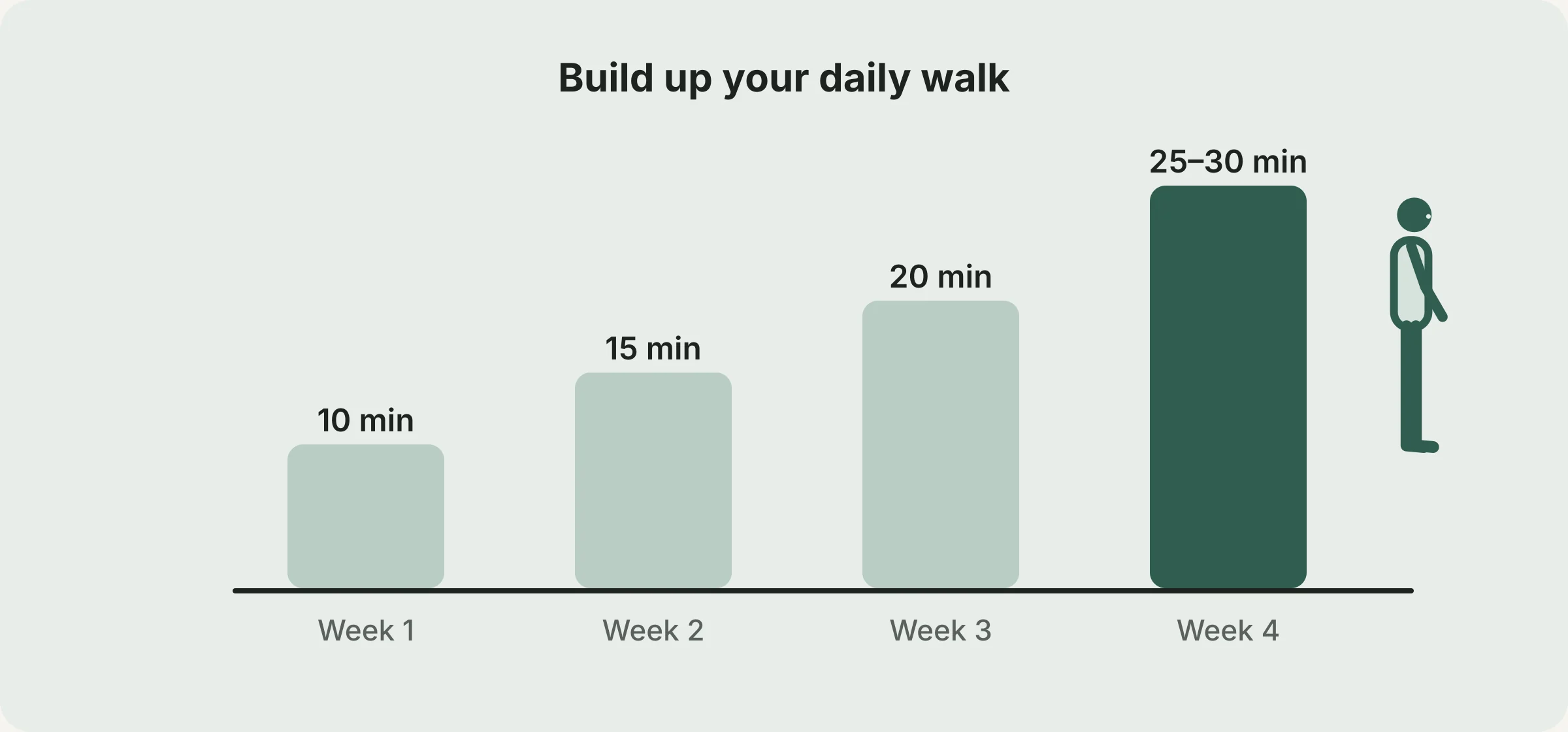
- Week 1: 10 minutes most days, at a comfortable pace
- Week 2: 15 minutes, a little brisker
- Week 3: 20 minutes, with some short faster stretches
- Week 4: 25 to 30 minutes, 3 to 5 days a week
Walking with someone, or listening to music or a podcast, can help you keep going.
Other aerobic activity
Cycling (including an exercise bike), swimming, dancing, gardening and active housework all count. Choose something you enjoy.
Strength exercises
Strength exercises help protect your muscles, which matters before surgery and other treatment. Try sit-to-stands, wall press-ups and step-ups twice a week. See our illustrated strength exercises.
Arm and shoulder exercises
If you’re having breast or lymph node surgery, start your arm and shoulder exercises now. Breast Cancer Now suggests starting them before surgery, so you know your normal range of movement.2 See arm and shoulder exercises.
Fitting it in
- Break it up. Three 10-minute walks count just as much as one 30-minute walk.
- Plan it. Put activity in your diary like an appointment.
- Make it part of your day. Walk to the shops, take the stairs, get off the bus a stop early.
- Keep a diary. Seeing your progress is motivating.
Check first if…
Talk to your team before increasing your activity if you have heart or lung problems, bone pain, dizziness or blackouts, or another condition that limits exercise. Stop and get advice if you have chest pain, severe breathlessness, dizziness or new pain.
Free help to get moving
- Macmillan Move More: free activity sessions in many areas, led by instructors trained in cancer rehabilitation.
- Penny Brohn UK: free online sessions, including strength and stamina.
- Cancer rehab personal trainers: qualified trainers you can pay to work with one to one.
Prefer a guided plan?
A personalised digital prehab programme plans your activity around your surgery date, with short daily sessions and a coach who adjusts the plan as you get fitter. See how digital prehab works.
Related pages
- A simple prehab plan to start at home
- Strength exercises to do before treatment
- Preparing for a mastectomy
Everyone’s treatment is different, so talk to your cancer team about what is right for you.
References
- Campbell KL, Winters-Stone KM, Wiskemann J, et al. Exercise guidelines for cancer survivors: consensus statement from international multidisciplinary roundtable. Medicine & Science in Sports & Exercise. 2019;51(11):2375–2390. doi.org/10.1249/MSS.0000000000002116
- Breast Cancer Now. Exercises after breast cancer surgery (BCC6). breastcancernow.org/media-assets/yjajew1j/bcc6-exercises-after-breast-cancer-surgery-web.pdf
- Macmillan Cancer Support, Royal College of Anaesthetists and NIHR Cancer and Nutrition Collaboration. Principles and guidance for prehabilitation within the management and support of people with cancer. 2019, updated November 2020. www.macmillan.org.uk/healthcare-professionals/news-and-resources/guides/principles-and-guidance-for-prehabilitation
- Toohey K, Hunter M, McKinnon K, Casey T, Turner MR, Taylor S, Paterson C. A systematic review of multimodal prehabilitation in breast cancer. Breast Cancer Research and Treatment. 2023;197(1):1–37. doi.org/10.1007/s10549-022-06759-1
- Brahmbhatt P, Sabiston CM, Lopez C, et al. Feasibility of prehabilitation prior to breast cancer surgery: a mixed-methods study. Frontiers in Oncology. 2020;10:571091. doi.org/10.3389/fonc.2020.571091
- UK Chief Medical Officers. Physical activity guidelines for adults and older adults. 2019. www.gov.uk/government/publications/physical-activity-guidelines-adults-and-older-adults/physical-activity-for-adults-and-older-adults-19-and-over-text-of-the-infographic