
The short version
- Many people return to running, sport and the gym after breast cancer treatment. Build up gradually, starting below what you used to do.
- A walk-run plan such as the free NHS Couch to 5K app is a good way back into running.1
- Check with your team first if you’ve had recent surgery or reconstruction, have lymphoedema, bone problems, or a heart condition.
Getting the timing right
There’s no fixed date when you can return to sport. It depends on your treatment, how you’re healing and how you feel. As a rough guide:
- After surgery, wait until your wound has healed and you have good shoulder movement. Your surgeon or physiotherapist can tell you when you can start more demanding upper-body activity, especially after reconstruction.
- During and after chemotherapy, your fitness and blood counts may take a while to recover. Start gently.
- After radiotherapy, the treated skin can be sore for a few weeks. Avoid swimming in chlorinated pools until any skin reaction has healed.
Guidelines for people after cancer recommend building up to regular moderate activity and strength exercise, and say exercise is safe for most people.2
Getting back into running
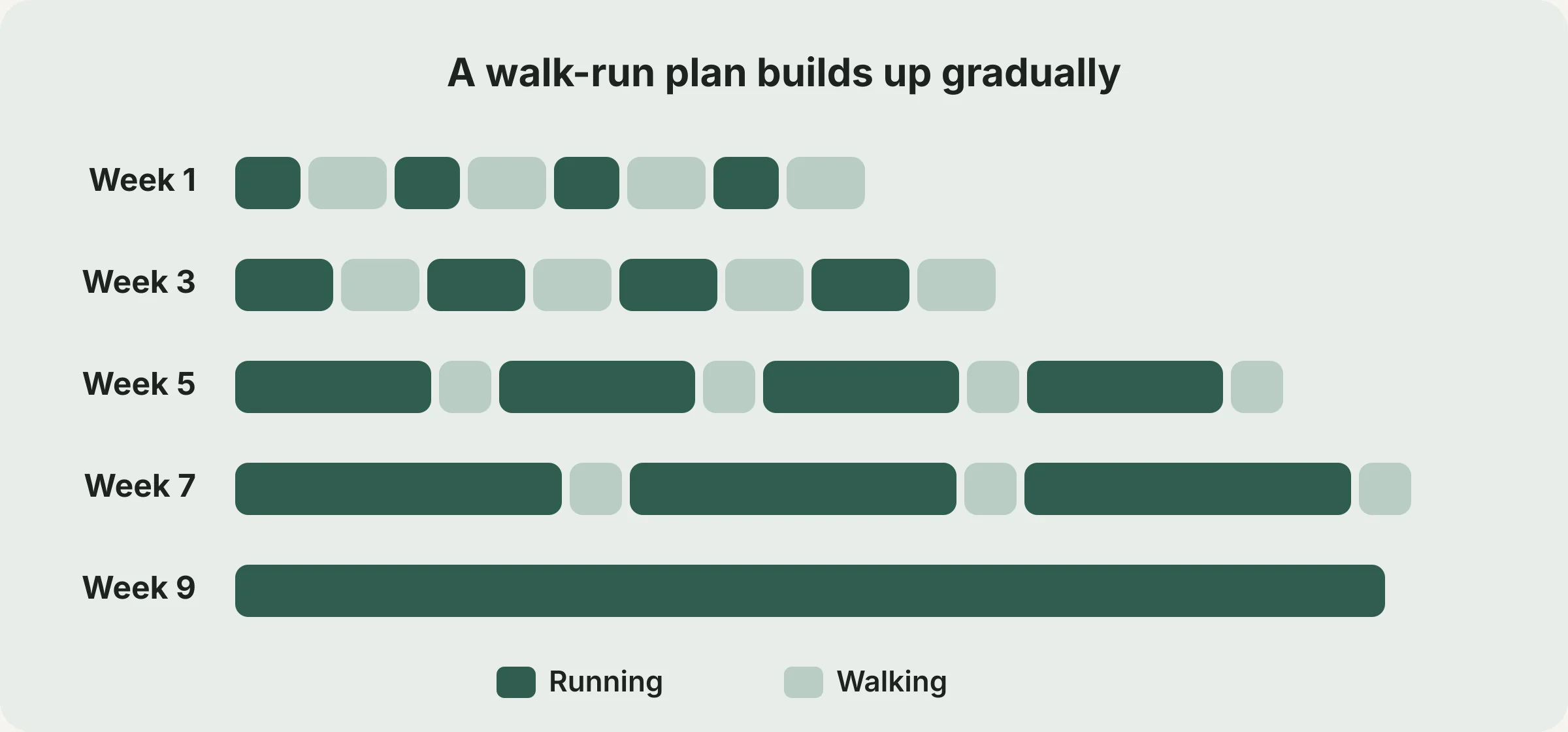
- Walk first. Build up to brisk walking for 30 minutes most days.
- Start a walk-run plan. The NHS Couch to 5K app is free and takes you from walking to running 5km over about nine weeks, or at a slower pace if you prefer.1
- Repeat weeks if you need to. There’s no rush.
- Keep up your strength work two or three times a week, which helps protect your joints and bones.2 See our 12-week plan.
- Join in. parkrun is a free, weekly 5km event, and you can walk, jog or run it.
Other sports and the gym
- Swimming is gentle on joints and good for shoulder movement once your wounds and any skin reaction have healed.
- Racket sports, golf and climbing put a lot of demand on the shoulder. Build up slowly, and ask a physiotherapist if movement is still limited.
- The gym: tell the instructor about your treatment, start with light weights and increase them gradually. See strength training after breast cancer.
- Contact sports: check with your team, especially if you have a port, reconstruction or bone problems.
A good sports bra
A well-fitted, supportive sports bra makes running and sport much more comfortable. After surgery, you may need a different size or style.
- Look for soft seams, a wide band and front fastening if lifting your arms is difficult.
- If you wear a breast prosthesis, look for a sports bra with pockets. Lightweight prostheses for sport and swimming are also available.
- Your breast care nurse or prosthesis fitter can advise you.
If you have lymphoedema
Exercise doesn’t make lymphoedema worse, and being active can help.2 Build up gradually, wear your compression garment while exercising if you’ve been advised to, and watch for any increase in swelling. Read lymphoedema: signs, treatment and support.
Stop and get advice if you have
- chest pain, palpitations or severe breathlessness
- new bone pain, especially pain that is worse at night or doesn’t settle
- new or increased swelling in your arm, hand, breast or chest
- dizziness or feeling faint
Prefer a guided plan?
A personalised programme can build your fitness back up safely, with a coach adjusting the plan as you progress. See how digital rehabilitation works or compare UK programmes.
Related pages
- Getting your strength back: a 12-week plan
- Yoga and Pilates after breast cancer
- Heart health after breast cancer treatment
Everyone’s treatment is different, so talk to your cancer team about what is right for you.
References
- Department of Health and Social Care. NHS Couch to 5K (free app). apps.apple.com/gb/app/nhs-couch-to-5k/id1082307672
- Campbell KL, Winters-Stone KM, Wiskemann J, et al. Exercise guidelines for cancer survivors: consensus statement from international multidisciplinary roundtable. Medicine & Science in Sports & Exercise. 2019;51(11):2375–2390. doi.org/10.1249/MSS.0000000000002116