
The short version
- Staying as active as you can during treatment is safe for most people and can ease fatigue, anxiety and low mood, and protect your strength.1
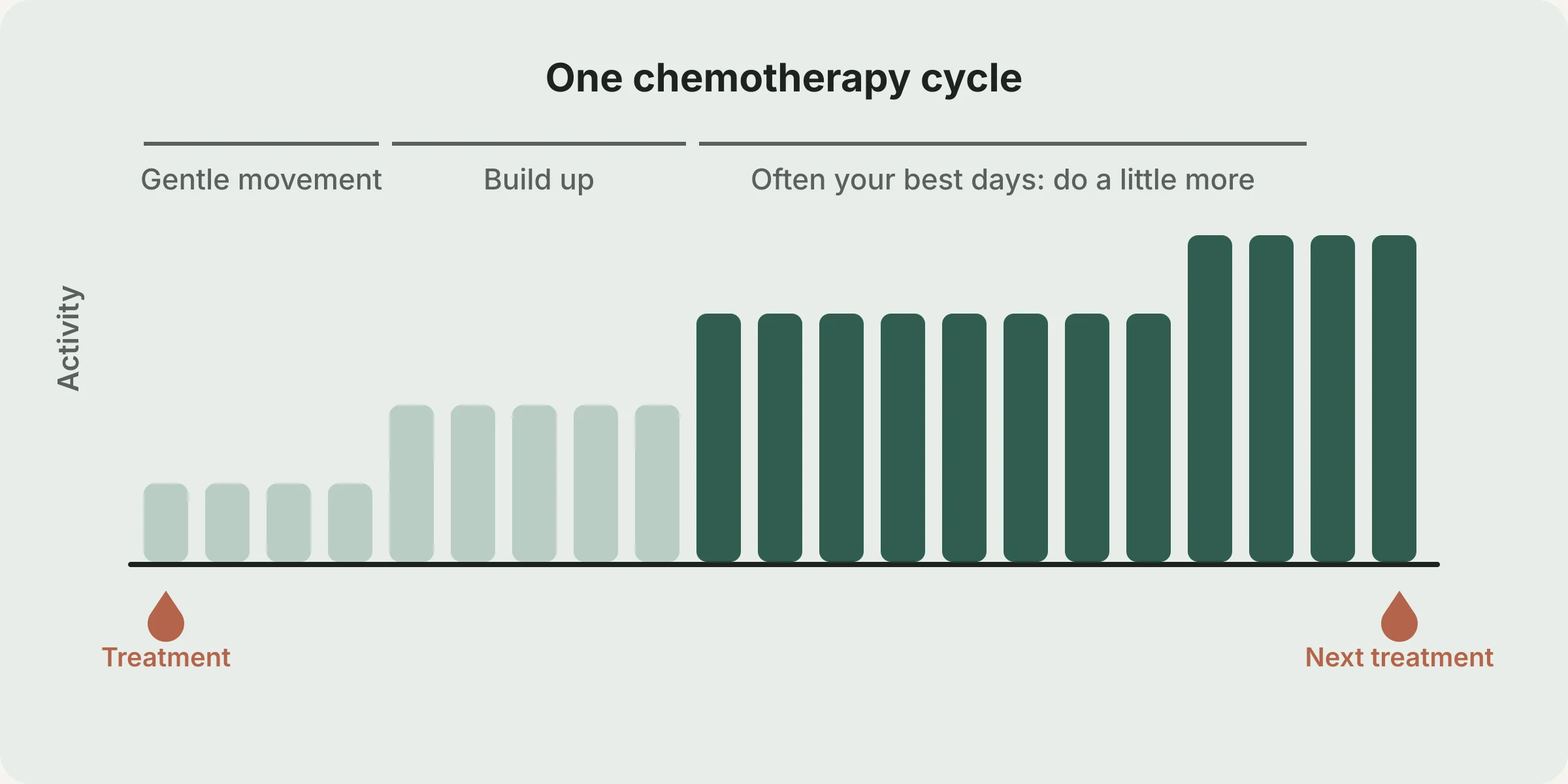
- Adjust to how you feel each day: little and often, with rest when you need it.
- Know the warning signs that mean you should stop and call your team.
Moving during treatment
- Exercise during chemotherapy
- How much exercise is recommended?
- When to rest: exercise safety and red flags
- Exercise on hormone therapy
After surgery
- Arm and shoulder exercises after breast surgery
- Cording (axillary web syndrome)
- Wound and scar care after breast surgery
- Reducing your risk of lymphoedema
Managing side effects
- Managing cancer-related fatigue
- Energy pacing: plan, prioritise, pace
- Joint pain on aromatase inhibitors
- Protecting your bones during treatment
- Menopause symptoms caused by treatment
- Sleep problems during treatment
Prefer a guided plan?
A personalised digital programme can plan your activity, nutrition and rest around your treatment, adjusting as you go, with coaches to support you. See how digital rehabilitation works or compare UK programmes.
Everyone’s treatment is different, so talk to your cancer team about what is right for you.
References
- Campbell KL, Winters-Stone KM, Wiskemann J, et al. Exercise guidelines for cancer survivors: consensus statement from international multidisciplinary roundtable. Medicine & Science in Sports & Exercise. 2019;51(11):2375–2390. doi.org/10.1249/MSS.0000000000002116